
Dialing in your bike gears makes every ride feel smoother and easier to control. Clean shifts mean less noise, less chain slip, and less effort at the shifter. Small adjustments like cable tension, hanger alignment, and limit screws can change the whole feel of your bike. The first step is spotting which setting is causing the rough shifting.
What Precise Gear Adjustment Looks Like
When your bike is adjusted with real precision, the shifts feel calm, quick, and almost effortless. You notice a clean handoff between gears, and that steady precision shift response makes you trust every pedal stroke.
There’s no awkward pause, no harsh clunk, and no need to guess what the drivetrain wants. Instead, you get a micro adjustment feel that makes each shift seem small but exact.
Your chain moves where you ask, and your ride feels more connected, like your bike is working with you. That kind of control doesn’t just help on hills or flats. It also gives you a more relaxed, confident feel, so you can focus on the road and enjoy the group ride vibe around you.
Why Clean Shifting Starts Here
Clean shifting starts with the small setup jobs that make your derailleur move in a straight, steady path, because even a tiny error can turn a smooth gear change into a clumsy one. Whenever you handle these smooth shifting basics, you give your bike a better chance to meet each gear without drama. That means less noise, less hunting for the right gear, and more of that calm ride feel you want.
A quick drivetrain confidence check helps you notice whenever the chain lands cleanly and stays put as you shift. Whenever those initial steps are right, you feel like part of the bike instead of fighting it. That matters on every ride, whether you’re climbing, cruising, or just trying to keep your rhythm.
Check Your Derailleur and Shifter Setup
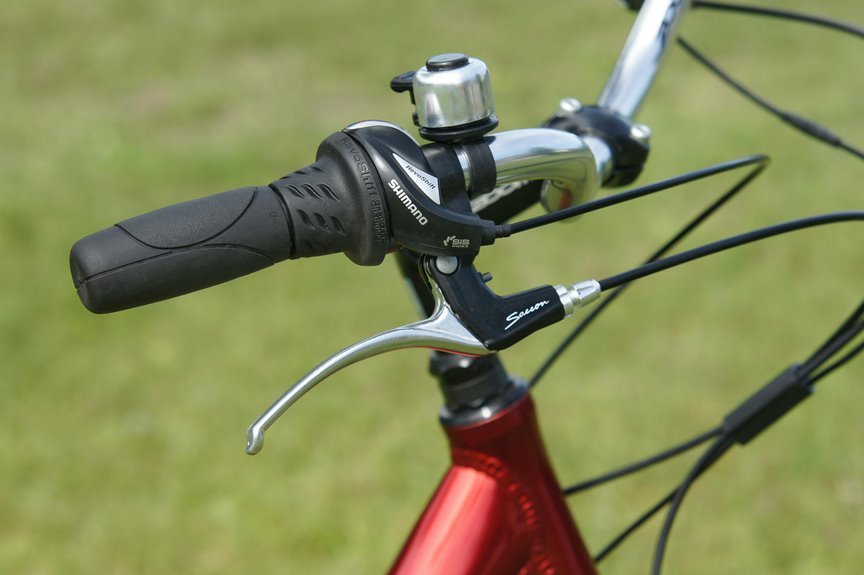
Before you touch the cable or barrel adjuster, you need to check that your derailleur and shifter are starting from a solid place. Make sure the shifter clicks cleanly through each position and that the cable moves without drag. Provided the lever feels sloppy or sticky, your shifts won’t feel right, no matter how careful you are.
Then look for derailleur wear, bent pulleys, or a tired spring that won’t return the cage well. Next, confirm shifter compatibility with your drivetrain, since the wrong match can cause vague or noisy shifts.
You’re aiming for a setup that feels like your bike is working with you, not fighting you. As soon as these parts are healthy and matched, your later adjustments become easier, faster, and a lot less frustrating.
Align the Derailleur Hanger
A bent derailleur hanger can throw off your whole shift pattern, so you’ll want to check its alignment before you chase other adjustments.
When it’s even a little off, your derailleur won’t sit in the right position and your gears can feel fussy or slow.
Straightening it helps the derailleur track the cassette properly, which makes the rest of your tuning much easier.
Check Hanger Alignment
Once your shifting still feels off after you’ve set the limit screws and tuned the cable tension, the derailleur hanger is the next thing to check, because even a small bend can throw the whole system out of line.
You can feel frustrated, but this step often saves the day. Use impact detection and a careful frame inspection to spot a hanger that leans, twists, or sits unevenly.
A simple alignment gauge helps you compare each side at the wheel rim. If the hanger is off, your derailleur can’t guide the chain cleanly, no matter how well you adjust the rest.
Take your time, make small corrections, and recheck after every move. That steady care helps your bike feel like it belongs with you again.
Correct Derailleur Position
Should your derailleur hanger be even a little out of line, your shifts can feel stubborn no matter how carefully you set the rest of the bike. As you correct the derailleur position, you help the whole drivetrain feel like it belongs together. Set the derailleur mounting angle so the cage sits straight under the cassette, then check pulley wheel clearance with the biggest sprocket.
| Check | Good | Bad |
|---|---|---|
| Cage line | Straight | Twisted |
| Pulley gap | Even | Too close |
| Shift feel | Crisp | Noisy |
If the hanger still pulls off center, the chain can hesitate or rub. You don’t need to fight that alone. Small bends matter, so make calm, careful changes and recheck after each one. With the right position, your bike answers you faster and rides more smoothly.
Set Limit Screws for Accurate Shifts
Start with the low limit screw, because it keeps your derailleur from pushing the chain too far into the spokes. Then check the high limit screw, since it stops the chain from overreaching into the frame and missing the easiest clean shift.
Whenever you set both with care, you give yourself crisp, calm shifts that feel much easier on every ride.
High Limit Screw Setup
Because the high limit screw controls how far the rear derailleur can move toward the smallest cog, it plays a big role in keeping your shifts clean and safe. You set it as the upper gear stop, so the chain lands on the smallest sprocket and stays there with overshift protection. That small setting helps you feel in control, and it keeps your ride from turning noisy in a hurry.
- Shift into the smallest cog initially.
- Turn the screw until the derailleur lines up well.
- Watch for chain rub or a jump off the cog.
- Test a few quick shifts and listen for smooth action.
When you get it right, your bike feels dialed in, and you can ride with the group without that awkward “almost there” gear chase.
Low Limit Screw Setup
Whenever your rear derailleur won’t sit in the biggest cog the way it should, the low limit screw is usually the initial place to look. Put your bike in the smallest gear, then turn the L screw a little at a time until the jockey wheel lines up cleanly with the largest cog.
This low limit screw setup protects your limit screw range and gives you a solid lowest gear stop, so the chain can’t fall inward. If you go too far, you’ll lose easy shifts and hear rubbing. If you stay too loose, the derailleur can overreach and feel shaky.
With calm, small turns, you can make the rear end feel like it belongs to you again, steady and ready for every climb.
Dial In Cable Tension
Should your shifts feel a little lazy or jumpy, cable tension is often the initial thing to check. You belong on a bike that responds with calm, clean movement, and a small tweak can bring that feeling back.
Start with barrel adjuster basics: turn it out to add tension, then test each shift with care. Before you twist, do a cable slack inspection so you know whether the housing is loose or pulled too tight.
- Check the rear shift feel in a stand.
- Turn the adjuster one click at a time.
- Ride after each change to sense the difference.
- Stop once shifts feel light, quick, and steady.
Keep your hands relaxed and trust the process. Small changes usually give the smoothest result, and that’s how your drivetrain starts to feel like it fits you.
Tune Your Gear Indexing
Now it’s time to tune your gear indexing so each shift lands cleanly and feels quick under your fingers. You’ll use shift cable tension and the derailleur limit screws together, because both control how smoothly the chain moves across the cassette.
Whenever they’re set right, your bike shifts with less noise, less fuss, and a lot more confidence.
Shift Cable Tension
Cable tension is the fine touch that makes your shifting feel clean, and a small change can fix a bike that keeps missing gears or hesitating. You’re not chasing perfection alone. You’re tuning your ride so it feels like it belongs to you.
- Turn the barrel adjuster slowly and feel the click.
- Add tension whenever shifts lag to easier gears.
- Reduce tension whenever the chain overshoots harder gears.
- Watch cable stretch effects after new cables or a few rides.
A good barrel adjuster feel tells you whenever the system wakes up. After each small turn, pedal through the gears and listen for smooth, quiet steps. Whenever the chain moves fast and settles right away, you’re close.
Keep your hands steady, trust the process, and you’ll give your bike the crisp response that makes every group ride feel better.
Derailleur Limit Screws
When your shifts feel close but not quite right, derailleur limit screws give you the clean edge you need. You’re not chasing magic here, just a safe range that lets the chain move cleanly without jumping off the cassette.
Turn the low screw to stop the derailleur from pushing too far inward, then set the high screw to keep it from overshifting outward. Small turns matter, so go slow and test each click.
Whenever you hear rub, check for limit screw wear and make sure the limit screw material still holds a firm bite. With a stable bike and steady hands, you’ll feel more in control, and your ride will feel like it belongs to you.
Test Your Shifting on the Road
After you’ve set the limits, tension, and B-gap, the real proof happens on the road. You need road feel testing, because your bike should shift like it belongs under you. Start with calm pedaling, then add a few load response checks on gentle climbs and steady flats. Listen for crisp gear changes and watch for any delay.
- Shift one gear at a time.
- Test both easy and hard efforts.
- Ride in a group-safe, open space.
- Observe how the chain reacts under pressure.
Whenever the bike answers smoothly, you’ve got that quiet, confident feel riders love. Whenever it feels off, stay patient and make small changes later. The goal is a ride that feels natural, so you can focus on the road and enjoy your crew’s pace.
Fix Common Shifting Problems
Should your bike starts hesitating, rubbing, or refusing to shift cleanly, you don’t need to panic, because most shifting problems come down to a few small fixes.
First, diagnose shift hesitation through checking cable tension and turning the barrel adjuster in tiny steps.
Should the chain still drags or skips, inspect worn drivetrain parts like the chain and cassette, since tired parts fight smooth movement.
Next, listen for rubbing in each gear.
That sound often means a limit screw needs a careful tweak.
Also, check the derailleur hanger should one side keeps acting stubborn.
Work slowly, shift through every gear, and let each change settle before moving on.
You’re not alone in this.
With a calm touch, your bike can feel crisp again, and you can ride with confidence and ease.
Adjust Gears for Hills and Traffic
For hills and busy streets, the right gear can make your ride feel calm instead of frantic. You can protect that calm by choosing gears before the hill bites or the light changes.
On climbs, pick a lower gear beforehand so your legs keep a steady spin. That makes hill cadence choices feel natural, not forced. In traffic, stay ready for traffic stop and go shifting so you’re not grinding at each restart.
- Shift down before you slow to a crawl.
- Keep pressure light while the chain moves.
- Match your effort to the road, not your ego.
- Use small gear changes to stay smooth with the group.
When you listen to your bike, you fit right in and ride with less stress.
Keep Your Bike Gears Tuned Longer
Now that you know how to keep your bike in the right gear on hills and in traffic, it helps to keep those gears working the same way every time you ride. You can do that via checking for gear wear at an early stage, before shifts start to slip or chatter.
Clean your chain, wipe the cassette, and watch for stiff links after wet rides. Then follow regular maintenance intervals, so small issues don’t grow into noisy problems.
Whenever you notice slower shifting, give the derailleur a quick look and fine tune cable tension before the next ride. That way, you stay in the groove with your bike and your group.
A little care now keeps your ride smooth, your effort lower, and your confidence steady mile after mile.
Essential Tools for Gear Adjustment
A good gear tune starts with the right tools in your hand. You don’t need a giant shop, but smart tool selection helps you feel ready and capable. Set up your workspace setup with steady light, a clean floor, and your bike held firm in a repair stand.
Then keep these close:
- Phillips or hex wrench for limit screws
- Barrel adjuster for cable tension
- 5 to 6 mm gauge for B-gap checks
- Clean rag for quick wipe downs
With the right pieces nearby, you can make small, calm changes without frustration. That simple prep keeps you in control and helps your riding crew feel the same quiet confidence whenever the chain moves where you want.
When to Retune Your Bike Gears
Even with the best tools close nearby, your gears won’t stay perfect forever, so it helps to know whenever to give them another check. You should retune after a crash, a wheel change, or any cable stretch that makes shifts feel slow or noisy.
If you hear rubbing, miss a gear, or need extra lever effort, don’t wait. Seasonal maintenance also matters, because wet rides, dust, and cold snaps can nudge settings off. After installation setup, check again once you’ve ridden a few miles, since fresh cables settle fast.
You’ll fit in better with smooth riders when your bike responds right away. A quick tune now keeps your shifting crisp, steady, and ready for the next climb or fast group ride.
Frequently Asked Questions
How Often Should I Replace a Worn Shift Cable?
Replace a worn shift cable as soon as you see frayed strands or feel delayed shifting. Inspect it during routine tune ups, and if you ride often, plan on changing it about once a year.
Can a Bent Derailleur Hanger Cause Missed Shifts?
Yes, a bent derailleur hanger can cause missed shifts. Have the hanger alignment checked, since even a slight bend can throw off indexing and lead to rough, hesitant gear changes instead of clean shifting.
Should Gear Adjustment Change After Replacing the Chain?
Yes. After replacing the chain, check the gear adjustment again. Chain wear can change shifting feel, so inspect the cassette for wear as well. Re set the indexing if needed so shifting stays smooth.
Why Does Shifting Worsen Under Heavy Pedaling?
Hard pedaling increases chain tension and cassette load, so the derailleur has less chance to move the chain cleanly onto the next cog. Back off the pedals for a moment, then check cable tension, indexing, and limit screws to improve shift quality.
Do Suspension Bikes Need Different Gear Setup?
Yes, you may need a different gear setup at times. Set gear tuning with suspension sag since rear suspension changes the derailleur position. This helps keep shifts crisp, prevents rub, and lets you ride confidently with the group.