
Yes, a well-tuned bike can ride smoother and feel easier right away. Small changes like saddle height, frame fit, reach, and handlebar position can make a big difference. Cleat setup, tire pressure, and gearing also shape how your bike performs. For commuting or training, dialing in these details helps every pedal stroke feel more efficient.
Why Bike Setup Affects Riding Efficiency
At the moment your bike setup fits your body well, every pedal stroke feels smoother, stronger, and less wasted. You notice it right away in your indoor training setup, because your legs move with less strain and your breathing stays calmer.
That fit helps you stay relaxed, so you can push harder for longer without feeling awkward or scattered. The smart bike benefits show up fast too, since a stable position supports better power transfer and steadier rhythm.
As your body lines up well with the bike, you waste less energy fighting the machine and more time joining the ride you came for. That sense of ease can make tough sessions feel more welcoming, and it helps you keep showing up with confidence, not doubt, every time you clip in.
Start With the Right Bike Fit
Getting your bike fit right is the best place to start, because even a smart bike can feel awkward provided the position doesn’t match your body. Whenever you handle bike fit basics well, you join the riders who feel smooth, calm, and in control. Focus on geometry matching, so the frame, reach, and bar height suit your shape and riding style.
| Check | What you want |
|---|---|
| Frame size | Feels natural |
| Reach | Keeps you relaxed |
| Stack | Supports posture |
| Bar shape | Fits your hands |
| Adjustment range | Leaves room to tune |
This simple check helps you avoid that “why does this feel weird?” moment. And once the fit feels right, every indoor session starts with less doubt and more confidence.
Set Saddle Height for Better Power
A proper saddle height can make your indoor ride feel smoother, stronger, and a lot less annoying, because your legs can move in the right range without wasting energy. You want saddle height precision, so your knee stays slightly bent at the bottom of each pedal stroke. That gives you better leg extension balance and helps you push with control instead of rocking side to side like a wobble toy.
Start with the saddle level, then make small changes and test how your hips, knees, and feet feel. Should you feel cramped, raise it a little. Should you reach too far, lower it.
Whenever the height feels right, you’ll pedal with more confidence, fit in with your training group, and keep your power steady ride after ride.
Dial In Saddle Fore-Aft Position
From the side of the bike, saddle fore-aft position plays a big role in how natural your ride feels, because it changes where your body sits over the pedals.
You want fore aft comfort that lets you settle in, not fight the bike. When the saddle sits too far forward, your knees can drift in ways that feel off. Too far back, and you may lose smooth pressure.
Try these steps:
- Sit on the saddle and pedal at an easy pace.
- Watch knee tracking from the front.
- Move the saddle in small steps.
- Recheck comfort after each change.
As you tune it, trust your body and the shared rhythm of a well-fit setup.
Small changes often make you feel like you belong on the bike.
Adjust Handlebar Reach and Drop
You want your handlebar reach to feel natural, so your arms stay relaxed and your upper body can support steady power.
A shorter or longer reach changes how open your chest feels, while bar drop shapes how low and aggressive your position becomes.
Whenever you balance comfort and power well, you’ll ride longer with less strain and a smoother pedal stroke.
Reach Length Adjustment
When your cockpit feels too stretched out, small reach changes can make your bike feel like it finally fits again. You’re not chasing perfection; you’re building a setup that lets you ride with ease and confidence. A shorter stem can shrink the stem length impact, while a longer one can open room assuming you feel cramped. Keep cockpit balance in mind so your hands, shoulders, and hips work together.
- Measure your current comfort on easy rides.
- Change one part at a time.
- Test your posture at steady effort.
- Save the setup that feels natural.
As you fine-tune reach, your body settles in, and the bike starts to feel like your own crew, not a stranger.
Bar Drop Position
A deeper bar drop can sharpen your position, but only provided it still feels calm and controlled in your body. You want enough drop to tuck your torso, yet not so much that your neck or shoulders tense up.
Whenever the bars sit lower, you may get better bar drop benefits, especially as long as your hands rest naturally and your elbows stay soft. Check how your hips, back, and wrists respond together, because good setup feels shared, not forced.
Whenever you feel cramped, bring the bars up a touch or shorten the drop. That small change can improve drop position comfort and help you settle in faster.
You’re aiming for a fit that feels like it belongs to you, mile after mile, without that awkward “why am I doing this?” face.
Comfort And Power
Building on that cleaner bar-drop feel, handlebar reach and drop shape how steady your body feels and how much power you can keep on tap. When you dial them in, you settle into the bike instead of fighting it, and indoor comfort rises fast. That calm position helps your legs turn over smoothly, so power consistency stays strong in hard efforts and long rides.
- Reach too long makes you stretch and lose control.
- Reach too short can crowd your chest and limit breathing.
- A lower drop can boost aerodynamics, but only while you stay relaxed.
- Small changes help you find the fit that feels like home.
You’ll know it’s right as your shoulders soften, your hands stay light, and every push feels shared with the bike.
Choose Pedal and Cleat Position
Start with your cleat position, because even a few millimeters can change how your legs track and how your feet feel after a hard ride. You want cleat alignment that lets your knees move straight, not in or out, so your pedal stroke stays smooth.
Next, check pedal float, since a little free movement can ease stress and help your feet settle naturally. Should you feel hot spots, numb toes, or knee tug, shift one side at a time and test again. Then tighten everything once the stance feels calm and repeatable.
This small setup choice helps you feel at home on the bike, like your fit actually belongs to you. With steady alignment and enough float, you can push harder and stay more comfortable on every indoor session.
Pick Faster-Rolling Tires
Once your cleats are set, the next easy win is the tire under you. You can join riders who care about every watt by choosing a faster-rolling tire. Lower rolling resistance means less energy lost as you spin, so your legs stay fresher and your pace feels smoother. Look at the tire compound first, because softer isn’t always faster.
- Pick a slick tread for clean indoor use.
- Check the tire compound for a balance of grip and speed.
- Favor lightweight casings that feel lively on the trainer.
- Match the tire to your wheel size so setup stays simple.
When you make this swap, you’re not chasing magic. You’re making your ride feel more connected, and that’s a good place to belong.
Set Tire Pressure for Your Ride
You can make every ride feel better once you find your ideal PSI, because the right pressure gives you grip, comfort, and speed without the guesswork.
Match that pressure to the terrain too, since smoother roads usually like a firmer setup while rougher paths need a bit more give.
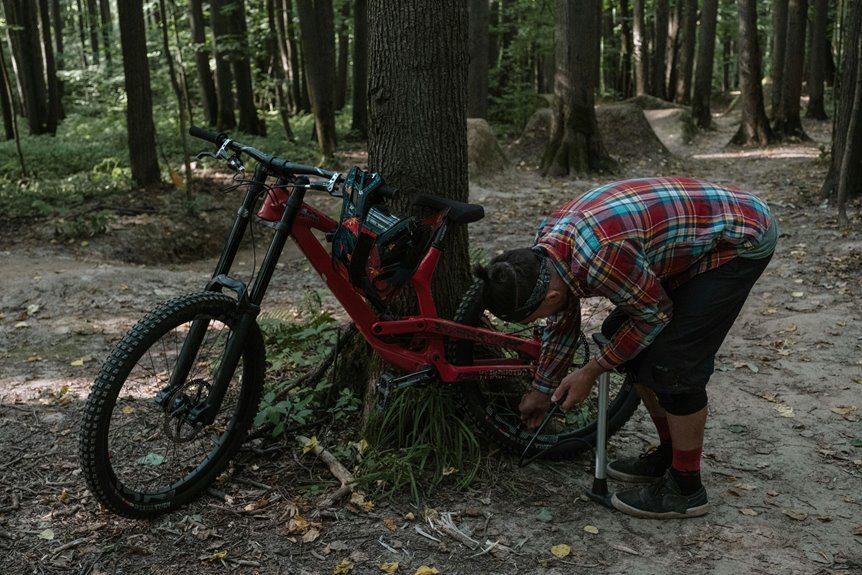
Before you ride, check your tire pressure every time so you don’t start your session with a saggy surprise.
Find Ideal PSI
Finding the ideal tire pressure can make your smart bike feel smoother, quieter, and far more natural right away.
You’ll fit in faster once your setup feels right, and small pressure changes can help you trust every pedal stroke. Use pressure gauges to check your tires before you ride, then compare the number with the range on the tire sidewalls.
- Start near the middle of the printed range.
- Adjust in small steps, then test again.
- Keep both tires close, so the bike feels balanced.
- Recheck often, because pressure drifts over time.
Once you ride with the right PSI, you feel steadier and more at home on the bike. That confidence matters, because comfort helps you stay relaxed, focused, and ready to enjoy the session.
Match Pressure to Terrain
When the road turns rough or the hills start to bite, the right tire pressure can make your smart bike feel calm and controlled instead of harsh and twitchy.
You can use terrain specific pressure tuning to match your tires to the day ahead. On smooth pavement, a firmer setup helps you roll fast and feel steady in the group. On cracked lanes or packed gravel, a softer setting adds grip and takes the sting out of bumps.
That’s road surface pressure matching in action. You’ll corner with more trust, climb with less chatter, and stay connected to the ride instead of fighting it. If you swap routes often, adjust pressure for each surface so your bike feels like it belongs there, and you do too.
Check Pressure Before Rides
A quick pressure check before every ride can save you from a wobbly start and a frustrating session. You fit in better whenever your bike feels right, and that starts with tire pressure checks. Use your pre ride inflation routine to match the feel you want, then ride with confidence.
- Squeeze the tires and observe any soft spots.
- Check the gauge for your target PSI.
- Add small bursts of air, then recheck.
- Walk around once more before clipping in.
Whenever you keep pressure steady, your bike rolls smoother, corners cleaner, and responds faster. That little habit helps you feel part of the ride from the initial pedal stroke. In case the weather shifts, revisit your setup, because pressure can drift overnight.
Fine-Tune Your Drivetrain for Smooth Shifting
Even the best smart bike can feel clunky whenever the drivetrain is out of tune, so start by making shifting crisp and quiet before you chase power numbers. You belong on a bike that responds right away, and a few small checks can make that happen. Clean the chain, add chain lubrication, and listen for rubbing. Then do derailleur tuning so each shift lands cleanly without a scrape.
| Check | What you want | Why it helps |
|---|---|---|
| Chain | Clean and smooth | Cuts drag |
| Derailleur | Aligned | Sharp shifts |
| Cables | Free and tight | Better control |
If the chain skips or hesitates, stop and adjust before your next ride. That calm, tidy feel builds trust, and trust makes every indoor session feel more like home.
Choose Gearing for Your Terrain
Your gearing should match the kind of ride you plan to do, because that small choice can make indoor training feel smooth instead of awkward.
Whenever you fit the right setup, you stay in the groove and feel part of your ride crew, even solo.
- Use smaller gears for steep courses so you can spin with control.
- Pick larger gears for flat routes whenever you want steady speed.
- Match gear ratio selection to your usual workouts, not just race day goals.
- Aim for terrain specific cadence so your legs feel natural and your effort stays calm.
If your trainer feels too easy or too jumpy, shift your gearing before you blame your fitness. The right choice helps you settle in, ride longer, and trust every pedal stroke.
Ride in a More Aerodynamic Position
You can get faster with a few small position tweaks on your smart bike.
Lower your torso a bit to cut wind resistance, and bring your hands into a compact position so your upper body stays quiet and smooth.
These changes don’t have to feel extreme, and once you set them up well, you’ll usually feel more stable and confident right away.
Lower Torso Angle
- Lower your chest a little, then breathe easily.
- Shift weight into the saddle and pedals evenly.
- Keep your back long so your power stays stable.
- Check comfort, then make small changes over time.
This position helps you slice the air with less drag, and it can make your indoor miles feel more natural.
You’ll likely notice better rhythm, and that quiet, confident road feel can enhance every session.
Compact Hand Position
A compact hand position can make your ride feel smoother and more focused, especially whenever you want to sit a little more aero without feeling cramped. You bring your hands in just enough to steady your upper body, and that helps you cut wind while keeping control.
When your grip is relaxed but firm, you get better grip control on fast sections and technical turns. Then your shoulders can settle, your chest can lower, and your legs can keep working without extra tension.
If your hands drift too wide, you might feel hand fatigue sooner and lose that clean, connected feeling. So, adjust your bars or hoods a little at a time. You’ll find a position that feels natural, confident, and part of your crew.
How to Set Up Your Bike for Commuting vs. Training
Although both setups can use the same bike, commuting and training ask for very different things, so it helps to treat them like two jobs for one machine.
For your daily ride, you want comfort, lights, and commute storage for bags or a lock. For a training schedule, strip off extra weight, keep the cockpit clean, and set saddle height and reach for strong pedaling.
- Use fenders and racks for work rides.
- Remove bulky accessories for hard sessions.
- Keep tire pressure suited to roads you ride.
- Save one setup for reliability, another for speed.
That way, you fit in with your crew, ride with less stress, and switch modes without feeling like you’ve built two bikes in one garage.
Test Your Changes on a Short Ride
Now that you’ve set your bike up for riding, give those changes a short test ride before you head out for a longer session.
Keep the spin easy initially, then notice how your saddle height, reach, and handlebar position feel. A short evaluation ride helps you compare indoor feel with your usual outdoor position, so you can tell whether the bike supports smooth power and steady comfort.
Pay attention to your breathing, your hips, and whether your hands feel relaxed. Should something feel off, make one small change, then ride again. That simple check keeps you in the groove and helps you settle into your setup with confidence.
Soon, your bike won’t feel like a machine you’re adjusting. It’ll feel like your ride, ready for the work ahead.
Avoid Common Bike Setup Mistakes
One small setup mistake can throw off a great indoor ride, but the positive news is that most of them are easy to fix before they become a real pain. You want your bike to feel like it fits you, not fights you. Start with saddle height, then check reach, handlebar angle, and cleat position so your legs and back stay calm. Tighten loose parts before every session, because tiny slips can ruin your rhythm. Keep your bike storage habits simple, too, so nothing shifts between rides.
- Match saddle height to smooth leg extension.
- Keep the front end steady and centered.
- Check tire or trainer contact for wear.
- Use post ride cooling routines to spot any hot spots fast.
Frequently Asked Questions
How Do Smart Trainers Compare With Smart Bikes for Indoor Efficiency?
Smart trainers usually cost less and work with more setups, while smart bikes often feel more efficient after you adjust the fit and riding feel. You spend less time on setup, keep your position steady, and feel more comfortable on every ride.
Can Indoor Setup Improve Sprint Power on a Smart Bike?
Yes, you can. A well set up indoor bike can improve sprint mechanics, increase power transfer, and help you produce stronger, more controlled bursts during hard efforts indoors.
What Metrics Should I Track to Verify Setup Changes?
Track power, heart rate, cadence consistency, saddle comfort, and perceived effort. These measures show whether your setup helps you sustain more even output, ride longer with less strain, and feel more secure on the bike.
How Do Virtual Training Apps Help Optimize Bike Setup?
Virtual training apps let you assess fit and posture in real time while riding, so you can adjust saddle height, reach, and handlebar position using feedback from climbs, sprints, and performance metrics, while also staying connected with other riders.
When Should I Choose Direct-Drive Over Wheel-On Trainers?
Choose direct drive when you want a tougher trainer, a more realistic ride feel, and tighter power measurement. You will get a smoother, more stable setup that feels closer to riding outdoors, and you will avoid extra tire wear.