
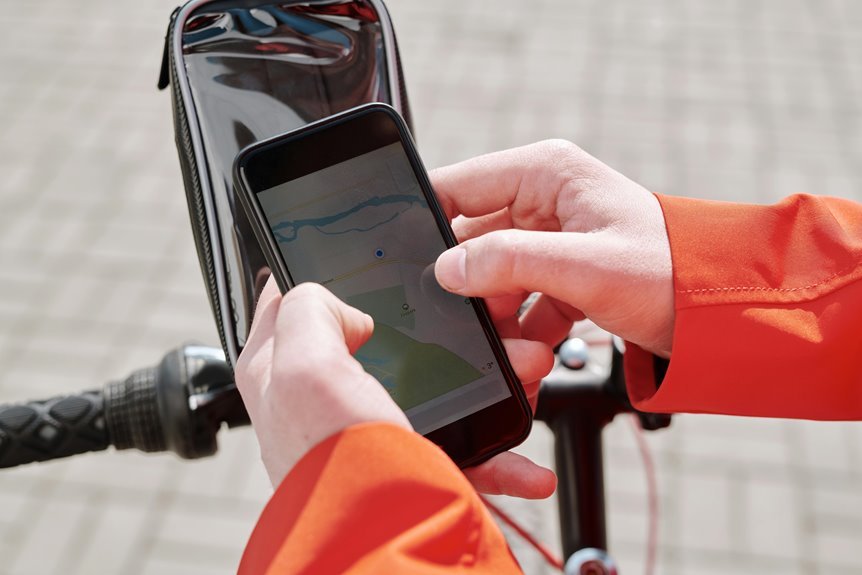

A stable bike phone mount keeps your screen readable and your route easy to follow. The best ones stay put over bumps, turns, and rough pavement without slipping or twisting. That stability comes from strong grip, anti-slip materials, the right fit for your bars and phone, and vibration control. Get those details right, and your ride feels smoother, safer, and far less distracting.
What Makes a Bike Phone Mount Stable?
Whenever you ride over potholes, loose gravel, or sharp turns, a stable bike phone mount depends on one thing initially: a strong hold at every contact point. You want a mount that hugs your phone and your bar without shifting. That shared sense of trust matters when the road gets messy.
Start with firm arms, grippy pads, and adjustable grip tension, because each one cuts slip before it starts. Then look at the clamp. A solid lock, especially an aluminum lever that fits your bar size well, keeps the base from twisting. Anti-slip coating adds friction, while a safety lanyard gives extra peace of mind.
Next, magnetic latch security helps your phone snap in fast and stay put. Put together, these features help you ride feeling connected, calm, and fully supported.
Why Does Mount Stability Matter for Navigation?
Why does mount stability matter so much for wayfinding? As your phone stays steady, you get route clarity and path visibility at a glance. You feel more confident, more connected, and more in sync with every rider who values a smooth, shared journey. A stable screen lets you read turns fast, keep your eyes moving naturally, and trust the map as traffic, wind, or rough pavement demand focus. That means fewer missed cues and less stress.
| Benefit | What you notice |
|---|---|
| Steady screen | Clear directions |
| Better angle | Easier route visibility |
| Secure hold | Fewer mid-ride checks |
| Less bounce | Faster map reading |
| Reliable view | Stronger route clarity |
As the trail or street changes, a stable mount helps you stay calm, follow the route, and ride like you belong there.
What Causes a Bike Phone Mount to Shake?
Your phone mount starts to shake whenever rough road vibrations travel up from the tires and into the bars.
If the clamp isn’t tight enough, those small hits turn into bigger wobbles, especially as you corner hard or roll over potholes.
Then speed and wind buffeting add even more movement, so you need a mount that grips firmly and stays steady whenever the ride gets messy.
Road Surface Vibrations
Although a phone mount might look solid whenever your bike is still, road surface vibrations start the moment your tires roll over rough pavement, cracks, gravel, potholes, and sharp seams in the road.
As you ride, these road vibration sources send fast jolts through your frame and into your bars, where your phone feels every hit. You’re not imagining it. Even small bumps create surface ripple effects that stack up and make route guidance harder to read.
- Rough asphalt adds constant chatter to your ride.
- Loose gravel creates quick, uneven taps under your wheels.
- Potholes and seams deliver sharp impacts all at once.
That’s why your mount can seem calm on smooth streets, then suddenly buzz on broken roads. Whenever you know what your bike is feeling, you ride with more confidence and stay connected.
Mount Clamp Looseness
Road buzz is only part of the problem, because a loose clamp can turn small vibrations into a steady shake at the bars. When your mount doesn’t grip the handlebar evenly, every bump gains leverage. You feel it in your hands, and your phone starts wobbling instead of staying with the ride.
That looseness often builds slowly. Clamp wear can smooth out contact points, especially if you move the mount between bikes or install it over dirt. Lever fatigue matters too. After many open-close cycles, the lever may stop applying full pressure.
If the bar diameter isn’t matched well, the clamp can rock even when it seems tight. That’s why riders in the know check fit, clean the contact area, and retighten before rolling out. A firm clamp helps you ride feeling dialed in, together, and confident.
Speed And Wind Buffeting
As speed climbs, wind starts pushing and pulling on the phone like a small sail, and that force can make even a tight mount tremble. You feel it most on open roads, descents, and passes where gusts hit from the side. That shaking grows whenever your setup catches more wind resistance and aero drag.
- A larger phone or thick case gives wind more surface to grab.
- An out-front position places the phone deeper into fast-moving air.
- Loose angle settings let gusts twist the phone against the mount.
That is why riders in your circle trust compact positioning, firm angle adjustments, and secure locks. A sturdy clamp, anti-slip grip, and low-profile mount help you stay steady, read maps clearly, and feel confident whenever the ride gets fast, blustery, and a little wild out there.
How Do Phone Mount Grip Systems Work?
Whenever you hit a pothole or lean into a sharp turn, a phone mount grip system works using holding your phone from more than one point at once, so it can’t slide, bounce, or twist loose.
That shared hold matters, because you want your setup to feel dependable every ride.
Most mounts pair an adjustable grip mechanism with firm lock engagement. The arms press inward, side grips resist shake, and an anti-slip coating adds friction where your phone touches the mount.
Some designs use a twist-and-lock action, while others use magnetic locks that snap your phone into place fast.
Together, those contact points spread force across the device instead of letting one edge take the hit.
Which Clamp Design Stays Secure Longest?
A strong grip system helps, but the clamp that attaches the mount to your bike often decides how long that stability lasts. Provided that you want lasting security, choose a clamp with a metal body and a precise locking lever. That combo resists flex, holds bar pressure, and improves clamp material longevity on rough rides.
- Billet aluminum clamps stay tight longer because they resist fatigue and vibration.
- Wide-range locking levers fit bars better, so you get less shifting and less locking lever wear over time.
- Semi-permanent clamp styles usually outlast quick straps, especially provided that you ride gravel, trails, or broken pavement.
You want a mount that feels like part of your bike crew, not a shaky add-on. As soon as the clamp fits cleanly and locks firmly, you ride with more trust and less second-guessing.
How Do Anti-Slip Pads Improve Grip?
Anti-slip pads help your phone mount grip better by adding more surface contact and friction where it matters most.
As you ride, they also soften small vibrations, so your phone stays steadier and feels less likely to shift.
Whenever you hit bumps or rough patches, you can trust those pads to help hold your phone firmly in place.
Friction Boosting Surface Contact
Because rough roads can jolt your phone in every direction, anti-slip pads give your mount a major grip improvement by increasing surface contact and adding friction where the phone and clamp meet. That added contact helps your setup feel secure, so you can ride with more confidence and feel part of the prepared rider crowd.
- More contact means your phone sits tighter against the clamp.
- Better surface texture benefits help the pad catch tiny slick spots.
- Friction enhancing grip materials create hold without needing extra force.
As a result, your mount grips more evenly across the phone’s edges and back. That balanced hold reduces small slips during turns, braking, and rough patches. You get a steadier fit, less readjusting, and a setup that feels made for riders like you on every ride.
Vibration Dampening During Rides
That stronger surface contact also helps in a quieter way through reducing the small vibrations that travel from the bike into your phone. When anti-slip pads sit snugly between the mount and your device, you get better shock isolation. That means less buzzing in your hands, less screen shake, and a steadier view you can trust on every shared ride.
| Pad Feature | What You Feel | Stability Benefit |
|---|---|---|
| Soft rubber layer | Less buzzing | shock isolation |
| Textured surface | Firmer contact | Better grip |
| Dense pad shape | Less rattling | resonance control |
| Full-contact fit | Smoother view | Clearer route guidance |
Because the pads absorb tiny movements before they build, your mount feels more settled. You stay connected to the ride, your route stays readable, and your setup feels like part of the team.
Secure Hold On Bumps
When the road turns rough, anti-slip pads help your phone stay planted instead of creeping around inside the mount. They create extra friction, so your device grips the cradle instead of sliding when hits stack up. That matters when you’re riding with your group and want routing you can trust.
- Soft pad surfaces enhance grip without scratching your phone or case.
- Built-in shock absorption helps soften chatter from potholes, gravel, and curb cuts.
- Better bump resistance keeps your screen centered, readable, and ready for the next turn.
Because the pads reduce tiny shifts, the locking arms don’t have to fight every jolt alone.
You get a steadier hold, less rattling, and more confidence on rough streets.
It feels like your mount is working with you, not testing your luck on every bump.
How Do Mount Materials Reduce Vibration?
While rough roads can shake any bike, the right mount material helps absorb that energy before it reaches your phone. Whenever you ride with a well-made mount, you feel more confident because the system works with you, not against you. Strong aluminum adds stiffness, so the mount resists flex and keeps your screen steady over chatter and cracks.
At the same time, smart designs pair that frame strength with material damping and polymer isolation. Soft rubber pads, coated contact points, and flexible inserts soak up high-frequency buzz before it travels into your device. That matters on gravel, city streets, and trail connectors where constant vibration can blur maps and stress phone parts.
Through combining rigid metal with controlled cushioning, your mount gives you a calmer ride and helps your phone stay protected with your crew.
How Does Handlebar Size Affect Fit?
Your handlebar size directly affects whether a phone mount clamps down tight or shifts when the trail gets rough.
You need a mount with the right clamp diameter range, and if the fit isn’t exact, shims and grippy liners help you lock it in without wobble.
That means whenever you match the bar size correctly, you’ll get a steadier view and a lot more confidence on every ride.
Clamp Diameter Compatibility
At the most basic level, clamp diameter decides whether a phone mount grips your bike securely or shifts the first time the trail gets rough. If your handlebar falls outside a mount’s bar diameter limits, even a strong lock can’t do its job well. That’s why clamp size standards matter when you compare mounts for road, gravel, or mountain bikes.
- Measure your handlebar before you shop, so you feel confident choosing the right fit.
- Check the mount’s stated range, because some clamps cover narrow commuter bars while others fit oversized trail setups.
- Match the clamp to your riding style, since rough terrain demands a tighter, more exact hold.
When the diameter lines up, your mount feels like part of your cockpit, and you ride with your group feeling prepared, steady, and fully included.
Shim And Grip Fit
Clamp range gets the mount onto the bar, but shims and grip surfaces make that fit stay tight while the ride gets rough. When your handlebar is smaller than the clamp’s max size, you need the right shim to fill the gap evenly. That’s where shim sizing precision matters. A loose shim lets the mount twist. A thick, uneven shim can create pressure points and reduce holding power.
Grip material works with the shim, not against it. As you ride, grip pad compression helps the mount settle onto the bar without chewing up the finish. Soft pads add friction, while firmer pads resist squirm on potholes and sharp turns. Together, they help you feel confident, included, and ready to ride with your phone steady, visible, and part of your setup.
How Does Mount Position Affect Stability?
Because the mount’s position changes how much your phone shakes, it plays a huge role in stability on smooth roads and rough trails alike. When you choose the right mount height and viewing angle, you feel more connected to your bike and more confident in every turn.
- A lower position near the stem usually cuts vibration because it sits closer to the bike’s center.
- An out-front spot can improve screen visibility, but it might catch more bumps if it sits too far forward.
- A balanced viewing angle helps you glance quickly without twisting your neck or shifting your posture.
That balance matters because comfort supports control. Should your phone sit where your hands, eyes, and bars work together, your whole setup feels like part of your riding group, not a distraction.
Which Bike Phone Mount Is Best for Rough Terrain?
When you ride on gravel, roots, or broken pavement, the best bike phone mount is the one that locks your phone down without shaking loose whenever the trail gets wild. You want a setup that feels like part of your bike team, not a weak link waiting to fail.
For rough rides, billet aluminum models usually lead in mount material comparisons because they stay rigid and absorb less wobble than cheap plastic.
Just as crucial, secure systems with adjustable grips, lock levers, or twist-and-lock designs hold steady through potholes, washboard, and singletrack chatter.
That matters most in terrain specific mount testing, where semi-permanent or over-stem mounts often beat basic handlebar clamps.
Should you ride hard and want confidence with your group, choose proven options like Peak Design, Rokform Pro, Sincetop, or a well-installed Quad Lock.
How Does Weather Affect Mount Performance?
Although a solid bike phone mount can feel rock steady on a dry ride, weather changes how well it grips, locks, and resists vibration once rain, heat, dust, or cold enter the scene. Wet roads can reduce friction on clamps, while heat can soften rubber parts and change tension. In a riding group, you want gear that stays dependable whenever conditions shift fast.
- Rain tests grip and weather seal impact, especially around buttons and charging areas.
- Dust can work into joints, making adjustment points feel gritty and less precise.
- Cold rain performance matters because stiff plastics and numb hands can make locking slower.
That’s why secure locks, anti slip coatings, and durable materials help you feel confident. Whenever your mount stays steady through changing skies, you ride with the same calm trust as everyone else beside you.
What Are Common Bike Phone Mount Design Flaws?
While many bike phone mounts look strong in the package, common design flaws show up fast once you hit rough pavement, sharp turns, or gravel. You notice design weaknesses when clamps flex, locks loosen, or grips lack anti-slip padding. That leaves your phone bouncing once your group ride gets lively.
| Flaw | What you notice | Why it matters |
|---|---|---|
| Weak clamp | Mount shifts | View feels shaky |
| Thin plastic joints | Arms wobble | Breaks sooner |
| Poor lock design | Phone rattles | Security drops |
| Limited fit range | Case slips | Support feels unreliable |
Just as weather can expose weak materials, rough terrain reveals common failure points in mounting systems. You deserve a setup that feels trusted, shared, and ride-ready, not one that makes you babysit your phone instead of enjoying every mile together.
How Can You Test Mount Stability?
A mount can look solid in your hand, but the real test starts after you clamp it to the bike and try to make it move. Start with gentle twists, then stronger pushes, and watch for bar slip, arm flex, or phone shake. Your goal is simple: make sure your setup feels like part of the ride crew, not a weak link.
- Use load testing methods using adding your phone, then pressing down, side to side, and forward to mimic bumps and turns.
- Build a retention trial setup with short curb drops, rough pavement, and quick stops to see whether the lock stays firm.
- Recheck bolts, grips, and angle after each pass. Whether anything shifts, tighten, adjust, and test again until everything feels trusted, stable, and ready for every ride together.
What Should You Look for Before Buying?
Before you buy, check how firmly the mount grips your phone and bars, because a weak hold can fail fast on rough roads.
You should also look for vibration damping that cuts buzz and shock, so your screen stays readable and your camera stays safer.
Just as crucial, make sure the mount fits your phone with or without its case, so you won’t end up with a secure mount that you can’t actually use.
Mount Grip Security
Should you ride on rough roads, grip security should be the initial thing you check, because a weak mount can let your phone shake, slide, or even fly off whenever you hit a pothole or take a sharp turn.
You want a mount that makes you feel ready for every ride, not nervous at every bump.
Look for secure arms, firm locks, and an anti-slip surface. A strong magnetic grip can help, but it should pair with a backup like a safety lanyard.
- Check for adjustable grips that hug your phone tightly, even with a case.
- Choose a locking system that clicks in firmly and stays shut on sharp turns.
- Look for anti-slip coatings and durable materials that hold steady in wet or dusty conditions.
That way, your phone stays part of the ride.
Vibration Damping Design
Even the strongest grip won’t help much when road buzz keeps shaking your phone mile after mile, so vibration damping deserves a close look before you buy. You want a mount that uses shock isolation to soften hits from cracks, gravel, and chatter. That keeps your screen easier to read and helps your camera last longer.
| Feature | Why it matters | What you feel |
|---|---|---|
| Rubber dampers | Absorb sharp vibration | Smoother view |
| Solid base | Limits flex at speed | More confidence |
| Resonance control | Reduces repeated shaking | Less blur |
As you compare mounts, check for flexible contact points, sturdy materials, and tight hardware that won’t loosen. Riders in your circle trust mounts that stay calm on rough roads, because a steady phone helps you feel ready, connected, and in control.
Phone Fit Compatibility
Fit comes prior, because a bike phone mount can feel rock solid and still fail you when it doesn’t match your phone’s size, shape, and case. Before you buy, check measurements closely so your setup feels made for you, not forced. A true universal fit helps your mount stay useful when you upgrade phones, and solid case compatibility matters provided you ride with extra protection every day.
- Measure your phone with the case on, not bare.
- Check grip range, corner clearance, and camera bump space.
- Confirm whether the mount needs a brand-specific case or adapter.
That last point matters more than most riders expect. Some systems welcome almost everyone, while others work best inside one brand’s ecosystem. Upon your phone fits naturally, you ride feeling included, prepared, and confidently part of the group on every route.
Frequently Asked Questions
Can Bike Phone Mounts Interfere With Wireless Charging?
Yes, bike phone mounts can affect wireless charging when metal parts or magnets disrupt proper coil alignment. Choose a mount built to reduce magnetic interference and confirm it works with your specific phone model.
Are Bike Phone Mounts Legal to Use While Riding?
In most places, a bike phone mount is legal if the phone is used for navigation and does not interfere with safe control of the bike. Laws vary by location, so check local cycling and road use rules before riding. Keep your attention on traffic and use the screen only when needed.
How Often Should You Replace a Bike Phone Mount?
Replace your bike phone mount every 1 to 2 years, or sooner if you notice wear. Check the grip, lock, and attachment points after rough rides to keep your phone secure and your setup reliable.
Can a Bike Phone Mount Damage Your Phone Case?
Yes, a bike phone mount can damage your phone case through friction, pressure points, and constant vibration, especially if the fit is too tight or too loose. To reduce wear, choose a mount with padded contact areas, a reliable locking system, and check the fit often so the phone stays secure without being squeezed.
Which Mounts Are Easiest to Transfer Between Multiple Bikes?
Peak Design mounts are the easiest to move between multiple bikes because they attach and remove quickly without tools. Riders who change setups often can switch them in minutes while keeping their phone stable and secure.