
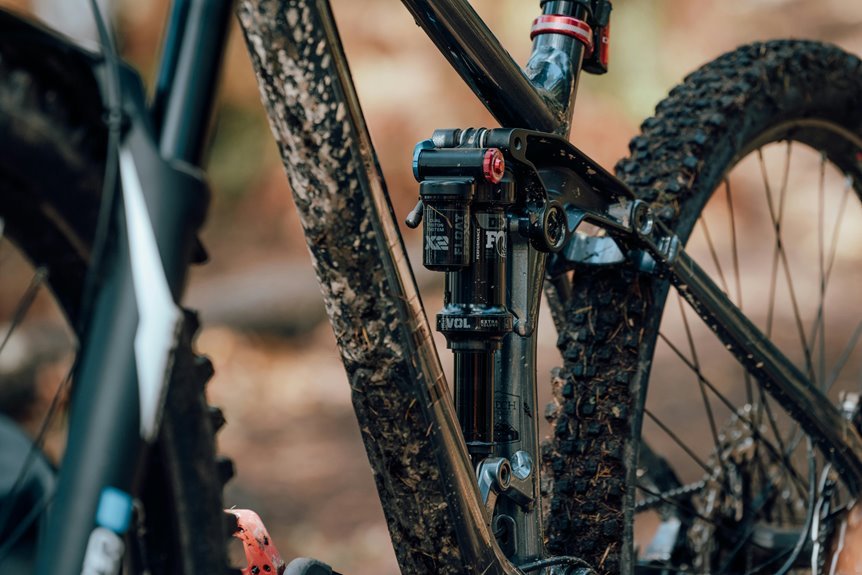

Smart mountain bike suspension reacts to bumps and rough terrain in real time. It adjusts damping as the trail changes under your wheels. That gives you better grip, less chatter, and a smoother ride. It also helps keep control high while saving energy on climbs and descents.
What Is Smart Mountain Bike Suspension?
When you hit the trail, smart mountain bike suspension takes the guesswork out of your ride by adjusting itself in real time.
You get a system overview that feels simple on the outside and clever inside. Its key components usually include sensors, a control unit, and electronic dampers working together to read your movement and react fast. Instead of stopping to flip levers, you stay in the flow with your crew and trust the bike to help match the moment.
This setup can make climbs feel steadier and rough sections feel calmer, so you ride with more confidence. If you want gear that supports you without calling attention to itself, smart suspension fits right in and keeps your focus on the trail ahead.
How Smart Suspension Adapts To Trail Changes
You can feel smart suspension wake up the moment the trail changes, because its sensors keep watching bumps, pitch, and rider input in real time. Then the system adjusts damping almost instantly, so your bike stays calm on climbs and controlled on rough descents. That quick response helps you ride with more confidence, since you don’t have to consider about locking or releasing anything yourself.
Terrain Detection Sensors
Tiny sensors do the heavy lifting in smart mountain bike suspension, and that’s what makes the ride feel almost instinctive.
You’re part of a setup that reads the trail before you can name it. With smart sensor placement on the fork, shock, and crank area, the system tracks bumps, lean, pitch, and pedal force. Then terrain mapping turns those clues into a clear view of what’s ahead. So whenever roots stack up or smooth dirt returns, your bike knows the difference fast. That means you stay with the group, feel less guesswork, and enjoy a calmer ride. It also helps you trust the bike more, because it’s watching the trail with you, not behind you.
Adaptive Damping Response
As the trail changes under your wheels, adaptive damping steps in and keeps the bike calm, quick, and easy to handle. You feel the fork and shock soften for chatter, then firm up as you push hard into a climb.
That shift happens fast, so you stay in rhythm without reaching for a lever. With instant damping modes, your bike reads bumps, pitch, and pedal force, then chooses the support you need.
The wireless control response helps the system react in milliseconds, which means you get smoother traction and less waste on rough ground. Because the setup adjusts on its own, you can ride with more trust, more flow, and more fun, like your bike gets what you want before you even ask.
Why Smart Suspension Improves Control
Whenever a suspension system can reason for itself, it gives you more control without asking for extra work. You stay calm because the bike adjusts before the trail can throw you off.
That quick support enhances cornering stability, so your tires hold better whenever the ground tilts or breaks loose. It also gives you line choice confidence, since you can pick the cleaner route and trust the bike to stay planted.
As the fork and shock work together, you feel less bounce and less chatter. So you steer with more precision, brake with more confidence, and keep your body relaxed.
That matters whenever the trail gets busy, because you’re riding with your crew, not fighting your setup.
What Sensors Power Smart Suspension?
So, what actually lets smart suspension reason fast on the trail? You do. The system listens through tiny sensors that read motion sensing, force detection, and bike angle as you ride. They track fork movement, shock travel, crank input, and pitch, then send that data to a control unit in milliseconds. That means your bike can stay with you, not against you.
- Fork sensors feel bumps before you fully react.
- Shock sensors measure how hard the rear end works.
- Crank sensors read your pedaling rhythm and effort.
- Lean and pitch sensors help the bike tell climbing from rough descent.
Together, these parts help you feel like you’re riding with a smart teammate, not a machine.
Air Vs. Coil For Smart Mountain Bike Suspension
When you choose between air and coil in smart mountain bike suspension, you’re really balancing quick adjustability against a more planted feel.
Air springs usually keep your bike lighter and easier to tune, while coil springs can give you smoother traction and a plush ride on rough trails.
The smart system then helps you get the most from either one by adjusting support as the trail changes.
Air Spring Benefits
An air spring gives smart mountain bike suspension the quick, lively feel it needs to work well with systems like RockShox Flight Attendant and Fox Live Valve. You get easy tuning, so your bike can match your weight and riding style without much fuss. That means you can ride with more confidence and feel part of a setup that listens back.
- It enhances air spring resilience on rough trails.
- It adds pressure chamber support for steady travel.
- It keeps your setup light and easy to adjust.
- It helps smart damping respond fast to trail changes.
Because the spring reacts quickly, your suspension can stay active whenever the trail gets choppy and stay calm whenever you need control. You’ll notice a smoother, more connected ride that feels built for you and your crew.
Coil Spring Tradeoffs
Because smart suspension needs to react fast, the spring choice matters more than you could believe. When you pick a coil, you get a plush feel that stays calm on chatter and roots, so your bike feels glued to the trail with you. That’s why many riders love coil spring sensitivity; it gives tiny bump response and steady grip.
Yet coil weight adds up, and setup changes aren’t as quick as with air. You also give up easy tuning, which can matter whenever your route changes fast. Still, coil spring durability can keep working hard on long, rough days without fading.
If you want comfort, traction, and a ride that feels faithful, coil can fit your crew well, especially whenever you value control over quick tweaks.
Best Trails And Conditions For Smart Suspension
On the right trail, smart suspension can feel like magic, but it really shines most on rides where the terrain keeps changing fast. You’ll notice the biggest payoff on muddy rooty trails, rocky side hits, and broken descents, because the system can react before you brace too hard. On dry flowy singletrack, it still helps, but the gain feels subtler, like a quiet buddy keeping your bike calm.
- Fast switchbacks with surprise bumps reward quick damping changes.
- Loose, wet corners stay steadier when traction keeps shifting.
- Mixed surfaces let the system do the reasoning for you.
- Long local loops feel less tiring when the bike stays composed.
If your group loves rough, playful routes, this tech fits right in and helps everyone ride with more confidence.
How Smart Suspension Helps On Climbs
On steep climbs, smart suspension helps you keep more tire grip, so your rear wheel stays planted instead of slipping on loose ground.
It also firms up just enough to stop wasted energy from your pedal stroke, which helps you climb smoother and faster.
That balance lets you focus on the line ahead while the system quietly does the hard part for you.
Traction On Steep Climbs
Whenever the trail tilts sharply upward, smart suspension can make the climb feel less like a fight and more like a rhythm you can trust. You keep your front wheel planted, and the system helps your bike stay calm over roots, rocks, and loose dirt.
That matters whenever mud traction gets sketchy or whenever steep ledges break your line and test your balance.
- It holds contact better on slick ground.
- It keeps your weight from bouncing off the pedals.
- It helps the rear tire bite whenever the grade spikes.
- It lets you stay steady without panic moves.
Adaptive Damping Efficiency
Smart suspension helps you climb with less waste because it changes damping the moment the trail changes. You stay in the zone, and your legs feel less beaten up on long grinds. With response timing analysis, the system spots your pedal force, bike pitch, and chatter fast, so it firms up whenever you press and relaxes whenever grip needs to stay high. That balance feels like riding with a teammate who always knows the hill.
| Climb cue | What you feel | Result |
|---|---|---|
| Smooth fire road | Less bob | More speed |
| Loose rock | Better bite | Fewer stalls |
| Short punch | Quick support | Easier surges |
Those energy saving modes help you keep rhythm, save strength, and arrive at the top ready for the next line.
How Smart Suspension Smooths Descents
Because the trail can turn rough in a split second, smart suspension smooths descents through reacting before you even have time to brace. You feel the bike stay calm as sensors read bumps, pitch, and your pedal input, then the system firms or opens the fork and shock in milliseconds.
That quick change gives you braking stability on steep chutes and steadier loose terrain control whenever gravel starts sliding under your tires. You don’t need to fight the bike, so you can stay relaxed and ride with the group.
- It softens square-edged hits fast.
- It keeps the front wheel settled.
- It helps the rear wheel track better.
- It reduces panic whenever the trail pitches down.
How To Tune A Smart Mountain Bike Suspension System
Tuning a smart mountain bike suspension system starts with grasping what the bike is trying to do for you, since these systems react fast and work best while they match your trail style.
You should begin with pressure calibration tips, then set sag, rebound, and support from there.
Next, pair the unit with your phone using app pairing basics, so you can save a trail profile that fits your riding group and local terrain.
After that, test one change at a time on a short loop.
Whenever the fork feels harsh, ease the setting a little.
Whenever the bike pitches forward, add more support.
Also, ride the same climb and descent again, because smart suspension learns from steady input and rewards patience.
Keep records, trust your feel, and let the system work with you, not against you.
How Much Power Smart Suspension Uses
A clever mountain bike suspension system usually uses less power than you might think, and that’s good news in case you worry about battery life on long rides. You’ll usually see tiny battery draw patterns because the system wakes only in case sensors spot bumps, pitch, or hard pedaling. That means you can ride with confidence and still keep your crew pace all day.
- Wireless units often sip power in short bursts.
- Hardwired systems still keep use modest.
- Smart modes help protect charging and runtime.
- Efficient sensors let you stay focused on the trail.
Common Smart Suspension Setup Mistakes
When you set up smart suspension the wrong way, it can feel less like a helpful upgrade and more like the bike is guessing in the dark.
You could skip setup calibration, so the system reacts too fast or too slowly for your weight and trail style. You can also ignore sag checks, which throws off sensor readings and makes climbs feel awkward. Another common slip is leaving the battery maintenance until it dies, then asking why the modes stop working mid-ride. Don’t mount the sensors loosely, either, because rough trails can shake them out of sync. Finally, keep your settings simple at the outset. As soon as you change too many things at once, you lose the rhythm that helps you trust the ride and your crew.
How To Choose A Smart Suspension System
Choosing a smart suspension system starts with how you actually ride, because the best setup on paper can still feel wrong on the trail. You want a system that matches your climbs, descents, and usual pace. If you race XC, look at fast-acting options like Flight Attendant. If you ride rougher terrain, Fox Live Valve can suit you well.
- Check budget considerations first so you don’t stretch too far.
- Look for upgrade compatibility with your frame, fork, and shock.
- Compare wireless and wired setups for ease of use.
- Make sure sensor placement and battery life fit your habits.
Then consider about controls, app support, and service access. You deserve gear that feels like part of your crew, not another chore. Whenever the system fits your bike and your style, every ride feels smoother and more confident.
Is Smart Suspension Worth It For Trail Riders?
Yes, smart suspension can be worth it for trail riders, especially whenever your rides mix long climbs, quick turns, and rough descents in the same loop.
You get a bike that feels like it belongs with you, not against you, because it firms up for pedaling and opens fast when rocks appear. That means less fumbling with levers and more time enjoying the line ahead.
Should you care about budget and value, compare the price with how often you ride tough terrain. For some riders, the comfort and control justify it.
Also, consider about maintenance costs, since sensors, batteries, and setup can add a bit of service work.
Still, should you ride often, the smoother feel can make every trail day better.
Frequently Asked Questions
How Do Flight Attendant and Live Valve Differ in Mode Behavior?
Flight Attendant begins in Open mode and cycles through Open, Pedal, and Lock through its mode switching logic every five milliseconds, while Live Valve begins firm and changes only between firm and open, with rapid suspension response timing.
Can Smart Suspension Work Without a Power Meter or App?
Yes, you can ride smart suspension without a power meter or app. It responds in 5 milliseconds, and in most rides you will notice the change. Your manual override keeps control in your hands, with true sensor independence.
Does Smart Suspension Affect Battery Life on Long Rides?
Yes, it can, but you’ll usually still finish long rides fine. Smart systems use some battery power, so range depends on settings, terrain, and how often the features run. The added comfort is helpful, and regular charging keeps you ready.
Is Smart Suspension Compatible With Older Mountain Bike Frames?
Usually, compatibility is limited. Check your frame’s mount points, axle standards, and cable routing before buying anything. If those details line up, a retrofit may work, but many older frames will not support smart suspension without major changes.
Can Smart Suspension Be Serviced Like Traditional Fork and Shock Systems?
Yes, smart suspension can be serviced in a similar way to traditional forks and shocks, but it requires the correct maintenance tools and scheduled service intervals. Because it also includes sensors, batteries, and wiring, some repairs may need dealer support.