
Keeping your bike chain clean is simple, and it helps your ride feel smoother. A clean chain also cuts down on wear and keeps your drivetrain running longer. Dirt, grit, and water can sneak in fast after a wet ride or dusty commute. These nine cleaning steps show you how to keep your chain in great shape with less effort.
How Often Should You Clean Your Bike Chain?
Usually, the right cleaning schedule depends on how and where you ride, but a good rule is to clean your bike chain every few rides or right after a muddy one. That simple chain cleaning frequency helps you keep grime from settling in and makes your bike feel smoother on the road or trail.
When you ride in rain, dust, or wet streets, shorten the gap and check it more often. Your post ride inspection routine can take a minute: look for dark buildup, squeaks, or stiff links. When the chain looks dull or feels noisy, give it attention before the dirt turns stubborn.
Staying on top of it also helps you feel like part of a crew that cares for their bikes and rides with dignity.
Gather Your Bike Chain Cleaning Tools
Before you start, gather the essential cleaning supplies so the job feels simple instead of messy.
You’ll want a chain-safe degreaser, a stiff brush or toothbrush, clean rags, and a dry cloth ready to go.
A few helpful prep tools, like gloves and a bike stand, can also make the whole process smoother and less frustrating.
Essential Cleaning Supplies
A clean chain starts with the right setup, and that makes the whole job feel a lot less messy.
You’ll want chain cleaning supplies that match your routine, so your bike maintenance checklist stays simple and ready. Grab a stiff brush or toothbrush, a clean rag, a small bucket, warm water, and gloves whenever you like extra comfort. Keep paper towels nearby for quick wipe downs, because they save time and keep grime off your hands. A chain scrubber can help whenever you want a deeper clean, and a stand makes the bike easier to handle. Once you gather everything first, you move with less stress and more confidence. That little bit of prep helps you feel like part of a crew that keeps rides smooth and chains happier.
Chain-Safe Degreaser
Now that you’ve got your brush, rag, bucket, and gloves ready, the next tool to look for is a chain-safe degreaser.
You want one that lifts grime without hurting your bike’s finish or your own routine. Check the label for material compatibility, so it plays well with metal, paint, and nearby parts.
Should your bike has rubber seals, choose a formula with rubber seal protection, because harsh cleaners can dry them out fast.
Spray or pour it only where you need it, then let it work for a minute. That small pause helps the dirt loosen, so you can wipe and scrub with less effort.
Once you pick the right degreaser, you protect your chain and make the whole clean feel easier, calmer, and more like your ride deserves.
Helpful Prep Tools
Five simple tools can turn bike chain cleaning from a messy chore into a smooth routine. You’ll want a chain brush, a firm toothbrush, a degreaser, clean rags, and a small bucket. Add gloves whenever you want cleaner hands, and keep a lubricant nearby for later.
Build a prep checklist before you start so you don’t scramble mid-task. Then set up your workspace setup in a bright spot with good airflow and a catch tray or old towel under the bike. That small step helps you feel calm and in control. Keep everything within reach, because smooth cleaning starts with easy access.
Once your tools are ready, you can focus on the chain instead of hunting for supplies.
Remove Loose Dirt From the Chain
Before you scrub deep into the chain, start with knocking off the loose dirt, because that small step makes the whole job easier and less messy. You belong in the group of riders who keep things smooth, and loose dirt removal helps you get there. Hold a dry rag or soft brush against the links and move the pedal slowly. Keep your pressure light so grit falls away instead of getting pushed deeper.
- Check each side for caked mud.
- Brush from top to bottom.
- Watch for stubborn spots near rollers.
- Do a quick surface grime check after wiping.
This initial pass saves time and protects the metal. Whenever the chain still looks dusty, repeat the wipe once more before moving on.
Use a Bike Chain Cleaner or Degreaser
You need a degreaser that matches your chain and won’t harm the metal or nearby parts. Then you can spray or apply it evenly so it loosens grime without wasting product or making a mess.
After that, a good cleaner does the hard part for you, so your chain feels smooth again with less scrubbing.
Choosing The Right Degreaser
A good degreaser can make chain cleaning feel a lot less messy and a lot more doable. You want one that matches your chain and your riding style, so you don’t strip away protection you still need.
Check the degreaser ingredients and read the label like you’d read a trail sign. Strong solvent strength works fast, but a milder mix can be kinder to newer chains and your hands.
- Choose a bike chain cleaner or degreaser made for drivetrains.
- Pick a formula that cuts oil without leaving heavy residue.
- Avoid harsh cleaners on waxed or freshly lubed chains.
- Keep it easy to rinse so grime doesn’t stick around.
When you match the product to your chain, you fit right in with riders who care for their gear.
Applying Cleaner Effectively
Once you’ve picked a bike chain cleaner or degreaser, the real payoff comes from applying it the right way so it can lift grime instead of just moving it around. You should work one section at a time, then let the cleaner sit long enough for cleaner dwell time to do its job. Use a spray coverage technique that reaches each link, roller, and side plate without flooding the whole bike. | Step | What you do | Why it helps |
| — | — | — |
|---|---|---|
| 1 | Aim close to the chain | Keeps cleaner on target |
| 2 | Rotate pedals backward | Pulls cleaner through links |
| 3 | Wait briefly | Enhances grime release |
| 4 | Wipe after | Stops dirt from sticking again |
If you stay steady, you’ll feel like part of a crew that keeps bikes running smooth.
Scrub the Chain and Cassette Teeth
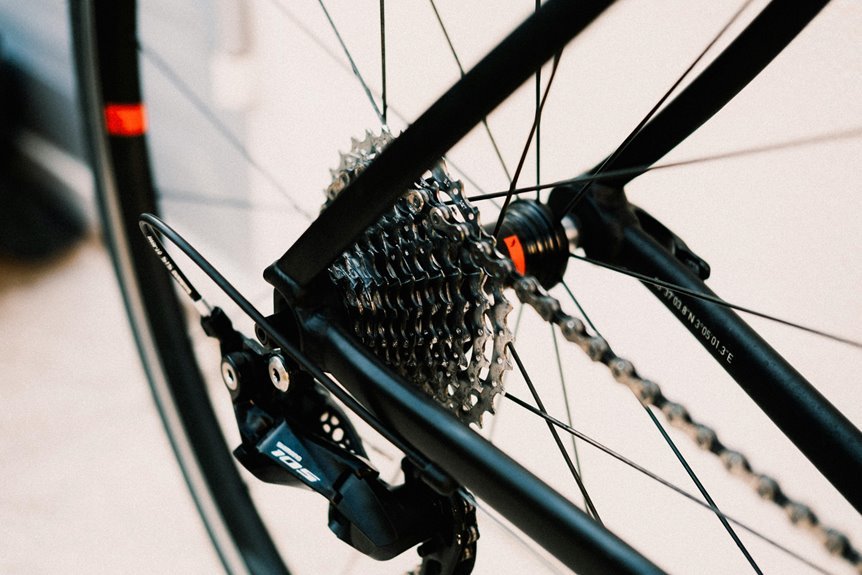
Start with scrubbing the chain and cassette teeth together, because grime loves to hide where the chain meets those cogs. You’ll feel less alone in the job once you treat the drivetrain as one team. Use a stiff brush and move link through link, then sweep between the cassette teeth with steady pressure. That simple rhythm helps cut cassette tooth wear and keeps shifting smoother.
- Work from the top run to the bottom run.
- Use short strokes around each tooth.
- Turn the pedals backward as you brush.
- Check chainring cleaning tips and copy that same careful touch.
If muck stays tucked in, go again instead of forcing it. You’re not battling the bike; you’re teaching it to run clean. Keep your pace calm, and the parts will thank you with quieter rides.
Rinse and Dry the Chain Completely
Once you’ve just finished scrubbing, rinsing the chain right away helps stop cleaner, grit, and loosened grime from hanging around and drying back on the metal. Use a gentle stream and work from one end to the other, turning the pedals so every link gets washed clean. For better final rinse techniques, keep rinsing until the water runs clear and no foamy film stays behind.
Then shake off extra water and wipe the chain with a clean rag. After that, use complete drying methods like a dry cloth, a few slow pedal turns, and a short wait in open air. You want each roller and plate dry, because trapped moisture can make rust feel right at home. While the chain feels cool and clean, you’re set for the next step.
Apply Bike Chain Lubricant Correctly
With the chain fully clean and dry, you can apply lubricant in a way that actually helps instead of making a sticky mess. You’re not just caring for metal; you’re keeping your ride smooth and your crew proud of a quiet drivetrain.
Pick the right formula initially, because lube type selection should match the weather and your routes. Then follow smart lubricant application timing, so the oil settles after the bike is dry.
- Backpedal slowly and place one drop on each roller.
- Let the chain move so lube reaches the inner parts.
- Use light, even coverage instead of flooding links.
- Save wet lube for rain and dry lube for dusty roads.
When you coat each link with care, you build confidence every time you pedal.
Wipe Off Extra Lube to Prevent Grime
Once you have applied lube to the chain, you need to wipe off the extra so it doesn’t turn into a grime magnet.
Use a clean rag and hold it around the chain while you backpedal. This simple excess lube cleanup keeps sticky film off the outside plates and helps your drivetrain stay smooth.
You’re not trying to strip the chain bare. You just want lubricant residue control that leaves oil inside the links, where it belongs.
If the chain looks shiny and wet, keep wiping until it feels lightly coated, not soggy. That small step helps you ride with a cleaner chain and fewer black marks on your hands. It also makes you feel like you’re taking care of your bike, not letting grit win.
Build a Simple Bike Chain Cleaning Routine
A simple bike chain cleaning routine can save you a lot of hassle later, and it doesn’t have to take over your whole day.
You’ll feel more confident whenever you treat it like a small weekly team effort. Start with quick inspection habits after rides, then clean sooner provided you spot grit or squeaks. Use weather based maintenance timing so wet rides get extra attention.
- Wipe the chain after muddy rides.
- Check for stiff links while pedaling.
- Clean and relube every few rides.
- Add a deeper clean each month.
Whenever you keep this rhythm, you protect the chain, cassette, and your own ride time. It’s a simple routine, but it keeps your bike ready for the next spin with less stress and more smooth miles.
Frequently Asked Questions
Should I Remove Factory Grease Before First Use?
Yes, you should remove it before first use if you want the best start. Factory grease helps during shipping, but cleaning and fresh lube give you a smoother, quieter, and cleaner chain.
How Do I Measure Chain Wear Accurately?
Use a chain wear gauge for the fastest check, or a caliper for exact measurement. Measure the chain under tension, then compare the reading with the wear limit in your manual. If the chain has elongated past the limit, replace it soon.
When Should I Replace a Worn Chain?
Replace your chain when wear reaches 0.5% on 11 or 12 speed drivetrains or 0.75% on 8, 9, or 10 speed drivetrains. Replace it sooner if you notice chain noise, poor shifting, tight links, or grime returning soon after cleaning.
Can I Clean My Chain With an Ultrasonic Cleaner?
Yes, ultrasonic cleaning can degrease a chain effectively, and you will get the best results if you dry it completely and apply fresh lubricant afterward.
How Do Waxed Chains Change Maintenance Intervals?
Waxed chains extend service intervals significantly. Expect roughly 500 km before a drip wax top up, another around 750 km, and a full rewax near 1000 km. The chain stays cleaner for longer, with durable wax performance.