

You want seat storage that stays put, keeps tools organized, and doesn’t turn into a swinging distraction on rough paths. That matters on daily commutes, weekend trail loops, and long road miles where small gear can rattle loose fast. The six picks below cover compact wedge packs, larger under-seat options, and one repair-focused setup for riders who like everything in one place.
Quick Look At Our Top Picks

PDEEY Bike Saddle Bag Wedge Pack

Topeak Aero Wedge Pack with Fixer F25 Small

Rhinowalk Waterproof Bike Saddle Bag 13L

LoneRobe Bike Saddle Bag with Repair Tool Kits

Tongha Large Capacity Bike Under Seat Wedge Bag
More Details On Our Top Picks
The PDEEY bag leans into durability first, with 900D Oxford fabric, a wax-coated water-resistant layer, EVA edge protection, and a treated zipper. That combination suits muddy trail days or damp commutes, because the shape holds up better than a soft pouch that quickly sags.
It’s not the lightest-feeling choice in the group, and the tougher shell can feel a bit more structured than ultralight packs like the ROCKBROS small bag. Still, that firmer build usually helps the bag keep its form under a saddle, which makes it easier to stash tubes, a mini tool, or snacks without the pack collapsing on itself.
What We Like
- 900D Oxford fabric gives it a tougher feel for regular use.
- Water-resistant coating and sealed zipper help with wet-weather carry.
- EVA edging adds shape and helps the pouch resist scuffs.
- Stable under-seat fit works well for mixed-surface rides.
Points To Note
- The firmer shell may feel less flexible in very tight spaces.
- No internal layout details are listed, so small items may need a pouch.
- Wipe-down care is the sensible routine after dusty rides.
Feature Snapshot
Who It Suits Best
You’ll get the most from this bag on daily rides, gravel links, or beach-path loops where you want a sturdier seat pouch without jumping to a giant pack.
A Better Fit Elsewhere
Rhinowalk’s 13L bag makes more sense for riders carrying layers and lunch, while the PDEEY bag stays closer to the compact end of the scale.
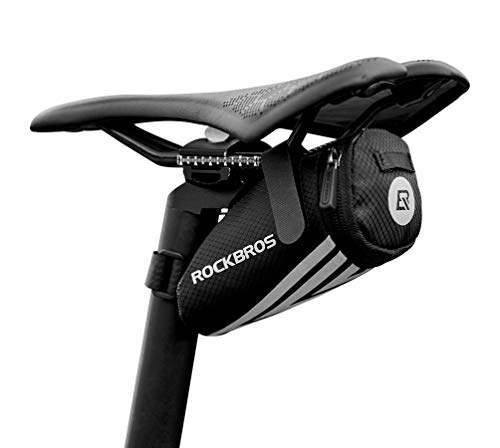
The ROCKBROS small bag keeps its profile tight, and that’s the whole point. Its two-strap mount and non-slip rubber base are aimed at riders who want a pouch that stays tucked in rather than hanging low on the bike.
Compared with the PDEEY bag, this one feels more focused on a clean, understated carry than on weather armor. That makes it a smart match for road bikes, folding bikes, or city rides where you just need tools, a tube, and a little extra room without bulk.
Bright Spots
- Two-strap attachment helps it sit securely under the saddle.
- Low-profile shape keeps the bag from jutting out much.
- Nylon build is made for repeated everyday use.
- Rubber base helps reduce sliding on rough pavement.
Small Caveats
- The slim format leaves less room for bulkier gear.
- Riders who carry extra layers may outgrow it quickly.
- Straps need the usual occasional check, especially after bumpy rides.
Core Details
Made For
Minimalist cyclists and commuters who want a small, tidy bag for repair essentials will get the most out of this one.
Where A Sibling Pick Shines
Topeak’s Aero Wedge Pack with Fixer F25 suits you better when quick removal matters, especially for riders who mount and unmount gear often.
Topeak’s small Aero Wedge is the tidy, route-friendly choice in this group. The QuickClick mount matters because it lets you remove the bag without fuss, which is handy for riders who park outside cafes or swap accessories between bikes.
Its 1000D nylon build, meaning a heavy-duty woven nylon fabric with a dense thread count, gives it a more road-ready feel than softer ultralight pouches. The honest trade-off is capacity, since the small size is better for essentials than for bulkier repair loads, but that’s exactly why many riders like it.
Upsides
- QuickClick mounting speeds up attachment and removal.
- 1000D nylon brings a durable, everyday-ready feel.
- Reflective strip adds a useful visibility touch.
- Safety light clip gives you a place for a rear light.
- Compact shape works well on clean, clipped-in bike setups.
Honest Caveats
- Small size keeps the carry limit modest.
- Riders hauling more tools may need a larger pack.
- Quick release hardware rewards careful setup on first install.
At A Glance
Built With In Mind
You’ll appreciate this one most on road rides, fitness loops, or weekend training spins where you want a small bag that disappears into the bike’s shape.
Skip It When
LoneRobe’s saddle bag with repair tools makes more sense for riders who want an all-in-one roadside kit instead of a slim carry pouch.
The Rhinowalk 13L bag is the roomy outlier here, and the volume changes the whole conversation. A 13-liter pack can handle layers, lunch, repair gear, and a few extras, which makes it fit long commutes or all-day rides better than the smaller pouches.
That extra room does come with a size trade-off, so you’ll want to think about clearance under your saddle and how much bulk your bike can comfortably carry. For riders who pack like they’re heading out for a full day, this is the most practical shape in the group.
Reasons To Buy
- 13L capacity gives you serious room for ride-day cargo.
- Works well for commuting trips and longer outings.
- Waterproof design is suited to unpredictable weather.
- Useful when you want one bag instead of a backpack.
Areas To Watch
- The larger size may feel bulky on smaller frames.
- Seat clearance matters more here than on compact packs.
- More interior space can make organization a little less tidy.
Feature Rundown
Whose Shelf It Belongs On
Commuters and long-ride riders who need a lot of under-seat storage will feel at home with this one.
Look Elsewhere When
PDEEY’s wedge pack is the better fit for smaller frames and simpler carry needs.
LoneRobe takes a different route from the other picks because the bag ships with a 16-in-1 repair tool set, patches, tire levers, and a metal rasp. That makes it feel less like simple storage and more like a roadside kit that lives under your saddle.
The alloy-steel tool parts and compact format suit riders who want one place for common fixes, especially on solo rides or remote loops. The trade-off is obvious: you’re carrying a repair bundle, so this is more specialized than the plain pouches from ROCKBROS or Topeak.
Standout Traits
- Includes a 16-in-1 tool set for common roadside fixes.
- Patches, tire levers, and rasp keep the kit self-contained.
- Alloy-steel tool parts add a more substantial feel.
- Good match for riders who like one compact repair bundle.
Worth Noting
- Tool-focused layout leaves less room for extra cargo.
- More parts means a little more upkeep and organization.
- The kit makes the most sense for repair-minded riders.
Details At A Glance
Right Fit For
Riders who travel alone, carry basic repair skills, or want a compact kit for trail-side fixes will get the most value here.
Another Choice May Suit
ROCKBROS’s small saddle bag works better for riders who only want a light pouch and already carry tools elsewhere.
The Tongha bag sits between the tiny pouches and the oversized 13L option, which makes it a sensible middle ground. Its large-capacity wedge shape gives you room for ride essentials without jumping all the way to the bulk of the Rhinowalk pack.
That balance is useful for riders who commute with a tube, pump, snacks, and a few small extras, yet still want the bag tucked neatly under the saddle. The main trade-off is predictability, because without more build details listed, you’re choosing it more for size and layout than for premium hardware.
Best Bits
- Large-capacity layout handles everyday ride essentials with room to spare.
- More compact than the 13L option while still carrying plenty.
- Works for MTB and road use, which broadens the fit.
- Helpful middle-ground choice for mixed ride styles.
Softer Spots
- Fewer construction details are listed, so finish feels harder to judge.
- You may want to use small pouches inside for tidy packing.
- Capacity is generous, but not as expansive as Rhinowalk’s 13L bag.
Core Details
The Right Fit
Commuters and trail riders who want a roomy under-seat pack without the bulk of a true travel-sized bag should feel comfortable here.
Where A Sibling Pick Shines
Topeak’s Aero Wedge Pack with Fixer F25 is the better fit for riders who care more about quick removal and a tighter road-bike profile.
How To Choose The Right Mountain Bike Seat Bags
Size, Shape, And Bike Clearance
Seat bags live in a narrow space, so shape matters as much as capacity. A compact wedge pack suits tight frames and technical riding, while a larger under-seat bag needs enough clearance to avoid rubbing your tire or thighs.
Volume should match the gear you actually carry. A small pouch handles a tube, multitool, and CO2 cartridge well, while a bigger bag makes more sense for commuters who also pack a layer, snacks, or spare gloves.
Mounting Style And Ride Stability
Strap-based mounts are common because they’re simple and flexible, but they need snug setup to stay quiet on rough ground. Quick-release systems add convenience, especially for riders who remove accessories often or shift the bag between bikes.
Look closely at how the bag sits against the saddle rails and seatpost. A low-profile mount helps on trails where movement and bounce turn into a nuisance fast.
Materials, Weather Protection, And Wear
Fabric choice tells you a lot about everyday durability. Dense nylon and Oxford fabric usually hold shape better, while water-resistant coatings, sealed zippers, and reinforced edges add protection against spray and light rain.
The trade-off is simple: tougher materials can weigh a little more and feel less flexible, but they usually age better with regular use. Riders in wet climates or on dusty paths tend to notice that difference sooner than casual weekend riders.
Match The Bag To Your Carry Style
Think about what belongs in the bag and what doesn’t. Tool-focused packs work well for repair kits, while larger pouches suit commuters who want to leave the backpack at home.
The right choice usually feels invisible once installed, because it fits the way you ride instead of asking you to reorganize everything around it. That’s the sweet spot for a good seat bag, and it’s worth paying attention to.
What To Weigh Before You Choose
Mistakes Worth Dodging
Many riders go too small, then end up stuffing a bag so tightly that zippers strain and items are hard to reach. Others grab a large pack for a short ride, which can leave extra bulk hanging where it doesn’t need to be.
Another common slip is ignoring mounting style. A bag can look fine on paper yet sit awkwardly on a frame with limited saddle clearance or unusual rail spacing.
The Upgrade Payoff
Higher-tier bags usually cost more because of better fabric, cleaner hardware, and mounting systems that feel more secure on rough roads. You also tend to get details such as reflective accents, stronger zippers, or reinforced bases that hold up better over time.
That upgrade makes the most sense for riders who log frequent miles, carry gear every day, or want a bag that stays put in messy conditions. For lighter use, a simpler pouch can be enough, and that’s perfectly sensible too.
