

Flat tires and low shock pressure tend to show up at the worst times, especially on trail days that already run long. The right pump keeps your bike usable without turning a quick tune-up into a roadside headache. Here you’ll find compact hand pumps, mini electric inflators, and true shock pumps, so you can match the tool to your ride, your storage space, and how much precision you want.
Some of these choices suit a jersey pocket, while others belong in the garage or on a frame. The point is simple, pick the pump that fits your bike setup and your routine, not just the one with the biggest headline number.
Quick Look At The Shortlist

Optio Cycle Shock Pump with Gauge

dwndpump Mini Bike Tire Pump
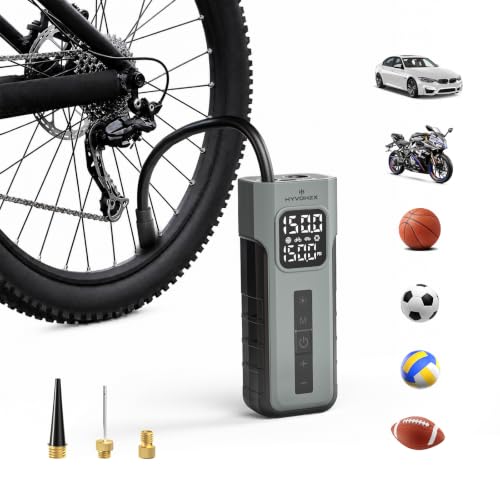
HYVOHEX 150 PS Portable Bike Pump

Schwinn Air Sport Mini Bike Pump

TOPUMP TB2PRO Mini Electric Bike Pump

JACO ShockPro MTB Shock Pump
More Details On Our Top Picks
Suspension work asks for more precision than a regular tire pump, and this manual Optio Cycle model is built around that job. The built-in gauge helps you dial in fork or rear-shock pressure without guessing, while the compact frame-mounted format keeps it easier to stash than a bulky floor pump.
That trade-off is obvious, though, because a high-pressure manual pump takes more effort than an electric inflator. For riders with full-suspension MTBs who care about fine adjustments before a trail day, that control matters more than speed.
Strong Points
- Gauge support helps you set pressure more deliberately.
- Compact size makes it easier to carry on the bike.
- Suited to forks, rear air shocks, and Schrader valve tires.
- Manual operation gives you a very direct feel for pressure changes.
Minor Gripes
- Pumping to high pressure takes more effort than a powered unit.
- Best suited to suspension work, not everyday quick tire fills.
- Frame-mounted storage is convenient, yet it still adds one more item to keep secured.
Feature Snapshot
Who It Suits Best
Trail riders with full-suspension bikes who want a compact shock pump for setup work will get the most from it.
Where A Sibling Pick Shines
JACO ShockPro MTB Shock Pump suits riders who want a tougher high-pressure tool for more frequent suspension tuning.
Small enough to disappear into a pocket or saddlebag, this dwndpump model leans hard into portability. The 0.21-pound weight and Presta plus Schrader compatibility make it easy to carry on road rides, though the product notes also say it is aimed at road bikes rather than mountain bikes.
That matters for mountain bike use, because the trade-off is convenience over broad trail-side versatility. You may find it handy as a tiny backup, but it makes more sense for riders who want the lightest possible emergency inflator and understand its road-bike emphasis.
Upsides
- Very light, so it barely changes what you carry.
- Fits a pocket, backpack, or saddlebag with little fuss.
- Supports both Presta and Schrader valves.
- Fast top-ups suit short roadside stops.
Things To Consider
- No pressure gauge, so you rely on feel or a separate gauge.
- The product notes point it toward road bikes, not mountain bikes.
- Electric hardware can run warm during use, so storage right after inflation deserves a little care.
Core Details
Right Fit For
Road cyclists who want a tiny electric pump for compact emergency carry will get the most from it.
Look Elsewhere When
Optio Cycle Shock Pump with Gauge makes more sense for mountain bikers who need suspension-specific pressure control.
Some households want one inflator that handles bike maintenance and a few other chores, and this HYVOHEX model clearly aims at that broader role. The digital gauge, LED light, and support for car, motorcycle, bicycle, and sports ball use make it a flexible garage companion rather than a pure trail tool.
Compared with the tiny dwndpump, this one gives you more utility but gives up some pocket-size convenience. For weekend riders who also keep other gear inflated, that mix is hard to ignore, even though a dedicated mountain bike setup may still prefer a more specialized pump.
Highlights
- Digital gauge gives you a clear pressure readout.
- LED light helps in dim garages or roadside stops.
- Works with several tire and inflating use cases.
- Fast inflation suits quick maintenance sessions.
Areas To Watch
- Broad compatibility can matter more than mountain-bike specialization.
- Electric inflators usually need charging management, so keeping the battery ready becomes part of ownership.
- Best viewed as a utility tool, not a compact ride-along pick.
Quick Facts
Whose Shelf It Belongs On
Home mechanics who want one portable inflator for bikes, cars, and odd jobs will get the most value from it.
A Better Fit Elsewhere
Schwinn Air Sport Mini Bike Pump suits riders who want a simpler manual backup with less charging to think about.
Manual pumps still earn their place because they do not need charging, and this Schwinn option keeps the setup very straightforward. You get a foot-to-floor or hand-pump format, plus support for both Schrader and Presta valve types, which makes it feel friendly for casual maintenance days.
The honest read is that it sits more in the general roadside-fix lane than the precision-suspension lane. Compared with the Optio Cycle shock pump, it is the simpler tool, which is exactly why plenty of riders will prefer it for ordinary tire top-ups.
Positives
- Foot or hand use gives you two ways to pump.
- Supports both major valve types for broader bike compatibility.
- Portable shape makes it easier to keep with ride gear.
- Low-maintenance manual design avoids charging routines.
Small Caveats
- Not as specialized for suspension tuning as a shock pump.
- Manual inflation takes more effort than electric options.
- Its mini format is handy, but longer pumping sessions can feel a bit more physical.
Details At A Glance
The Right Fit
Commuters and casual trail riders who want a no-charge manual backup will be comfortable with this one.
Swap It Out When
TOPUMP TB2PRO Mini Electric Bike Pump is the better fit for riders who want automatic inflation control and a built-in gauge.
For riders tired of hand-pumping at the roadside, this TOPUMP model makes a strong case for spending a little more. The pressure gauge, auto-stop function, Type-C rechargeability, and support for Presta plus Schrader valves point to a pump that wants to do the thinking for you.
That convenience comes with the usual electric trade-off, since you still need to keep it charged and stored with a little care. Compared with the Schwinn manual pump, it saves effort; compared with the HYVOHEX, it feels more bike-focused and less like a multi-use garage inflator.
Reasons To Buy
- Auto-stop helps avoid overinflating by hand guesswork.
- Built-in gauge keeps pressure checks straightforward.
- Type-C charging is easier to live with for regular use.
- Compact electric design suits bikes and e-bikes.
Points To Note
- Battery-based tools need routine charging, so they reward a bit of planning.
- Electric convenience usually adds size and complexity versus a manual pump.
- The pump is compact, yet still less pocket-friendly than the smallest manual options.
At A Glance
Best Suited To
Frequent riders who want a compact electric pump with auto-stop and clear pressure feedback will get the most from it.
Reach For A Different Pick
Schwinn Air Sport Mini Bike Pump is the simpler choice for riders who want to skip battery care altogether.
This JACO pump speaks directly to riders who care about suspension setup, not just tire pressure. The aircraft-grade aluminum and ABS build gives it a sturdier feel on paper, and the 300 PSI gauge is aimed at the fine adjustments rear shocks, air forks, and dropper seat posts often need.
Compared with the Optio Cycle shock pump, this one leans harder into durability and high-pressure headroom. That said, it is still a specialist tool, so trail riders who only need occasional tire inflation will probably find it more pump than they need.
Best Bits
- 300 PSI gauge gives plenty of headroom for suspension tuning.
- Aircraft-grade aluminum and ABS help the build feel sturdy.
- Useful for rear shocks, air forks, and dropper seat posts.
- Designed with mountain bike suspension work in mind.
Worth Noting
- Specialized design makes it less useful as an all-purpose tire pump.
- High-pressure setup work still takes a steady hand and patience.
- More focused than the lighter manual options, so it suits a narrower use case.
Technical Sheet
Who Should Grab It
Riders who tune rear shocks or air forks regularly will appreciate this pump most.
Where A Sibling Pick Shines
Optio Cycle Shock Pump with Gauge is a better match for riders who want a simpler compact shock pump with frame-mounted carry.
How To Choose The Right Mountain Bike Pumps
Match The Pump To The Job
Mountain bike pumps are not all aimed at the same task. A shock pump, like the Optio Cycle and JACO picks, is built for high-pressure suspension parts, while a mini tire pump is there for ordinary inflation after a slow leak or a full-flat repair.
That difference matters because suspension parts need small, controlled pressure changes, while tires need faster volume movement. Choosing the wrong style usually leads to frustration, not savings.
Look At Portability In Real Life
Carry weight changes how often you’ll actually bring the pump. The dwndpump is tiny enough for pocket carry, the Schwinn feels like a simple backup, and the HYVOHEX or TOPUMP electric units make more sense in a pack or garage.
Riders who commute, race, or spend long days on mixed terrain usually value a compact backup more than a large tool. A pump that lives at home can be larger and more capable, which is why shock-focused models often feel less travel-friendly.
Decide How Much Precision You Want
A built-in gauge matters more than many shoppers expect. For suspension tuning, the gauge on the Optio Cycle and the 300 PSI readout on the JACO help you make small pressure changes with more confidence, while the dwndpump skips a gauge altogether to stay tiny.
That trade-off is straightforward, manual simplicity versus pressure visibility. Riders who care about setup and repeatable pressure settings should lean toward a gauge, especially on full-suspension bikes.
Think About Power, Charging, and Maintenance
Electric pumps bring convenience, but they also add charging routines. The TOPUMP uses Type-C, the HYVOHEX includes a digital display and LED light, and the dwndpump deliberately leaves out a pressure screen to keep the unit small.
Manual pumps avoid battery management, and that can be a real plus for riders who want something always ready. For long-term ownership, fewer electronics usually means fewer things to keep track of, even though you give up some convenience.
Things Worth Knowing Before You Choose
Hidden Buying Traps
The biggest mistake is mixing up tire pumps and shock pumps. A compact inflator may look versatile, yet suspension work asks for different pressure control than a standard tire top-up.
Another common slip-up is ignoring valve compatibility. Presta and Schrader support matters because the wrong fit turns a simple fill into a hassle.
What The Higher Tier Buys
Higher-tier pumps usually spend the extra money on gauge quality, auto-stop features, stronger materials, or more accurate pressure control. That shows up in tools like the JACO, which uses aircraft-grade aluminum and ABS, and the TOPUMP, which adds auto-stop and a built-in gauge.
For riders who adjust pressure often, those touches save time and reduce guesswork. Occasional riders can often stay with a simpler manual option and still cover the basics without paying for features they will barely use.
