
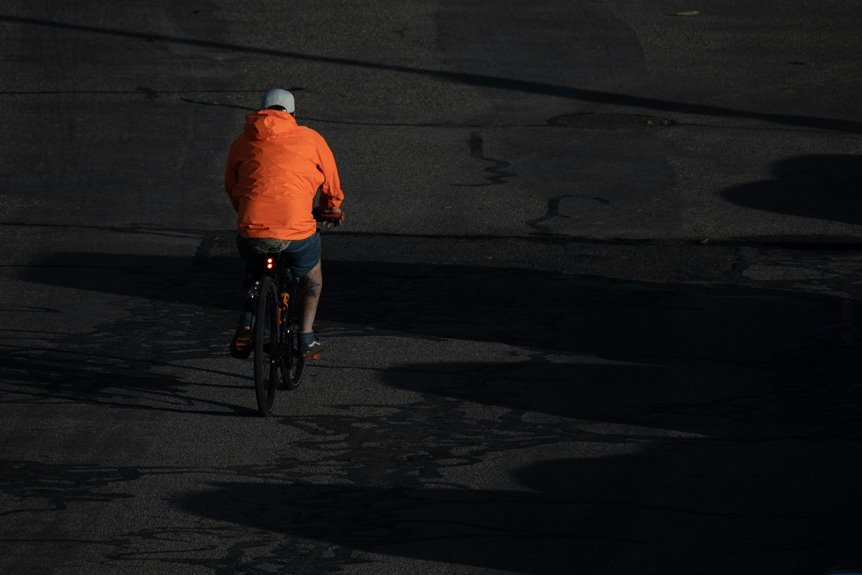

Smart bike lights make night riding safer by helping people see you sooner and understand what you’re doing. They use features like brake alerts, turn signals, and adaptive brightness to make your bike stand out in traffic. That clearer visibility can give drivers more time to react on busy streets. The best results come from picking useful features and placing your lights in the right spots.
Why Smart Bike Lights Improve Visibility
Because drivers notice movement and bright signals faster than they notice a dark bike shape, smart bike lights make you easier to see from much farther away. That matters because you want every ride to feel safe, seen, and part of the flow around you. Smart lights use flashing patterns, brake alerts, and side signals to catch attention fast, even in busy daylight. Those daytime visibility benefits are crucial since many bike crashes happen before sunset.
Just as crucial, smart lights can highlight your motion. Lights on pedals and other moving parts support bio motion recognition, so drivers recognize you as a cyclist sooner, not just a small light in traffic. Whenever people understand what you’re and where you’re going, they slow down, give more space, and help you ride with more confidence and calm.
Smart vs Standard Bike Lights
That added visibility sets up a fair comparison between smart bike lights and standard ones. If you ride with friends or commute home late, you want gear that helps drivers notice you sooner and treat you like you belong on the road. Standard lights help, but smart lights often create stronger reactions from drivers.
That difference shows up in real safety results. Research on permanent running lights found a 19% lower injury crash rate, which highlights the daylight visibility impact, too, since many bike crashes happen before dark.
Smart lighting can also influence driver behavior, with tests showing slower passing speeds and more stopping distance. In police safety comparisons, better visibility matters because officers often judge risk by how early a rider can be seen, recognized, and given space in traffic.
Which Smart Bike Light Features Matter Most?
When you choose a smart bike light, brightness and beam patterns matter because they help drivers see you sooner and judge your position more clearly.
You also need battery life alerts, since a light that dies mid-ride can’t protect you as visibility drops.
As you compare features, you’ll want to look at how well your light shines, how smartly it spreads that light, and how clearly it warns you before power runs low.
Brightness And Beam Patterns
Two lighting choices matter most right away: how bright your bike light is and how its beam spreads across the road. You want enough light intensity to spot potholes, glass, and curbs early, but not so much glare that you blind people heading your way. A balanced setup helps you ride with confidence and keeps everyone around you comfortable too.
That’s where beam spread matters. A wide beam lets you see more of the lane, shoulders, and corners, so you feel more connected to the road and to the group riding beside you. A focused center beam reaches farther ahead for faster sections. Together, wide coverage and steady brightness create a safer, more welcoming ride. You stay visible, read the road better, and avoid that awkward moment whenever your light acts like a spotlight at a campfire.
Battery Life Alerts
Good light output helps you see the road, but battery life alerts help you trust that visibility will still be there miles later. As soon as you ride with a group or head home solo, that confidence matters. Smart lights with battery alerts keep you in the loop before darkness catches you off guard.
- You get clear low power warnings before your light fades.
- You can switch modes promptly and save charge for busy roads.
- You avoid that shared panic as a ride runs longer than planned.
- You stay part of the pack, not the rider asking to borrow lights.
That matters because visibility works only as your light stays on. Reliable alerts help you plan stops, charge sooner, and ride with the calm feeling that you’ve got this tonight, together, safely.
How Automatic Brightness Helps at Night
Because night roads can change from bright to dark in seconds, automatic brightness helps your bike light stay clear without forcing you to consider it. You stay focused on the road, your pace, and the riders around you instead of reaching for buttons when conditions shift.
With ambient light sensing, your light reads the street around you and responds fast. In brighter areas, it tones down to save power and reduce glare.
Whenever you roll into dim streets, parks, or shaded paths, adaptive brightness modes raise output so drivers can spot you sooner. That steady adjustment helps you feel more confident and more connected to the group, especially on shared night rides. It also keeps your beam useful, so you can see road edges, debris, and rough pavement without blasting everyone else’s eyes.
How Brake Sensing and Turn Signals Help
When you slow down, brake sensing can flash a bright red light, so drivers notice your change in speed faster.
Turn signals make your next move clear, which helps cars give you more space and react sooner.
Together, these features help you communicate your intent with less guesswork and more confidence.
Brake Sensing Benefits
Although a bright front and rear light helps drivers see you, brake sensing and turn signals help them grasp what you’re about to do next. That matters as traffic feels close and fast. As your rear light brightens as you slow, people behind you get a clear warning, not a guess. You feel more seen, and that shared comprehension builds trust on the road.
- Brake sensing shows your speed change right away.
- Drivers react sooner, often giving you more stopping space.
- impact detection can log hard hits and sudden stops.
- collision feedback can support safer habits after close calls.
Because these signals match your movement, your ride feels more natural and connected. You’re not just visible. You’re readable. And as drivers can read you better, everyone around you becomes part of a safer riding community together.
Turn Signal Visibility
Even with strong front and rear lights, drivers still need help reading your next move, and that’s where turn signals make a real difference. Whenever you ride with smart signals, you give people around you clearer timing, better signal coordination, and less guesswork in busy traffic. That shared comprehension helps you feel seen, not singled out.
Paired with brake sensing, turn signals create stronger intersection communication. Your rear light brightens as you slow, then your signal shows where you’re heading next. Drivers can react sooner, give you more room, and pass with less stress. That matters most at crossings, merge points, and dark neighborhood corners.
You stay part of the flow instead of fighting it. In a group ride or solo commute, these cues help everyone around you move with more confidence and care each night.
Clear Rider Intent
How do drivers know what you’re about to do if your bike stays silent? Smart lights speak for you, so your next move feels clear to everyone sharing the road. That clarity builds rider confidence and helps you feel like you belong in traffic, not stuck guessing.
- Brake sensing flashes a bright red light when you slow down, so drivers react sooner.
- Turn signals show your direction sooner, which cuts confusion at intersections and lane changes.
- Running lights keep you visible all ride long, and studies found a 19% lower injury crash rate.
- Clear signals create smoother interactions with cars, which enhances commute motivation on dark rides.
Whenever your bike communicates well, drivers pass with more care and space. You ride with less stress, more trust, and a stronger sense of connection.
How App Controls Improve Bike Lights
Because riding conditions can change in seconds, app controls make smart bike lights far more useful via letting you adjust brightness, flash patterns, turn signals, and brake-light settings right from your phone. That means you stay ready whenever traffic thickens, rain starts, or a dark stretch appears ahead.
With app customization, you shape the light to fit your ride and your group. You can save modes for city streets, greenways, or wet commutes, then switch fast without stopping.
Remote lighting control also helps whenever your light sits under a seat bag or on a rear rack. Instead of fumbling at a stoplight, you tap your screen and keep moving with confidence.
That easy control helps you feel prepared, visible, and connected to riders who care about safety just like you do every day.
How to Choose the Right Smart Bike Light
Once you can control your lights with an app, the next step is choosing a smart bike light that truly fits your ride. You want a setup that helps you feel confident, seen, and part of a safety-minded riding community.
- Start with a compatibility check, so your light works smoothly with your phone, bike computer, or watch.
- Match features to your habits. Brake alerts, flashing modes, and adaptive brightness help drivers notice you sooner.
- Consider battery life and weather protection. You need a light that keeps up on wet commutes and long group rides.
- Use budget planning to balance price and value. Paying a bit more for reliable visibility can mean safer miles.
As you compare options, choose the one that supports your routine and helps you ride with confidence every time.
Where to Mount Smart Bike Lights
Where you mount your smart bike lights matters just as much as the light itself, since the right position helps drivers spot you sooner and understand your movement more clearly. For your front light, handlebar mounting gives you a clear beam at driver eye level without blocking your path. It also keeps controls close, so you feel confident and connected with the flow around you.
For the rear, seatpost placement usually works best because it stays centered and easy to notice from behind. Provided that you carry a bag or wear a long jacket, check that nothing hides the light.
Next, angle both lights straight ahead and behind, not toward the sky or ground. Whenever your lights sit at the right height and angle, you ride like part of a safe, seen, respected cycling community every night.
Common Smart Bike Light Mistakes
Even the best smart bike light can’t protect you in case you make a few common setup mistakes, and that truth can feel frustrating anytime you’re trying to ride safely. Still, you aren’t by yourself, and small fixes help you ride with more confidence and feel part of a safety-minded cycling community.
- You aim the beam too high or too low, so drivers miss you and you miss hazards.
- You make installation mistakes, like loose mounts or blocked sensors, which weaken smart features.
- You ignore charging, lens cleaning, and firmware checks. Those maintenance oversights quietly reduce brightness and response.
- You use the wrong mode for traffic, weather, or daylight, even though flashing and adaptive settings improve detection.
At the point you avoid these habits, your light works with you, not against you, on every ride out.
Frequently Asked Questions
How Long Do Smart Bike Light Batteries Typically Last?
Most smart bike lights run for 4 to 12 hours on a full charge. Battery life changes based on brightness level, sensor use, and whether the light is steady or flashing. Lower brightness settings usually help each charge last longer, so you can head out with a better sense of readiness.
Are Smart Bike Lights Legal in All States or Countries?
No. Smart bike lights are not legal in every state or country. Laws can limit color, flashing settings, brightness, mounting position, and turn signal features, so review the rules for your location before using them.
Can Smart Bike Lights Work in Heavy Rain or Snow?
Yes, smart bike lights can work in heavy rain or snow if they have strong weather protection. For winter riding, choose models with sealed housings, secure mounts, and batteries designed for cold conditions so they stay reliable on the road.
Do Smart Bike Lights Require Internet or Cellular Connection?
No, internet or cellular service is usually not required. Most smart bike lights pair directly with your phone and sync through the app locally, so core features continue to work during your ride without a network connection.
How Much Do Smart Bike Lights Usually Cost?
Smart bike lights typically cost between $20 and $150, with entry level models starting around $20. Features like turn signals, brake alerts, and motion sensors raise the price, but they add clear visibility and useful safety benefits in traffic.