

Garage floor space disappears fast once bikes, helmets, and tools start competing for the same corner. Vertical storage solves that problem by moving the frame upright, freeing room for cars, bins, and daily foot traffic. The nine picks below cover wall-mounted, swivel, and freestanding setups, so apartment dwellers, family garages, and storage-heavy homes can match the rack to the space instead of forcing the space to fit the rack.
Quick Look At Our Top Vertical Bike Storages
TORACK Bike Storage Rack 6 Bike Wall Mount

Vertical Bike Parking Stand Adjustable Height

Steadyrack Swivel Bike Wall Mount

monTEK No-Lift Swivel Bike Wall Mount

TORACK Bike Storage Rack 6 Bike Racks 5 Hooks

TORACK BIKEPAL Wall Mounted Swivel Bike Racks
StoreYourBoard Freestanding Bike Rack

CXWXC 2-/4-Bike Storage Rack with Basket

CXWXC 2-/4-Bike Storage Rack with Basket
More Details On Our Top Picks
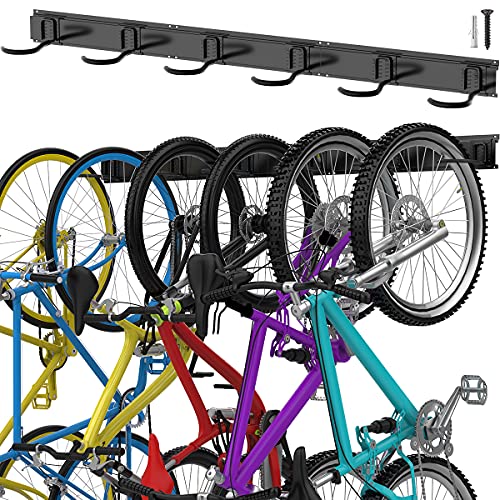
Wall-mounted storage like this suits garages where the floor needs to stay clear for cars, bins, or a workbench. The six-bike layout gives larger households a cleaner way to line up bikes without leaning frames against drywall. The trade-off is familiar, wall mounts ask for sensible placement and a bit of planning before the first hook goes up.
Compared with the swivel picks later in this list, this TORACK setup is more about fixed order than easy pivoting. That can be a good thing for a busy family garage, because once the spacing is settled, the bikes stay out of the way and easy to scan at a glance.
What We Like
- Wall mounting keeps the floor open for storage and parking.
- Six-bike capacity suits households with a full lineup.
- Hooks create a tidy visual row, which helps in shared garages.
- The simple format usually makes everyday organization feel less chaotic.
Things To Consider
- Wall placement matters, so the layout takes some advance measuring.
- Homes with shifting bike counts may outgrow a fixed rack pattern.
- Hook style can leave little margin for awkward handlebar spacing.
Feature Snapshot
Who It Suits Best
Households with several bikes and a dedicated garage wall will get the most from this layout.
Where A Sibling Pick Shines
StoreYourBoard Freestanding Bike Rack fits better for apartment garages or spaces where drilling into walls is off the table.
Freestanding storage changes the experience completely, because no wall drilling is required. The adjustable height and 29-inch wheel fit give this stand broad compatibility for road and mountain bikes, while the four locking casters make it easier to shift the rack around a garage or apartment layout. The honest trade-off is that freestanding gear needs a little more floor room than a wall system.
Compared with TORACK’s fixed wall rows, this Sttoraboks stand feels more flexible in a rented place or a changing shared space. The coated hooks and 55-pound bike limit help frame the use case clearly, though bikes with wide tires still deserve a close look against the stated 4-inch tire support.
Highlights
- No-drill setup makes it friendlier for rentals and temporary rooms.
- Locking casters help with repositioning during cleaning or layout changes.
- Adjustable height broadens fit across different bike sizes.
- Freestanding format avoids putting holes in the wall.
Areas To Watch
- Floor space is still part of the equation, so it suits open corners better than tight nooks.
- The stated tire width cap may rule out some larger setups.
- Moving parts and wheels can collect dust, so occasional cleaning makes sense.
Core Details
Right Fit For
Apartment residents and renters who want a movable rack without wall installation get the clearest benefit here.
Another Choice May Suit
Steadyrack Swivel Bike Wall Mount works better for garages that can spare wall space and want a more fixed roll-in feel.
For riders who dislike wrestling a bike overhead, the roll-in format changes the rhythm of storage. The stand is designed for road and gravel bikes up to 77 pounds, and the steel build gives it a sturdier feel on paper than the lighter, more flexible freestanding racks in this roundup. That said, it’s still a wall system, so layout and mounting space matter.
The swivel action gives it an edge in narrow garages or sheds where a straight-out rack would feel awkward. In most homes, that pivoting movement is the detail that turns bike storage from a chore into a clean side motion, especially for people who use the bike daily.
Best Bits
- Roll-in loading avoids heavy lifting at shoulder height.
- Swivel movement helps bikes tuck closer to a wall.
- Steel construction suits a more substantial, fixed installation.
- Works well in sheds, garages, and compact apartment storage areas.
Softer Spots
- Wall mounting still asks for careful placement and secure hardware.
- The road-and-gravel focus makes it a tighter fit for some other bike styles.
- Wall use usually means less flexibility than a movable floor stand.
Technical Sheet
Built With In Mind
Road and gravel riders who want a wall mount with easier loading will get the clearest fit here.
Swap It Out When
Sttoraboks Vertical Bike Parking Stand suits renters or temporary spaces better because it avoids wall drilling entirely.
The pivoting format here gives monTEK a more flexible feel than a fixed hook rack, especially in garages where handlebars and pedals always seem to find each other. Four fit settings cover 16-inch through 29-inch wheels, and the stated tire width support reaches 3.54 inches. That makes it a handy match for mixed bike households, though fendered bikes are excluded by the listing.
That 120-degree swivel range matters most in tight spaces, because it lets the bike sit closer to the wall and open up the walkway. For people juggling road, MTB, hybrid, or city bikes, the layout is simple enough to use every day without a lot of fuss.
Upsides
- 120-degree pivoting helps bikes fit into narrow walls and corners.
- Four settings widen the fit range across wheel sizes.
- The stated 77-pound support gives it room for heavier bikes.
- Wall-mounted storage keeps the garage floor open.
Minor Gripes
- The no-fender note is important for commuter bikes with full coverage.
- Wall mounting still requires planning around stud placement.
- Moving parts can benefit from occasional dusting in garage use.
At A Glance
Whose Shelf It Belongs On
Home garages with mixed bike types and limited wall depth are the clearest match for this mount.
Look Elsewhere When
StoreYourBoard Freestanding Bike Rack fits better for people who want a floor stand without drilling into the wall.
This TORACK rack leans into volume, plain and simple. The 64-inch length and stated 600-pound capacity make it a strong candidate for garages that need to swallow several bikes plus a handful of hooks for helmets or accessories. The trade-off is that big capacity usually asks for a longer clear wall, so cramped spaces may feel crowded fast.
Compared with the six-bike wall mount earlier in the list, this version feels more like a full storage rail than a compact organizer. That extra room can be helpful in a household with multiple adult bikes, kid bikes, and accessories all piling up in the same corner.
Strong Points
- High stated capacity suits bigger households and gear-heavy garages.
- Six rack positions plus five hooks add useful extra storage.
- Wall mounting keeps the floor open beneath the lineup.
- The 64-inch format creates a long, organized storage run.
- Useful for people who want bikes and accessories in one place.
Points To Note
- The longer footprint needs more uninterrupted wall space.
- Heavy-capacity racks tend to make mounting layout more important.
- Cleaning around a longer wall system takes a little more effort.
Feature Rundown
The Right Fit
Larger garages and multi-bike households get the most value from this long wall rail.
Reach For A Different Pick When
monTEK No-Lift Swivel Bike Wall Mount makes more sense for tighter walls where pivoting clearance matters more than sheer capacity.
Two-pack wall storage suits garages that need a pair of matching spots without overcommitting to a larger rail. The swivel design gives the bikes a bit more room to swing into position, which helps in narrow rows or shared spaces. One practical note, the real value here depends on whether a pair of wall positions is enough for the household’s current lineup.
Compared with the single monTEK mount, this TORACK BIKEPAL pair makes more sense for households that want symmetry or twin parking spots. It sits in a useful middle ground between a full rail like TORACK’s 6-bike setup and a single swivel hanger.
Bright Spots
- Two mounts help create a matched storage layout.
- Swivel movement supports tighter garage arrangements.
- Wall mounting keeps the floor usable for other gear.
- Good fit for paired bikes in shared households.
Worth Noting
- Two mounts are useful, but they still need planned wall placement.
- Smaller households may not need a pair of racks.
- Swivel hardware is easier to keep tidy with occasional dusting.
Details At A Glance
Made For
Households that need two clean wall positions for daily bike parking will find the format straightforward.
Another Choice May Suit
CXWXC 2-/4-Bike Storage Rack with Basket fits better for entry areas that also need a basket for small gear.
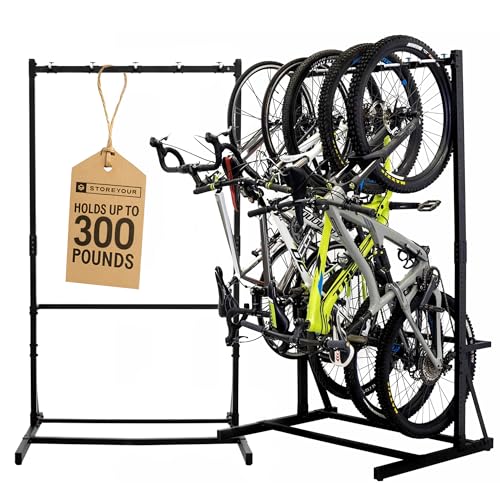
Some homes need storage that moves with the layout instead of locking it to a wall. This freestanding rack holds five bikes and uses rubber-coated hooks, which helps reduce metal-on-metal contact in everyday parking. The main trade-off is plain enough, the footprint sits on the floor, so it asks for a bit more room than a wall-mounted rail.
Against the wall-only racks above, StoreYourBoard is the easier fit for basements, rental spaces, or garages where drilling isn’t worth the hassle. For multi-bike storage that still feels orderly, the five-bike format hits a sensible middle ground.
Positives
- Freestanding design avoids wall mounting.
- Five-bike capacity works well for mixed household storage.
- Rubber-coated hooks are gentler on contact points.
- Useful in garages, basements, or rental spaces.
Room For Improvement
- The floor footprint is larger than a wall rack’s.
- Open-frame storage may need periodic tidying around the base.
- Households with more than five bikes may outgrow it quickly.
Core Details
Perfect Match For
Renters and garage organizers who want a stable floor stand without wall drilling are the clearest fit here.
Where A Sibling Pick Shines
TORACK Bike Storage Rack 6 Bike Wall Mount suits households that prefer a wall rail and want to keep the floor completely open.
The basket changes the whole setup, because this rack does more than just hold bikes. Road, mountain, and hybrid bikes can share the same storage zone with small items gathered above or beside them, which is handy in entryways and apartment garages. The trade-off is that any combo rack asks for a little more attention to layout, since extra functions can make the footprint feel busier.
Compared with the simpler bike-only stands, CXWXC suits homes where gloves, locks, or other grab-and-go pieces need a home nearby. That makes it feel more complete for a shared space, even though compact rooms still need careful measuring.
Reasons To Buy
- Basket storage adds a useful spot for small gear.
- Works with road, mountain, and hybrid bikes.
- Useful for apartment entries and garage corners.
- Combines vertical bike parking with accessory storage.
Small Caveats
- The added basket makes the setup feel larger than a plain stand.
- Shared storage zones can need a little organization over time.
- Tighter rooms may need more careful measuring before placement.
Feature Card
Who Should Grab It
Entryways and garage corners that need both bike parking and a small catchall area are the strongest match.
Skip It When
StoreYourBoard Freestanding Bike Rack fits better for a simpler five-bike setup without the extra basket element.
This CXWXC version keeps the same bike-and-basket idea, but it belongs in the roundup as the more compact interpretation of the concept. It suits smaller indoor areas where the goal is to store bikes neatly without turning the whole room into a storage bay. The subtle trade-off is that compactness only works well when the owner stays disciplined about what lives in the basket.
Compared with the other CXWXC entry, this pick makes sense for rooms where a lighter visual footprint matters more than extra gear spread. For apartments and narrow home corners, that cleaner shape can be the difference between useful storage and clutter.
Best Bits
- Compact shape fits smaller indoor zones.
- Basket adds a home for small essentials.
- Works for road, mountain, and hybrid bikes.
- Good for apartment corners and tighter garage walls.
Hidden Buying Traps
- The basket is helpful, but it can fill up fast in busy homes.
- Smaller spaces still need careful placement to avoid crowding.
- Shared storage can look tidier only with regular sorting.
Core Details
Who Will Love This
Small apartments and compact garage corners benefit most from this tidier, space-aware layout.
A Better Fit Elsewhere
CXWXC 2-/4-Bike Storage Rack with Basket in the earlier entry suits homes that want the same idea but with a broader accessory-storage focus.
How To Choose The Right Vertical Bike Storages
Measure Space Before Choosing Hardware
Wall-mounted racks save the most floor space, but they ask for clear wall width, ceiling clearance, and a sensible plan for handlebars and pedals. Freestanding stands are easier to place, though they take up more room on the floor and can feel crowded in a narrow garage.
Rack length matters just as much as bike count. A 64-inch rail looks modest on paper, yet in a one-car garage it can shape the whole layout around a single wall.
Match The Rack To The Bike Mix
Wheel size, tire width, and frame weight separate a smooth fit from a frustrating one. Road bikes, gravel bikes, mountain bikes, and e-bikes do not all settle into the same hanger the same way, so the stated compatibility range deserves close attention.
Swivel mounts help in tight spaces, while roll-in designs reduce lifting strain. Those details matter most for daily riders, because the storage routine needs to stay easy enough to repeat every day.
Think About Installation And Maintenance
Drill-free stands suit rentals and temporary rooms, while wall systems usually reward a more permanent setup. That difference also changes upkeep, since wall rails tend to stay out of the way, but floor stands often need a bit more cleaning around the base.
Maintenance is mostly practical: check that mounting points stay secure, keep moving parts free of dust, and leave enough room for the bike to enter and leave the rack cleanly. A tidy setup tends to last longer in day-to-day use because it gets used more willingly.
Choose Storage By Household Need
Multi-bike homes benefit from high-capacity rails, while solo riders often get more value from a single swivel or freestanding stand. Add-ons like hooks or baskets help in shared spaces where helmets, locks, and gloves need a nearby home.
The clearest choice usually comes from the room itself. A system that fits the space comfortably will feel better than a larger rack that dominates the garage.
What To Weigh Before You Choose
Common Shopping Slip Ups
Many people focus only on bike count and forget wall width, wheel diameter, or tire thickness. That usually leads to a rack that looks right on paper but feels cramped once handlebars and pedals enter the picture.
Another common miss is skipping the installation plan. Wall hardware needs the right surface and enough open space, while freestanding racks need a floor area that stays clear day after day.
What The Higher Tier Buys
Higher-priced racks usually bring sturdier construction, swivel motion, larger capacity, or extra storage pieces like hooks and baskets. Those features cost more because they add material, moving parts, and more precise fitting.
The upgrade makes sense for heavy daily use, mixed bike households, or garages that need a cleaner layout with less friction. A simple rack can still do the job, but a more engineered one tends to feel easier to live with.
Closing Thoughts
Vertical Bike Storages work best when the rack matches the room, the bikes, and the amount of daily handling involved. A wall rail suits a busy garage, a swivel mount helps in tight corners, and a freestanding stand keeps renters out of the drill-and-patch cycle. The right choice often comes down to one plain question, how much space can stay devoted to the bikes without making the rest of the room harder to use.
