

Indoor riding solves a simple problem, training time doesn’t always line up with weather, daylight, or traffic. The right trainer keeps a road bike, mountain bike, or indoor setup usable in a spare room, garage, or apartment without turning every session into a noisy chore. Some picks lean toward basic resistance and easy storage, while others focus on smart features, realism, or a more planted ride feel. The list below keeps those differences clear so the best match is easier to spot.
Quick Look At Our Top Trainers

Alpcour Fluid Bike Trainer Stand
Fitvids Bike Trainer Stand Steel Bicycle Exercise Fluid Magnetic Stand

ThinkRider X2Max Smart Bike Trainer
Bike Trainer Stand for Indoor Riding
Elite Roller Trainer Cubo Power Fluid

Wahoo Fitness KICKR Bike PRO Indoor Trainer

Saris Fluid2 Indoor Bike Trainer

ROCKBROS Bike Rollers Adjustable Bike Trainer Stand

Garmin Tacx Neo 2T Smart Trainer
Alpcour’s foldable stainless steel frame speaks to apartment riders and garage setups that need to disappear after the session ends. Progressive resistance gives the ride a more natural ramp-up than a fixed-load unit, and the dual-lock layout should help the bike feel steadier during harder intervals.
The trade-off is simple, this style still leaves cadence and noise tied to the bike’s tire and setup. It suits road and mountain bikes that need a portable trainer with a straightforward footprint, and the honest read is that it fits everyday indoor miles better than highly technical training plans.
What We Like
- Foldable build makes storage easier in tight spaces.
- Stainless steel construction should handle regular moving around well.
- Progressive resistance feels more natural than a flat, static load.
- Dual-lock design adds a steadier feel during standing efforts.
Things To Consider
- Wheel-on trainers usually need careful tire setup to stay quieter.
- Portable construction can feel less planted than a full smart bike.
- Regular cleaning around the roller area helps avoid grime build-up.
Feature Snapshot
Who It Suits Best
Commuters, apartment riders, and road cyclists who want a foldable wheel-on trainer with a stable feel fit this model well.
A Better Fit Elsewhere
Saris Fluid2 Indoor Bike Trainer suits riders who want a similar fluid setup with app-friendly potential and wider bike compatibility.
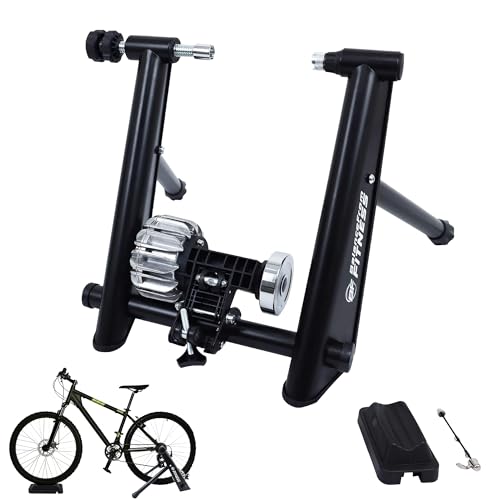
Fitvids leans into the practical side of indoor riding, with a steel frame and a fluid magnetic setup that aims for quieter spinning. The included front wheel riser block matters more than it sounds, because it helps level the front end and makes the riding position feel less awkward in a living room or spare bedroom.
Compared with the Alpcour stand, this one reads as a straightforward, no-frills path for riders who want resistance and a cleaner setup without chasing smart features. There’s a small hitch, the listing details are thin, so the value comes from the core hardware rather than extra refinements.
Highlights
- Steel frame gives the stand a familiar, durable feel.
- Fluid magnetic resistance is aimed at smoother pedaling.
- Front wheel riser block helps level the bike indoors.
- Simple setup works well for casual winter training routines.
Areas To Watch
- Limited source details leave less clarity on setup features.
- Wheel-on trainers may need occasional cleanup around the tire contact point.
- Riders seeking app-driven workouts will likely want a smarter unit.
Core Details
Who Will Love This
Budget-minded cyclists who want a basic indoor trainer with a front riser block fit this model well.
Another Choice May Suit
ThinkRider X2Max Smart Bike Trainer makes more sense for cyclists who want connected training and slope simulation.
ThinkRider’s pitch is about control and connectivity, and that starts with smart resistance plus ANT+ and BLE support. ANT+ is a low-energy wireless standard used by many cycling devices, while BLE means Bluetooth Low Energy, a common way to link trainers to phones and head units without draining batteries quickly.
The 18% slope simulation is the part that stands out most, since it gives indoor climbs a more demanding feel than a basic wheel-on trainer like the Fitvids stand. For riders building structured workouts around apps, this is a serious option, though the smart feature set also means a longer learning curve than simpler trainers.
Best Bits
- Smart resistance works well for app-based workout plans.
- ANT+ and BLE support broaden device compatibility.
- 18% slope simulation adds a stronger climbing feel.
- Quiet portable design suits shared spaces and evening sessions.
- Less dependent on guesswork than a basic resistance trainer.
Small Caveats
- Smart features can take more setup time than simpler trainers.
- Connected training usually makes cable and device management more involved.
- App pairing habits vary, so results depend on the rest of the setup.
Details At A Glance
Built With In Mind
Connected cyclists who train with structured apps and want a more immersive climb simulation suit this model well.
Where A Sibling Pick Shines
Saris Fluid2 Indoor Bike Trainer fits riders who want a simpler fluid trainer with a familiar road-and-mountain-bike focus.
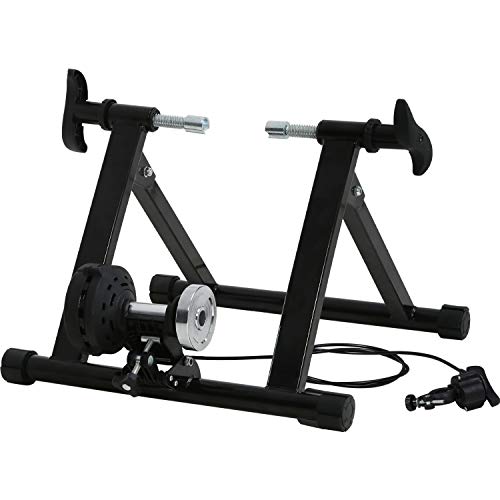
FDW keeps things familiar: magnetic flywheel, five resistance settings, and a noise-reduction focus that suits after-work indoor sessions. The flywheel is the rotating wheel that helps create a smoother pedaling feel, and that matters because a little momentum can make steady workouts feel less choppy.
Compared with the ThinkRider smart trainer, this one is built for riders who want manual resistance control instead of app-driven detail. It makes sense for road cyclists and casual home setups, though the basic feature set means it trades sophistication for simplicity.
Strong Points
- Five resistance settings give a simple range for training intensity.
- Magnetic flywheel helps the pedal stroke feel smoother.
- Noise-reduction design suits bedrooms and apartment spaces.
- Straightforward controls make it easier for new indoor riders.
Room For Improvement
- Manual resistance feels less precise than smart control.
- Wheel-on contact still means tire care matters over time.
- The simpler setup may leave performance cyclists wanting more data.
Feature Card
Who Should Grab It
Home riders who want a basic, quiet-ish trainer with simple resistance control fit this model well.
Swap It Out When
Garmin Tacx Neo 2T Smart Trainer suits cyclists who want a more advanced smart setup and a premium training feel.
Elite’s roller trainer takes a different path from the fixed-frame stands above, because rollers demand a more engaged ride and usually reward smoother handling. That makes it appealing to cyclists who like a less static feel in a home training space, especially for technique work or easy spinning between tougher workouts.
The catch is obvious, rollers ask for more balance and attention than a clamped trainer like the Alpcour or FDW stand. For experienced cyclists, that extra involvement can be exactly the point, but newer indoor riders may prefer something that feels more planted under the bike.
Positives
- Roller format encourages smoother bike handling.
- Fluid resistance helps the ride feel less abrupt.
- Compact style suits training spaces with limited floor area.
- Good fit for cadence work and steady spinning.
Softer Spots
- Rollers require more balance than clamped trainers.
- Setup comfort depends heavily on rider confidence.
- Storage is easier than bulky systems, but practice still matters.
Technical Sheet
Whose Shelf It Belongs On
Experienced cyclists who want balance work and a compact roller setup fit this trainer well.
Look Elsewhere When
ROCKBROS Bike Rollers Adjustable Bike Trainer Stand is easier to consider for riders who want a foldable roller option with resistance.
This is the closest thing in the group to a dedicated indoor cycling station, so it naturally speaks to riders who want more than a wheel-on trainer. The payoff is a more complete training setup, but the trade-off is space, setup commitment, and a profile that suits a fixed indoor corner better than a weekend pop-up routine.
Compared with the Saris Fluid2 or the Alpcour stand, the Wahoo model sits in a much more specialized lane. It suits serious training spaces, especially where a rider wants the feel of a purpose-built indoor bike instead of adapting an outdoor frame every time.
Upsides
- Dedicated indoor-bike format reduces setup friction during repeated sessions.
- More immersive than a wheel-on trainer for regular training blocks.
- Better suited to a permanent home training corner.
- Appeals to cyclists who prefer a fixed fit and routine.
Areas To Watch
- Requires more space than compact wheel-on options.
- Not as convenient for quick storage after a ride.
- Best value shows up in long-term use, not casual sessions.
Core Details
Made For
Committed indoor cyclists who want a permanent training station and a more complete ride experience suit this model well.
Where Another Pick Suits Better
Garmin Tacx Neo 2T Smart Trainer makes more sense for riders who want premium smart-trainer features without moving to a full indoor bike.
Saris keeps the formula familiar, but the smart-equipped option adds an appealing bridge between simple fluid resistance and connected training. That matters for riders using Zwift, since the trainer’s app compatibility can make structured workouts feel less like guesswork and more like a plan.
Road and mountain bike compatibility widens the appeal, which puts it in a more flexible lane than the Wahoo indoor bike or the more basic FDW stand. The honest read is that it fits a lot of home setups without feeling flashy, and that’s often exactly what many riders need.
Reasons To Buy
- Fluid resistance gives the ride a familiar outdoor-style feel.
- Smart-equipped support adds room for connected workouts.
- Compatible with road and mountain bikes for wider use.
- Zwift app support suits structured indoor training plans.
Worth Noting
- App features help most when the rest of the setup is ready.
- Wheel-on trainers still benefit from careful tire upkeep.
- Smart compatibility may matter less for purely casual riders.
Feature Rundown
Right Fit For
Riders who want a familiar fluid trainer with app support and broad bike compatibility fit this model well.
Reach For A Different Pick When
ThinkRider X2Max Smart Bike Trainer is the stronger fit for cyclists who want deeper smart functionality and slope simulation.
ROCKBROS focuses on portability first, which makes sense for riders with limited storage or multi-use rooms. The foldable roller design keeps the footprint modest, and the resistance element adds a little more training utility than a bare-bones roller set.
Compared with the Elite roller trainer, this one feels more geared toward convenience and easier stowing after the ride. It still asks for balance and concentration, so it fits cyclists who want a compact challenge rather than a locked-down platform.
Bright Spots
- Foldable design helps in homes where storage matters.
- Roller format supports balance and smoother pedal habits.
- Added resistance broadens use beyond casual spinning.
- Works for MTB and road bike indoor sessions.
Minor Gripes
- Roller riding can feel demanding for new indoor cyclists.
- Setup confidence matters more than with a clamped stand.
- Moving parts may need occasional cleaning and inspection.
Spec Overview
The Right Fit
Space-conscious cyclists who still want a balance-focused indoor workout fit this model well.
Skip It When
Alpcour Fluid Bike Trainer Stand suits riders who want a steadier wheel-on setup with less balance demand.
Garmin’s Tacx Neo 2T sits at the far end of the smart-trainer spectrum, where connected control and a more polished indoor experience matter most. The source data points to a stronger service package as well, with claims handling and plan details that suit a higher-investment setup.
That kind of trainer makes the most sense in a dedicated training space, where frequent rides justify the added sophistication. Compared with the Saris Fluid2, it leans much harder into premium smart training and gives serious cyclists a more advanced base for structured work.
Best Bits
- Smart trainer format supports highly structured indoor training.
- Feels better aligned with a dedicated ride space.
- Claim process details add an extra layer of service support.
- Well suited to cyclists who want a more advanced setup.
Points To Note
- Premium capability makes the setup more complex than basic trainers.
- Best value shows up in frequent use, not occasional rides.
- Plan details apply only under the stated coverage terms.
Quick Facts
Who Should Grab It
Serious indoor cyclists who want a premium smart trainer and frequent structured sessions fit this model well.
Another Choice May Suit
ThinkRider X2Max Smart Bike Trainer is a more approachable smart option for riders who want connected features without moving to Garmin’s higher tier.
How To Choose The Right Trainers For Bike
Match The Trainer To The Space
Room size changes the whole experience. A foldable stand like the Alpcour or ROCKBROS models suits a shared room or garage corner, while the Wahoo indoor bike expects a more permanent spot. In a narrow apartment, a compact wheel-on trainer usually feels easier to live with than a bulkier smart bike.
Storage matters just as much as riding feel. Rollers and foldable stands tuck away more cleanly, but they also ask for a little more setup each time. A fixed trainer can feel like a small studio station, which is great for routine, less so for flexibility.
Choose Resistance By Riding Goals
Basic magnetic resistance works well for steady exercise and light interval work. Fluid resistance usually feels smoother and more natural, which is why models like the Saris Fluid2 and Alpcour stand make sense for riders who want a closer road feel. Smart resistance adds app control and more precise changes, which matters more for structured indoor plans.
One size does not fit every training style. Casual riders often get enough from five settings or a simple resistance curve, while cyclists chasing workouts need more control over pace, slope, and load. The more specific the training goal, the more useful a smart trainer becomes.
Check Fit, Noise, And Tire Wear
Compatibility sounds boring until a trainer fails to match the bike already in the shed. Road and mountain bike support appear in several of these picks, but riders with unusual axle standards or very wide tires need to read the listing carefully. Tire wear also rises on wheel-on trainers, so regular inspection and correct pressure become part of ownership.
Noise is another practical dividing line. Fluid and magnetic systems often feel calmer than bare rollers, yet a quiet ride still depends on tire condition, floor surface, and how hard the session gets. For early mornings or upstairs rooms, that detail can matter more than a flashy feature list.
A Quick Reality Check
Common Shopping Slip Ups
Many riders focus on resistance style and skip the space question. That creates problems later, especially with a full indoor bike or a trainer that stays out instead of folding down. Setup effort, storage, and floor space deserve equal attention.
Another common miss is treating all trainers as equally compatible. Wheel-on stands, rollers, and smart bikes behave very differently, and the ride feel changes just as much. Matching the format to the training habit saves a lot of frustration.
Where The Extra Money Goes
Higher-tier trainers usually spend the budget on smarter resistance control, richer app support, and a more complete ride experience. In practice, that means less guesswork and more consistency from session to session. Some of that cost also goes toward a sturdier frame, quieter operation, or a more permanent indoor setup.
Premium pricing makes the most sense for frequent use. A rider logging regular intervals or following a structured plan can justify the upgrade more easily than someone riding once in a while. For occasional workouts, simpler hardware often covers the need without extra complexity.
Final Thoughts
Trainers For Bike cover a wide range, from foldable wheel-on stands to fully dedicated indoor bikes, so the right choice depends on how often the setup will be used and how much space is available. Alpcour, Saris, and FDW make sense for practical home riding, while ThinkRider, Wahoo, and Garmin move into more serious training territory. Rollers from Elite and ROCKBROS suit cyclists who want a more active ride feel. The best match is the one that fits the room, the routine, and the level of control that actually gets used.
