
Choosing a ride for a two-year-old is less about speed and more about fit, balance, and how easily you can guide the fun. Some families need a push-handle trike for park walks, while others want a balance-style ride that helps a toddler feel steady without too much complexity. This roundup keeps those real-life needs in view, so you can match the right bike to your child’s size, confidence, and daily routine.
Quick Look At The Shortlist
KRIDDO 2-in-1 Toddler Tricycle 18 Months to 5 Years Old (Pink)
Bobike Baby Balance Bike Toys for 12-36 Months

Bobike Baby Balance Bike Toys for 12-36 Months

Bobike Baby Balance Bike Toys for 12-36 Months

Bobike Baby Balance Bike Toys for 12-36 Months

cubsala 12 14 16 18 Inch Kids Bike BMX Style Bicycle with Training Wheels
Kkdi Toddler Tricycle for 1-3 3-5 Year Olds

Tricycle for Toddlers 1-3 3-5 Year Olds, Spider Toddler Bike
More Details On Our Top Picks
The KRIDDO tricycle fits the daily reality of a parent who wants a little steering help, not a full workout. The extended push handle matters because you can keep the ride moving through a driveway, sidewalk, or park path without asking a new rider to do everything at once.
The foldable front footrest is the small detail that changes the feel, since resting feet can help a child stay calmer during longer strolls. Compared with the Bobike balance-bike picks below, this one makes more sense for guided outings and mixed-age use, though it does ask for a bit more storage space than a bare-bones balance bike.
Highlights
- Push-handle steering support helps you guide early rides with less strain.
- The foldable footrest gives a toddler a place to settle in during slower walks.
- Its trike format feels steadier than a two-wheel balance style for very new riders.
- The pink finish gives it an easy gift appeal without feeling flashy.
Things To Consider
- Trikes usually take more room in a closet or trunk than compact balance bikes.
- The added parts mean a bit more assembly and occasional bolt checking.
- Older toddlers who want to coast on their own may outgrow the guided feel sooner.
Core Details
Who It Suits Best
Guided riders and families who take long walks with a toddler will get the most from this trike.
A Better Fit Elsewhere
Bobike Baby Balance Bike Toys for 12-36 Months fits families who want a lighter, simpler starter ride for indoor practice or tighter spaces.
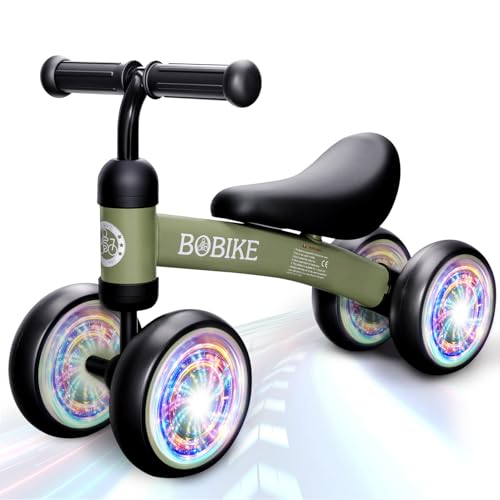
This Bobike balance bike keeps the idea very simple, and that simplicity helps in small homes. A no-pedal setup gives a toddler a low-pressure way to practice sitting, scooting, and learning where the ground is under them.
You may find the compact footprint especially useful in apartments, playrooms, or a hallway that doubles as a riding lane. Compared with the KRIDDO trike, this one asks less of your storage space, though it gives up the guided push-handle support that some families want for outdoor walks.
What We Like
- No-pedal design keeps the learning curve gentle for very young riders.
- Its small profile suits indoor practice and short trips outside.
- Balance-bike movement can help a child get comfortable with steering and body control.
Room For Improvement
- The source details leave a lot about the build and materials unstated.
- No-pedal balance rides are less useful for an adult who wants to push from behind.
- Small toy-style rides can feel outgrown faster than a trike with a wider age span.
Feature Card
Made For
Space-conscious families and first-time riders who want a very simple toy-bike setup will feel at home with this pick.
Another Choice May Suit
KRIDDO 2-in-1 Toddler Tricycle 18 Months to 5 Years Old suits families who want more parental control during outdoor walks.
This version of the Bobike balance bike stands out less for the ride itself and more for the support plan attached to it. That matters for families who treat a toddler ride as a real household item, not a throwaway toy, because bumps and broken parts are part of normal life with small kids.
The accidental-damage coverage, support line, and claims process bring more peace of mind than the bare listing in item 2. The trade-off is that you are buying a plan, so it makes sense only when you want that extra layer around the product rather than the simplest possible setup.
Reasons To Buy
- Accidental-damage coverage suits rough-and-ready household use.
- Support is available around the clock, which is handy for time-crunched parents.
- The claims flow is described as quick and straightforward, which lowers friction.
- Repairs may be handled without added parts or labor cost.
Points To Note
- The protection plan has to be bought with the product or shortly after.
- Pre-existing wear does not fall under the plan.
- You are buying added coverage, not a different ride design.
Technical Sheet
Built With In Mind
Families who want a simple toddler ride backed by extra coverage will find this a practical choice.
Where A Sibling Pick Shines
Bobike Baby Balance Bike Toys for 12-36 Months is the better fit when you want the same style without the added protection plan.
This Bobike listing keeps the same basic balance-bike concept, so the main question is how much simplicity you want from the purchase. The lack of extra features in the source details can actually be useful for a parent who wants a straightforward toddler ride without sorting through a long feature list.
It sits closest to item 2 in spirit, though this one leans even harder into no-frills ownership. The honest read is that you would choose it for uncomplicated use, not for a long feature chase.
Bright Spots
- Clean balance-bike format keeps the experience easy to understand.
- The shorter spec list can mean fewer moving parts to think about.
- It works well as a simple gift or household starter ride.
Small Caveats
- The listing gives little detail on size, materials, or comfort touches.
- Less feature information makes it harder to judge long-term fit.
- Families wanting guided pushing will need a different style entirely.
Details At A Glance
The Right Fit
Parents who want a stripped-back toddler ride for short sessions and easy storage should feel comfortable here.
Look Elsewhere When
KRIDDO 2-in-1 Toddler Tricycle 18 Months to 5 Years Old fits better for guided outdoor walks and a more structured ride.
This Bobike version looks much like the other balance-bike entries, yet the listing structure gives you a slightly different shopping experience. That return-path setup may matter more than it sounds, especially for a gift purchase where flexibility counts.
You may appreciate the no-pedal format for everyday toddler play, but the source details still keep the focus on the shopping path rather than the ride itself. Compared with item 4, it is the better fit for a household that values return convenience as part of the purchase decision.
Best Bits
- The balance-bike format stays easy for very young children to understand.
- Its return flow may suit cautious online shopping habits.
- Simple setup often feels less overwhelming for a first ride.
Areas To Watch
- The source copy says little about the ride hardware itself.
- You are still looking at a basic toddler balance bike, not a feature-heavy trike.
- Return convenience matters less once the bike is in everyday use.
Quick Facts
Whose Shelf It Belongs On
Gift shoppers who want a simple toddler ride with a practical return flow will find this a sensible stop.
A Better Fit Elsewhere
Bobike Baby Balance Bike Toys for 12-36 Months from item 2 suits the same age range with a cleaner, more compact starter-bike feel.
The cubsala bike is the clear step-up choice once a child is ready for something closer to a real pedal bike. Training wheels soften the learning curve, and the coaster brake, a back-pedal braking system, helps keep the stopping motion easy to grasp for young kids.
Compared with the trikes above, this feels more like a transition bike than a toy ride. Families with a child who has already outgrown guided pushing may find the BMX styling and size range more useful, though the larger footprint is the trade-off.
Upsides
- Training wheels help early pedal riders feel steadier.
- The coaster brake keeps stopping simple for beginners.
- Size options make it easier to match growing kids.
- BMX styling gives it a more grown-up look without changing the learning focus.
Worth Noting
- This is a bigger commitment than a compact toddler trike.
- Pedal bikes need more room for storage and parking.
- Very young two-year-olds may not be ready for this step yet.
Feature Rundown
Perfect Match For
Kids who are moving beyond balance toys and want a first pedal-bike experience will get the most from this model.
Swap It Out When
KRIDDO 2-in-1 Toddler Tricycle 18 Months to 5 Years Old is better for families who still want parent-led strolling rather than pedal practice.
The Kkdi tricycle leans into visible extras, which makes it feel more playful than the simpler Bobike entries. A four-level adjustable seat matters because a growing toddler can sit more comfortably as leg length changes, and the twin baskets add useful space for small treasures.
One thing worth considering is that the lighting wheels and storage features push this toward fun-first ownership rather than pure utility. That works well for a child who lights up at the look of the bike itself, though a family wanting the lightest, cleanest setup may prefer the KRIDDO trike.
Standout Traits
- Four seat positions help the ride stay useful across growth spurts.
- Two baskets add room for toys, snacks, or park-day finds.
- Lighting wheels give it a playful look kids often notice right away.
- The trike format feels more settled than a two-wheel balance toy.
Minor Gripes
- Extra parts can mean extra cleaning and more to keep track of.
- Styling touches add appeal, but they do not replace core ride quality.
- The source details leave key build information unstated.
Core Details
Who Will Love This
Families who want a cheerful trike with visible extras will get the most out of this one.
Reach For A Different Pick When
Bobike Baby Balance Bike Toys for 12-36 Months is the cleaner choice for a smaller, simpler starter ride.
The Ackarido tricycle reads like the playful cousin of the Kkdi pick, with colorful lighting wheels and a large basket giving it a more toy-like personality. That can be a real plus for a child who likes visual details, and it gives you a spot for a favorite toy or snack on neighborhood walks.
Because this model is still a tricycle, it stays more forgiving than a pedal bike for a very new rider. Compared with the KRIDDO trike, the appeal here leans more toward visual features and storage flair than toward a guided-push setup.
Positives
- Lighting wheels add fun without changing the basic trike layout.
- The large basket makes short outings feel more practical.
- Its toddler-friendly trike format keeps early rides steadier.
- The playful look may help some children feel excited to hop on.
Areas To Watch
- Decorative touches can add cleanup and assembly steps.
- The listing gives no detail on seat adjustment or push-handle support.
- Heavy use on rough ground may make storage parts wear faster than a simpler bike.
Spec Overview
Who Should Grab It
Children who respond to bright details and families who want a playful trike for short outings will be a solid match here.
Skip It When
KRIDDO 2-in-1 Toddler Tricycle 18 Months to 5 Years Old is the better call for parents who want an easier push-led setup.
How To Choose The Right Bikes For 2 Year Old
Start With Ride Style, Not Marketing
For a two-year-old, the biggest decision is whether you want a tricycle, a balance bike, or an early pedal bike with training wheels. Tricycles like KRIDDO and Ackarido feel steadier and easier for guided walks, while Bobike balance bikes keep things simple and low to the ground.
Balance bikes work well for short practice sessions because they let a child learn steering and body control without pedaling at the same time. Training-wheel bikes, like the cubsala model, make more sense once your child is ready for a bigger step and a little more independence.
Match The Bike To Your Space And Routine
A compact balance bike is easier to store in a hallway, apartment, or car trunk. A trike with a push handle takes more room, but it pays off during strolls around the block or through a park.
That trade-off matters more than most product pages admit. Families who leave the house often tend to appreciate push handles, footrests, and baskets, while indoor-focused households usually prefer smaller, lighter frames with fewer parts to manage.
Look Closely At Growth Range And Fit
Age ranges help, but seat adjustability and wheel size tell you more about how long the bike may stay useful. The Kkdi trike’s four-level seat, for example, gives you more room to adapt than a fixed setup, and the cubsala’s multiple wheel sizes help you move through stages.
For a two-year-old, fit should feel stable with both feet easy to place and the body upright without strain. Too much bike can feel awkward fast, while too little adjustability means you may be shopping again sooner than expected.
Think About Ownership, Not Just The First Day
Cleaning, storage, and assembly all matter more than they first seem. Wheels that light up, baskets, push bars, and extra brackets can make the bike more useful, but they also add places where dirt gathers and bolts need attention.
A simpler frame is often easier to keep tidy. A more feature-rich model can still be the right call, especially for a gift or a child who loves the bells and lights, but the honest trade-off is a little more upkeep.
A Quick Reality Check
Common Shopping Slip Ups
Many shoppers focus on age wording and skip the size details. That can lead to a bike that sounds toddler-friendly but sits too tall, too bulky, or too busy for a two-year-old.
Another common miss is choosing a feature-heavy trike for a child who really only needs a simple starter ride. A clean balance bike often suits that stage better than a larger setup with baskets, lights, and multiple add-ons.
Where The Extra Money Goes
Higher-tier rides usually pay for better adjustability, sturdier hardware, and more comfort-focused touches. Seat changes, push handles, storage baskets, and layered support plans all add cost because they add parts and flexibility.
That upgrade makes sense for families who plan to use the bike often or want a smoother transition across growth stages. For short-term use or a very cautious first rider, a simpler model can be the smarter spend.
Frequently Asked Questions
What type of bike works best for a 2-year-old?
A tricycle or balance bike usually fits this age best. The right choice depends on whether you want guided pushing or a simple self-balancing start.
Are training wheels useful at age 2?
They can help, but many two-year-olds still do better with a trike or balance bike first. Training wheels fit better once the child is ready for pedal practice.
Does a push handle matter?
Yes, especially for walks around the neighborhood or longer park outings. It gives you more control while your child gets used to the ride.
Should you choose a balance bike or a tricycle?
A balance bike suits homes that want simplicity and small storage needs. A tricycle suits families that want extra steadiness and a more seated ride.
What should you check before buying?
Look at seat adjustment, age range, and how much space the bike needs at home. Those details matter more than flashy styling for daily use.
Closing Thoughts
The right bike for a two-year-old should feel easy to manage, easy to store, and easy for small legs to handle. KRIDDO is the most practical guided option here, while the Bobike balance bikes suit simpler starter play. The cubsala stands out once your child is ready to move past the toddler stage, and the Kkdi and Ackarido trikes add more personality for families who like extra features. Choose the style that fits your space and your child’s current comfort, and the rest tends to fall into place.