

Bike clutter spreads fast. One wall, floor stand, or outdoor shelter can change how your garage, shed, or apartment feels the moment you roll a bike back in after a commute or weekend ride.
This roundup focuses on storage that fits real homes: narrow rooms, shared garages, damp patios, and setups that need to hold steady under daily use. You’ll see simple hooks, floor stands, wall mounts, and covered outdoor options, each suited to a different space problem.
Quick Look At The Shortlist

PIYILO 48 in Garage Tool Organizer Wall Mount

Happy Travel Bike Storage Shed Tent

Bike Floor Stand Rack- Indoor Bike Stand for Garage/Home

HORUSDY Stainless Steel Bike Storage Rack

Vertical Bike Parking Stand – Adjustable Height for 29’Wheels

niffgaff Heavy Duty Garage Storage Hooks

Steadyrack Bike Rack
More Details On Our Top Picks
The 48-inch rail gives you real wall coverage, so bikes, shovels, and yard tools can live in one zone instead of leaning against each other. The double-layer hooks and soft sleeves matter in a busy garage, where paint scuffs and sliding handles are part of daily life.
You may find this especially useful in a shared shed or family garage where you want one tidy mounting point rather than several small holders. Compared with the floor-based CHEPARK stand later in the list, this saves floor space, but it also asks you to commit to wall placement.
Strong Points
- 48-inch length gives you broad wall coverage for long-handled gear and bikes.
- Soft sleeves on the hooks help reduce scratching on finished surfaces.
- Double-layer hook layout keeps storage more orderly than scattered single hooks.
- Useful for garages that need one clean mounting strip for mixed equipment.
Points To Note
- Wall mounting asks for solid placement and basic installation care.
- The setup suits dedicated storage zones more than renters who avoid drilling.
Feature Snapshot
Who It Suits Best
Homeowners with a garage or shed full of mixed tools and bike gear get the most out of this layout.
Swap It Out When
Choose the CHEPARK Bike Floor Stand Rack if you want a no-wall, roll-in setup for a single bike.
This is the outside option in the roundup, and that matters because weather exposure changes everything. The tent-style shelter gives you covered storage for multiple bikes, plus enough height to handle motorcycle or garden gear use in the same footprint.
For a driveway or patio, the appeal is straightforward, you get a portable shelter instead of a permanent structure. The trade-off is that soft-sided outdoor storage usually asks more of placement and anchoring than a rigid wall rack like the HORUSDY system.
Upsides
- Covered format helps keep bikes out of direct exposure.
- Extra top space gives the shelter more usable vertical room.
- Works for several bikes, which helps households with multiple riders.
- Portability makes it easier to reposition than fixed outdoor storage.
- Can also house garden tools or a mower in the same enclosure.
Small Caveats
- Soft-sided storage needs sensible setup in a protected spot.
- Cleaning and drying the cover will matter more than with metal racks.
- It takes more space than a single floor stand.
At A Glance
Who Will Love This
Households that park bikes outside and want a covered, movable shelter get the clearest benefit here.
A Better Fit Elsewhere
Choose the Steadyrack Bike Rack for a cleaner indoor wall setup with a more rigid storage feel.
Floor stands are the easy answer for people who want parking more than mounting. This CHEPARK rack fits 20 to 29 inch bikes, so it covers a wide spread of mountain and road bikes without asking you to lift them onto a wall hook.
That no-lift style is the point, especially in a garage you use every day or in a home entry area where you want fast parking after a ride. Compared with the PIYILO rail, it gives up wall storage efficiency, but it also avoids drilling and works well for one-bike setups.
What We Like
- Roll-in parking keeps everyday use simple.
- Works with a broad wheel-size range from 20 to 29 inches.
- Good fit for home garages, apartments, or small indoor corners.
- Single-bike format keeps the footprint controlled.
Room For Improvement
- Single-bike capacity may feel limiting in multi-bike homes.
- Floor placement still needs enough clear space around the stand.
Technical Sheet
The Right Fit
Apartment dwellers and single-bike homes get the clearest use case from this stand.
Another Choice May Suit
Choose the niffgaff Heavy Duty Garage Storage Hooks for a simpler wall-hanging setup with less floor use.
Hook packs solve the awkward middle ground between a full rack and a single hook. This set gives you multiple hanging points, so bikes, ladders, hoses, and garden tools can split across the wall instead of crowding one anchor.
The anti-slip coating is the practical detail here, because it helps items sit more securely on the metal. Compared with the dedicated HORUSDY rack, this is the looser, more flexible route, which suits garages that change over time.
Bright Spots
- 18 hooks give you plenty of placement options.
- Anti-slip coating helps gear sit more securely.
- Useful for mixed storage, not only bikes.
- Easy to spread across different wall sections.
Worth Noting
- Hook-only storage gives less structure than a full rack system.
- Layout planning matters, or the wall can feel scattered.
- Regular checkups on hook placement make sense in busy garages.
Core Details
Best Suited To
DIY-minded garage owners who want flexible wall organization get the most out of this pack.
Where A Sibling Pick Shines
The PIYILO 48 in Garage Tool Organizer Wall Mount is the better choice for a cleaner, more unified bike-and-tool zone.
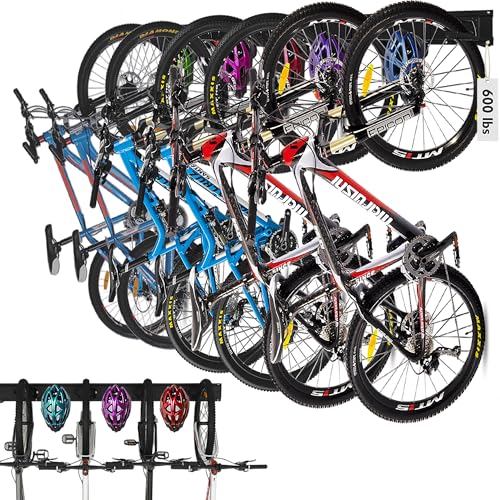
For households with several bikes, this wall rack changes the storage conversation. Six bike hangers plus six helmet hooks create a more complete system than the smaller hook packs, so the gear lives together instead of spreading across the garage.
The stainless steel build also gives it a cleaner, harder-wearing feel than lighter mixed-material racks. The honest read is that you need wall space for it, but family garages and active cycling homes will usually see that as part of the plan.
Highlights
- Six bike hangers support a larger household setup.
- Six helmet hooks help keep riding gear grouped together.
- Stainless steel construction suits demanding garage use.
- Wall-mounted layout frees up floor space.
- Good fit for riders who want one central storage zone.
Minor Gripes
- Six-bike layouts ask for a generous wall section.
- Wall installation takes more planning than a floor stand.
Details At A Glance
Made For
Active families and shared garages get the clearest payoff from this rack.
Look Elsewhere When
The CHEPARK Bike Floor Stand Rack fits a single-bike setup better when you want no wall work.
Rental-friendly storage has a different logic, and this stand fits that brief well. The freestanding frame, four locking casters, and no-drill setup make it easier to reposition than a fixed wall mount, which helps in apartments, shared garages, and changing layouts.
The adjustable height and tire support up to 4 inches give it a wider fit for mountain and road bikes, but tall, heavy bikes still deserve a careful look at placement. Compared with the CHEPARK stand, this one carries more hardware and mobility, so it feels more purposeful in tight spaces.
Standout Traits
- No-drill setup suits rentals and temporary spaces.
- Four locking casters make the stand easier to move and position.
- Adjustable height helps with different bike sizes.
- Support for wider tires broadens compatibility.
- Freestanding layout keeps installation simple.
Areas To Watch
- Movable storage still needs a clear patch of floor.
- Heavier bikes call for careful placement before rolling away.
- Moving parts mean more surfaces to keep clean over time.
Feature Rundown
Built With In Mind
Apartment dwellers and renters who want flexible indoor bike storage get the strongest fit here.
Reach For A Different Pick When
Choose the HORUSDY Stainless Steel Bike Storage Rack for a wall-based setup that serves several bikes at once.
This pair of wall hooks keeps the concept stripped down, and that can be a strength in a cluttered garage. With a 120 lb capacity rating, the hooks are positioned for heavier items like bikes, kayaks, or ladders, so one bracket can handle more than casual wall clutter.
They sit well in a setup that already has shelving or cabinets, where you just need a few solid hanging points. Compared with the 18-pack Kodreat set, these feel more concentrated and less scattered, which some garages will prefer right away.
Best Bits
- High capacity rating suits heavier garage items.
- Simple wall-hanging format keeps the setup straightforward.
- Good for bikes alongside other bulky gear.
- Compact pair works well in smaller wall sections.
Softer Spots
- Two hooks only, so broad organization needs more pieces.
- Wall mounting still calls for sensible spacing and placement.
Feature Card
Whose Shelf It Belongs On
Garage owners who want a small number of strong hooks rather than a full rack system fit this pair best.
Skip It When
The 18 Pack Garage Hooks Heavy Duty suits wall zones that need many hanging points instead of just two.
Steadyrack takes a different approach from the simpler hooks and rails above. The pivoting wall design helps the bike swing inward for storage, which matters in tight garages where every extra inch along the wall feels expensive.
The roll-in, no-lift style is especially useful for mountain and gravel bikes, since you’re not wrestling the frame onto a high hook. The catch is fit specificity, so this makes the most sense for riders whose wheel and tire sizes line up with the stated range.
Positives
- Pivoting design helps conserve wall space.
- Roll-in loading reduces the need to lift the bike high.
- Works with mountain and gravel bikes in the stated fit range.
- Two-pack format supports a paired setup in the garage.
- Wall mount keeps the floor open for other gear.
Honest Caveats
- Fit is more specific than a basic hook or floor stand.
- Wall mounting still asks for thoughtful placement.
- Best value shows up most clearly in a tight space.
Spec Overview
Perfect Match For
Mountain and gravel bike owners in compact garages get the strongest case for this rack.
Where Shoppers Go Wrong
The HORUSDY Stainless Steel Bike Storage Rack makes more sense for multi-bike homes that want broader wall coverage.
How To Choose The Right Bike Storage Solutions
Start With Where The Bike Lives
The first decision is location, because indoor and outdoor storage solve different problems. A garage wall rail, a floor stand, and a covered shed tent each change how much floor you keep open and how much protection the bike gets from weather or daily traffic.
Wall mounts work best in spaces with clear studs or strong anchors, while freestanding stands fit rentals and temporary layouts. Outdoor shelter makes sense for driveways, patios, and shared yards, but it asks more of placement and weather exposure.
Match The Rack To The Bike
Wheel size, tire width, and bike weight should guide the short list. A rack that fits 24 to 29 inch wheels sounds broad, yet gravel and mountain bikes can still need a specific tire range or a higher weight rating than a road bike.
That’s why a general hook set and a purpose-built wall cradle do different jobs. One keeps the wall simple, the other holds the bike in a more exact position, which helps in tighter spaces.
Think About Daily Handling
The easiest storage choice is the one you’ll use without fuss. Roll-in floor stands and no-lift wall systems reduce daily friction, especially for commuters who want to park fast after a ride.
Heavier wall racks can reward you with a cleaner layout, but they ask for more install effort up front. If the garage changes often, movable or hook-based setups usually stay easier to live with.
Don’t Ignore The Rest Of The Gear
Bikes rarely travel alone. Helmets, pumps, locks, and yard tools all compete for the same room, so a smart storage plan should leave space for the accessories too.
A six-hook rack or a mixed tool organizer can turn one wall into a working zone rather than a pile of separate holders. For many homes, that matters as much as the bike itself.
What To Weigh Before You Commit
Wrong Turns To Avoid
A common mistake is buying for the bike and forgetting the room. A large wall rack can look efficient on paper, then crowd a narrow garage once you actually place the bikes and open the car door.
Another trap is skipping fit checks on wheel size, tire width, and weight limits. That’s the part that keeps the rack usable over time instead of feeling awkward on day one.
What The Higher Tier Buys
Higher-priced storage usually pays for stronger materials, more refined mounting hardware, or mechanisms like pivoting arms and locking casters. In this category, that often means cleaner operation, better space use, and less compromise around awkward walls.
The upgrade makes sense for busy garages, multi-bike households, and riders with heavier mountain bikes. Simple hook systems still do the basic job well, but more advanced racks earn their place when layout and handling matter as much as raw storage.
Frequently Asked Questions
What type of bike storage works best in a garage?
Wall mounts and floor stands both work well in garages, but the better choice depends on how much wall space you want to give up. A multi-bike wall rack suits a busier garage, while a floor stand works better for one-bike parking.
Are outdoor bike shelters worth considering?
They make sense for driveways, patios, and shared yards where indoor space is limited. A shelter adds cover, but it also asks for more careful placement than a simple indoor rack.
What should you check before choosing a bike rack?
Check wheel size, tire width, bike weight, and how much floor or wall room you have. Those four points usually decide whether a rack feels easy or awkward in daily use.
Do wall-mounted systems work for renters?
They can, but renters often prefer no-drill or freestanding setups. A movable stand avoids permanent holes and still keeps the bike organized indoors.
How do you keep storage from becoming clutter?
Choose a system that also accounts for helmets, tools, or other riding gear. One organized wall section is easier to maintain than several separate holders spread across the garage.