
Bike Speedometers matter most when you want distance, pace, and ride time in plain view without fuss. Commuters, weekend cyclists, and indoor trainers all benefit from a unit that matches the way they ride, whether that means GPS accuracy, wired simplicity, or long battery life.
Some of these picks lean toward easy setup and compact displays, while others are better suited to longer rides, rough weather, or app syncing. The right choice comes down to how much detail you want on the bar and how much charging or wiring you’re willing to live with.
Quick Look At The Shortlist
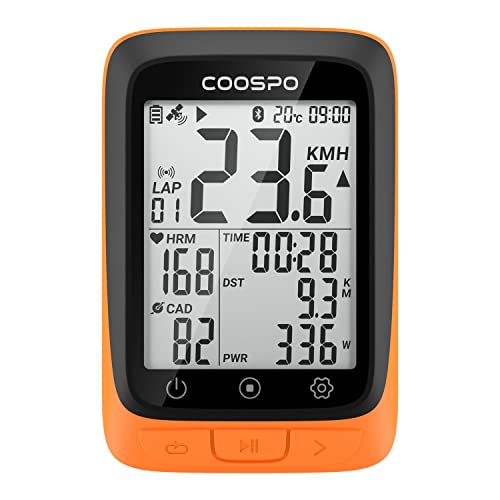
CooSpo Wireless GPS Bike Computer

iGPSPORT BSC100S GPS Bike Computer Wireless
PRUNUS Bike Speedometer and Odometer Wireless
CYCPLUS GPS Wireless Bike Computer M1

Hilceriy Wired Bike Computer and Odometer
CYCPLUS GPS Wireless Bike Computer M2
CYCPLUS GPS Wireless Bike Computer

More Details On Our Top Picks
CooSpo opens the roundup with a clean GPS-centered setup that also supports Bluetooth and ANT+, the two common wireless standards that let a head unit talk to sensors and training apps. The 2.4-inch LCD keeps the footprint compact, so it suits a road bar, a hybrid, or a commuter bike without taking over the cockpit.
The auto backlight helps on early starts and late finishes, and the waterproof build gives it a better fit for changeable weather than a bare-bones wired unit. The trade-off is familiar with compact GPS computers, the screen is smaller than the larger CYCPLUS M1, so dense data layouts need a quick glance rather than a long stare.
Strong Points
- GPS tracking keeps pace and distance independent of wheel sensor setup.
- Bluetooth and ANT+ widen compatibility with common accessories.
- The 2.4-inch screen stays tidy on crowded handlebars.
- Auto backlight improves visibility in dim commutes and twilight rides.
Points To Note
- The smaller display can feel tight for riders who want several fields visible at once.
- Like most bar-mounted units, it rewards a careful first setup so the screens you want are the ones you see.
Feature Snapshot
Who It Suits Best
Urban commuters and recreational cyclists who want GPS tracking in a compact body will get the most from this one.
A Better Fit Elsewhere
CYCPLUS GPS Wireless Bike Computer M1 suits riders who want a larger display and longer runtime than CooSpo offers.
iGPSPORT gives you a slightly larger 2.6-inch LCD than the CooSpo above, which matters more than it sounds like once you start checking pace, distance, and ride time in traffic or on rough roads. The rechargeable design suits regular use, and the 40-hour runtime claim puts it in a different lane from units that need a charger after every long outing.
The wireless layout keeps the bar area cleaner than a wired odometer like the Hilceriy later in the list, and Bluetooth plus ANT+ makes it friendlier to mixed setups. The honest read is that more run time usually means a little more bulk somewhere, so you’re getting endurance rather than the smallest possible shell.
What We Like
- The 2.6-inch display gives a bit more breathing room than the CooSpo unit.
- Forty-hour runtime fits riders who log several sessions between charges.
- Wireless pairing keeps the setup neat for modern handlebars.
- The waterproof build makes it a sensible all-weather training companion.
Minor Gripes
- The larger battery focus can make it feel less trim than smaller GPS models.
- Like any feature-rich computer, the menu layout can take a little familiarization before it feels second nature.
Quick Facts
Made For
Endurance riders and commuters who want a bigger screen without stepping into a bulky unit are the best fit here.
Where Another Pick Shines
PRUNUS Bike Speedometer and Odometer Wireless suits casual cyclists who want a simpler, lower-friction display than the iGPSPORT setup.
PRUNUS takes a more straightforward route than the GPS-heavy picks above, which is useful for riders who mainly want speed and odometer data without app pairing or satellite lock concerns. The big digital LCD and touch sensor switch make the interface feel plain in a good way, almost like a dashboard that asks very little of you.
Automatic wake-up is the real convenience feature here, because it reduces the little start-stop ritual that can get annoying on shorter rides. The trade-off is just as clear, since this style of computer is more about core ride metrics than the deeper tracking you get from the CYCPLUS models.
Upsides
- Wireless operation keeps installation cleaner than a cable-run system.
- The large LCD is easier to scan during casual riding.
- Touch sensor control keeps button handling simple with gloves or bare hands.
- Automatic wake-up is handy for stop-and-go neighborhood rides.
Worth Noting
- It focuses on basics, so advanced GPS-style mapping features are off the table.
- Touch controls can feel less tactile than physical buttons on bumpy pavement.
At A Glance
Right Fit For
Casual riders, fitness loops, and riders who want a no-drama odometer setup are the clearest match.
Another Choice May Suit
iGPSPORT BSC100S GPS Bike Computer Wireless suits you better if you want rechargeable GPS tracking and a larger screen.
The M1 is the point in the list where the category starts feeling more like a dedicated training tool than a simple speed readout. Its 2.9-inch LCD gives the biggest screen so far, and the 1200mAh battery is paired with a stated runtime over 60 hours, which suits long weekends, commute clusters, and riders who hate frequent charging.
Four-satellite positioning adds a little extra confidence in mixed terrain compared with simpler GPS units, while Bluetooth and ANT+ keep it flexible for sensor pairing. The trade-off is obvious enough, the larger display and battery emphasis make it less discreet than the CooSpo or M2, so it feels better on bars that can spare the space.
Bright Spots
- The 2.9-inch display is easier to read than the smaller screens in this roundup.
- More than 60 hours of stated runtime cuts down on charging frequency.
- Four-satellite positioning is a sensible fit for riders who move between open roads and tree cover.
- Bluetooth, ANT+, and app sync support make it useful for structured training.
- Auto backlight helps with early rides and evening returns.
Small Caveats
- The larger body can feel busy on narrow stems or crowded handlebars.
- Sync features add value, but they also add another layer of setup to learn.
Core Details
Who Will Love This
Frequent cyclists who want a larger, long-running GPS computer with app-friendly features will get the best match here.
Where Shoppers Go Wrong
CYCPLUS GPS Wireless Bike Computer M2 suits riders who want a smaller body and a more compact on-bar presence than the M1.
Hilceriy heads in the opposite direction from the GPS models, and that’s exactly why some riders will like it. The wired connection usually means a steadier relationship between sensor and display, which suits someone who wants basic speed, distance, and ride time without worrying about pairing or charging.
The unit also adds maximum and average speed, temperature, calories, and single mileage, so the feature list is broader than the price-first look suggests. The catch is installation, since a wired bike computer asks for neater cable routing and a bit more patience around the fork and handlebar area.
Best Bits
- Wired design keeps the setup straightforward for riders who prefer a direct sensor link.
- Average and maximum speed help you compare steady pacing with hard efforts.
- Temperature and calorie readouts add extra context for fitness-focused rides.
- Automatic wake-up makes repeated starts and stops less annoying.
Areas To Watch
- The cable run takes more care during installation than a wireless unit.
- It feels less polished than the GPS models if you want app syncing or satellite-based tracking.
- Wired routing can be a little awkward on bikes with very clean cockpit layouts.
Details At A Glance
Whose Shelf It Belongs On
Budget-conscious cyclists and riders who like wired simplicity will get the most value here.
Look Elsewhere When
CYCPLUS GPS Wireless Bike Computer M1 is the better fit for you if app sync and longer GPS-based riding are higher priorities.
CYCPLUS trims the formula with the M2, and that smaller 2.5-inch LCD makes sense for riders who want GPS data without the larger presence of the M1. The 1000mAh battery and stated 70-plus-hour runtime are a strong pairing for long stretches between charges, especially on a commuter bike that gets used several times a week.
Four-satellite positioning, Bluetooth, ANT+, and auto backlight keep it squarely in the modern GPS camp, while the compact body makes it friendlier to tighter cockpit setups. The trade-off is straightforward, the smaller screen won’t feel as generous as the M1, so you’re choosing neat packaging over maximum display area.
Reasons To Buy
- The compact body works well on bikes with limited handlebar space.
- More than 70 hours of stated runtime helps cut charging frequency.
- Bluetooth and ANT+ support fit mixed sensor setups.
- Auto backlight keeps the display usable in dim conditions.
Room For Improvement
- The 2.5-inch screen is smaller than the M1, so data fields feel tighter.
- Riders who want a lot of information visible at once may need more screen space.
Feature Rundown
The Right Fit
Commuters and riders with compact bars who still want long-run GPS performance are the strongest match.
Swap It Out When
CYCPLUS GPS Wireless Bike Computer M1 is the smarter call for riders who want a larger screen than the M2 provides.
This CYCPLUS unit looks built for riders who want more data control than the smaller GPS models give them. The custom display feature matters because it lets you prioritize the metrics that matter most on your route, and that becomes valuable on long climbs, training loops, or mixed-surface rides where speed alone doesn’t tell the whole story.
The 2.8-inch LCD sits in a useful middle ground, larger than the M2 but still manageable, and the 1500mAh battery with stated 100-plus-hour runtime is the standout spec here. The trade-off is that more customization usually means more setup decisions, so it feels better for organized riders than for someone who wants a set-it-and-forget-it screen.
Positives
- Custom display support lets you shape the screen around your ride style.
- The 2.8-inch screen strikes a practical balance between space and size.
- Five-satellite positioning adds another layer of route confidence.
- IPX7 rating gives it a stronger weather-ready profile than the IPX6 models above.
- More than 100 hours of stated runtime suits riders who charge infrequently.
Softer Spots
- Custom layouts take time to set up properly.
- The feature set asks more from the user than the basic PRUNUS or wired Hilceriy units.
Core Details
Built With In Mind
Data-oriented cyclists and long-distance riders who want screen flexibility and long runtime are the right match.
Another Choice May Suit
CYCPLUS GPS Wireless Bike Computer M2 suits you better if you want a smaller, less involved GPS unit than this upgrade pick.
Bikevee leans into climbing data, which makes it different from the more general-purpose GPS computers above. Altitude, gradient, and ascent data speak directly to hilly routes, so the unit suits riders who care as much about elevation management as they do about pace and distance.
The 2.4-inch screen keeps the body compact, and the IPX7 rating plus auto backlight give it a practical edge for wet weather and low-light starts. The 650mAh battery and stated 28-hour runtime mean it’s less of a marathon unit than the CYCPLUS models, so it fits shorter training blocks more naturally.
Highlights
- Altitude, gradient, and ascent data are useful on hilly terrain.
- The compact 2.4-inch screen keeps handlebar clutter down.
- IPX7 rating gives stronger water resistance than many entry-level units.
- Auto backlight helps the display stay readable before sunrise or after dusk.
Things To Consider
- The 28-hour runtime is modest beside the longer-running CYCPLUS models.
- Riders on flat routes may not use the elevation-focused data as often.
Spec Overview
Who Should Grab It
Hill-heavy riders and climbers who want compact hardware with useful ascent data are the best match.
Reach For A Different Pick When
CYCPLUS GPS Wireless Bike Computer is the better fit for you if longer runtime and deeper customization matter more than climbing metrics.
How To Choose The Right Bike Speedometers
Start With The Data You Actually Use
Speed, distance, and ride time cover the basics, but the right choice depends on how much extra detail you want on the bar. A commuter who checks pace and trip distance needs less than a rider tracking climbs, average speed, and long-session endurance.
GPS units are useful for route awareness and cleaner setup, while wired units usually keep things simple and steady. The trade-off is easy to see, GPS gives more flexibility, and wired models reduce the number of moving parts in the decision.
Match Screen Size To Your Cockpit
Small screens suit tight handlebars and riders who prefer a tidy front end, while larger LCDs make multi-field data easier to read at a glance. That matters more on rough roads, where a glance is easier than a long look.
Think about the amount of information you want visible at one time. A compact display can be enough for speed and distance, but a bigger panel gives more breathing room for riders who want several metrics without cycling through menus.
Check Battery, Weather, And Mounting Fit
Longer runtime matters for frequent riders, touring use, and anyone who dislikes charging after every ride cluster. Weather rating matters too, especially for wet commutes or mountain routes where road spray is part of the routine.
Mounting fit is the quiet detail that separates a clean cockpit from a cluttered one. A small GPS computer may suit narrow bars, while a wired setup can ask for more careful cable routing but reward you with a very simple daily routine.
Look At Connectivity Before You Commit
Bluetooth and ANT+ help a speedometer work with sensors and training apps, which matters for riders building a more complete data setup. If you only want speed and odometer readings, you can ignore a lot of that, and a basic model may feel more sensible.
App syncing and custom screens are nice upgrades, but they also add setup time. The cleanest choice is the one that matches your riding style now, not the one with the longest feature list on paper.
A Quick Reality Check Before You Decide
Mistakes Worth Dodging
Many shoppers focus on screen size and forget the mounting fit or battery routine. That leads to a computer that looks good in photos but feels awkward on the bike.
Another common miss is paying for data you never use. A hilly-route rider can justify elevation metrics, while a flat-city commuter usually gets more value from a clear display and dependable basic tracking.
The Upgrade Payoff
Higher-tier units usually cost more because they add larger screens, longer runtime, stronger weather ratings, and better connectivity. Those details matter most for riders who log frequent miles or depend on the computer in changing conditions.
Upgrades make sense when they remove friction from real use. A rider charging often or squinting at a small display will feel the benefit right away, while a casual weekend rider may be better served by a simpler unit.
Frequently Asked Questions
What does ANT+ add to a bike speedometer?
ANT+ lets the unit communicate with compatible sensors and training accessories. That matters most when you want more than basic speed and distance.
Is a wired bike computer still worth considering?
Yes, especially for riders who want a straightforward setup without battery management. Wired units usually fit best on bikes where a tidy cable run won’t be a hassle.
How important is screen size on a cycling computer?
Screen size matters more when you want several fields visible at once. Smaller displays are still useful, but they ask for quicker glances and simpler layouts.
Do long battery numbers matter for casual riding?
They matter less for short rides, though they still reduce charging interruptions. Longer runtime becomes more useful once you ride several times a week or head out for longer sessions.
Which type works best for hill rides?
A model with altitude, gradient, and ascent data is the most useful match. Those readings give you a clearer picture of climbing effort than speed alone.