
Long sessions on a stationary bike, a cruiser, or a trike expose the same problem fast: a narrow saddle can make sitting feel like work. This roundup focuses on seats with back support, plus oversized and noseless shapes that spread pressure and give you a steadier position. You’ll see which picks suit Peloton-style setups, commuting, and casual neighborhood riding, along with the trade-offs that matter once the box is open.
Quick Look At the Shortlist

CDYWD Noseless Oversized Bike Seat
Sunlite Backrest Saddle 9 x 11 Black

CDYWD Oversized Bike Seat
THALOUS Oversized Bike Seat Backrest Comfort

Extra Wide Bike Seat with Backrest

Bike Seat with Backrest, Extra Wide
Bike Saddle Oversized Comfortable with Backrest
More Details On Our Top Picks
A noseless saddle changes the contact point, so this CDYWD shape makes sense for stationary biking and longer indoor sessions. The extra-wide platform helps spread pressure, while the open center leaves more room than a traditional pointed saddle.
You’ll notice the fit angle matters more here than on a standard seat, especially on Peloton-style setups or a beach cruiser. For daily spin work, that trade-off is worth it, but riders who like a narrow nose for steering precision may not warm to it.
What We Like
- Noseless layout reduces front-end pressure in seated rides.
- Oversized padding suits longer indoor sessions.
- The broad surface gives you a steadier perch on a stationary bike.
- Useful for Peloton, city bikes, cruisers, and ebikes.
Points To Note
- The shape takes some adjustment on the first few rides.
- Less traditional steering feel can bother riders used to narrow saddles.
- Fit matters, so alignment on the post deserves attention.
Feature Snapshot
Whose Shelf It Belongs On
This fits indoor cyclists and cruiser riders who want a more relaxed sitting position without moving to a full backrest setup.
Swap It Out When
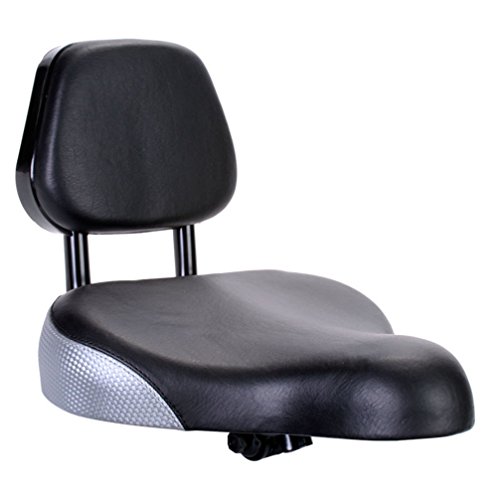
Sunlite’s Backrest Saddle suits riders who want actual lumbar support, especially on trikes or upright neighborhood rides.
Sunlite takes the category in a different direction, because the backrest is built into the saddle itself. That makes it a natural fit for upright riding, where you want a place to lean back instead of balancing on a narrow perch.
The 9-inch by 11-inch footprint signals a roomy seat area, and the backrest height tops out at 9 inches according to the listing. For tricycles and comfort-focused city rides, that combination is easy to understand, though it will feel bulkier than the noseless CDYWD pick.
Highlights
- Integrated backrest gives you a true leaning point.
- Roomy 9 x 11 shape suits upright seating.
- Strong match for trikes and other stable setups.
- Black finish keeps the look simple and plainspoken.
Room For Improvement
- Bulkier than backrest-free saddles.
- Best on bikes built for upright posture, not sporty positions.
- The taller support can feel excessive on compact frames.
Core Details
Built With In Mind
You’ll get the most from this on trikes, cargo-style setups, and other bikes where upright posture matters more than speed.
Where A Sibling Pick Shines
CDYWD’s noseless oversized saddle suits indoor cyclists better when you want cushion without the bulk of a backrest.
This CDYWD seat keeps the focus on width and foam depth rather than a backrest. The 12 by 13 by 5.5 inch size gives you a large landing zone, which suits riders who want more surface area on a cruiser, city bike, or exercise bike.
Compared with the noseless CDYWD model, this one looks more familiar and may feel easier to live with for riders who still want a traditional saddle outline. The honest trade-off is that it solves padding better than posture, so it’s the right kind of simple, not the most supportive for a long upright ride.
Best Bits
- Large 12 x 13 x 5.5 inch size gives you generous seating room.
- Thick foam padding helps on longer casual rides.
- Traditional saddle shape feels familiar during installation and use.
- Fits several bike types, from stationary bikes to cruisers.
Small Caveats
- No backrest, so posture support stays limited.
- The wide shape may feel oversized on compact frames.
- Extra padding can feel softer than some riders prefer.
At A Glance
Who Should Grab It
This suits casual riders who want a broad, padded saddle without moving into a full backrest layout.
A Better Fit Elsewhere
YIYIBYUS’ Bike Seat with Backrest works better for trike riders who want support at the back, not just more cushion under them.
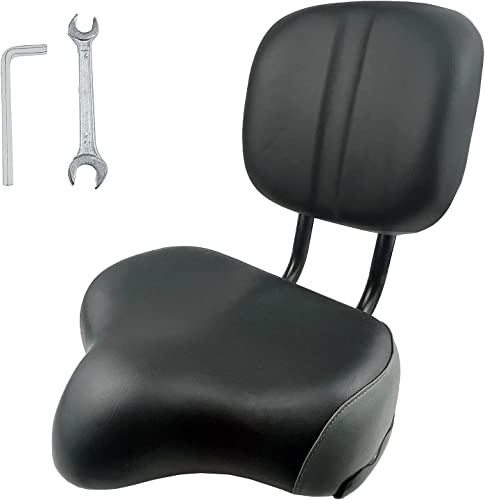
THALOUS leans into the comfort-first formula, mixing memory foam with a PU cover for a softer ride feel. That combination makes sense for city commuting, trike use, or relaxed electric-bike cruising where the saddle matters more than fast handling.
Compared with the firmer-feeling CDYWD oversized seat, this one sounds like a more cushioned answer for riders who want a gentler sit. The trade-off is familiar: softer padding can feel great early on, then less supportive on very long outings.
Reasons To Buy
- Memory foam construction brings a softer contact point.
- PU surface is easier to wipe down after dusty rides.
- Universal replacement angle broadens its use case.
- Backrest design helps upright riders stay relaxed.
Worth Noting
- Soft padding is not the same as firm support.
- Universal fit still depends on your bike’s mounting setup.
- Heavier comfort builds can take up more visual space.
Details At A Glance
Right Fit For
You’ll appreciate this most on upright bikes and electric cruisers where comfort matters more than a sportier ride posture.
Look Elsewhere When
Sunlite’s Backrest Saddle is the more direct choice for riders who want a clearly defined support point behind the seat.
SABUIDDS builds this one like a comfort seat with a little more tailoring. The ergonomic shape, adjustable back height, and mix of leather, foam, and aluminum make it a practical fit for ebikes, trikes, and larger frames.
That leather-and-foam setup should be easier to keep tidy than fabric-heavy cushions, and the aluminum piece adds a firmer structural feel. It’s not as minimalist as the CDYWD noseless seat, but it gives you more control over posture and more confidence for upright riding.
Positives
- Ergonomic shape supports a more natural sitting position.
- Adjustable back height lets you tune the lean.
- Leather, foam, and aluminum create a sturdy-feeling mix.
- PU-style leather surface should be straightforward to clean.
- Good match for trikes and larger electric bikes.
Areas To Watch
- The extra hardware can make setup more involved.
- Upright comfort comes with added bulk.
- Style and structure may be more than basic commuters need.
Feature Rundown
The Right Fit
This suits trike and eBike owners who want posture support plus a more finished-looking saddle.
Where A Sibling Pick Shines
WEEROCK’s oversized backrest seat is the simpler call for casual riders who want a bigger cushion without as much adjustment detail.
YIYIBYUS goes straight at long-ride comfort with a wider cushion and a backrest you can adjust by knob. That detail matters because a backrest is only useful when you can place it where your torso actually meets it.
The seat uses polyethylene foam and iron, which points to a more structured build than soft foam alone. For tricycles and exercise-bike replacements, that can be a sensible middle ground, though the larger profile may feel overbuilt on compact frames.
Plus Points
- Wide cushion supports seated comfort over longer sessions.
- Adjustable backrest height adds useful personalization.
- Iron and foam construction suggests solid structure.
- Included hardware and instructions reduce installation guesswork.
Honest Caveats
- The bulky shape needs enough room on the bike.
- Knob-based adjustment adds a small setup step.
- Best suited to upright riding, not sporty geometry.
Quick Facts
Best Suited To
This works well for trike owners and home exercise setups where you want a firmer, adjustable support point.
Another Choice May Suit
Sunlite’s Backrest Saddle feels more straightforward for riders who want a simpler, more compact back-support shape.
WEEROCK keeps things broad and usable with an oversized saddle and a backrest that adds comfort without looking overly specialized. The 11.5 by 9.5 inch seat and 8.75 by 8 inch backrest make sense for routine commuting, neighborhood riding, and casual mountain-bike use.
Compared with the more adjustable YIYIBYUS option, this looks like the simpler route for riders who want familiar comfort and less fuss. It won’t be the most tailored choice in the list, but that’s part of its appeal, because straightforward gear is often easier to live with.
Bright Spots
- Oversized seat gives you more room than a standard saddle.
- Backrest adds relaxed support for slower rides.
- Useful on mountain bikes, commuters, and trikes.
- PU cushion surface should be easy to wipe clean.
Softer Spots
- Less adjustability than some other backrest seats here.
- Seat and backrest dimensions may feel large on smaller frames.
- Comfort-focused shape is better for casual pace than aggressive riding.
Core Details
Perfect Match For
This suits casual riders and commuters who want a roomy back-support seat without much setup complexity.
Reach For A Different Pick When
SABUIDDS’ Extra Wide Bike Seat with Backrest is the better fit for riders who want adjustable support and a more feature-heavy build.
How To Choose The Right Bike Seat With Back Support
Seat Shape Comes First
Back support matters, but the saddle shape still decides how you sit. A noseless design, like the CDYWD comfort seat, suits indoor cycling and pressure relief, while a true backrest like Sunlite’s works better for upright posture on trikes or cruiser-style bikes.
Width matters too, because an oversized seat can feel generous or awkward depending on your frame. Too much bulk on a narrow bike can make mounting and dismounting less graceful.
Materials Change The Ride Feel
Foam, memory foam, PU covers, leather, and metal framing each change the feel in a different way. Softer builds help on casual rides, while firmer structures usually feel more planted when you’re riding for longer stretches.
That’s the trade-off: more cushioning can feel nicer at first, but it doesn’t always equal better support. For daily commuting, a mix of shape stability and moderate padding tends to age better than an ultra-soft cushion.
Backrest Adjustability Is Worth A Close Look
Some back-support seats give you a fixed backrest, while others let you raise or lower it. The adjustable models, such as Sunlite, SABUIDDS, and YIYIBYUS, help you line up the support with your torso instead of forcing your body into the saddle’s shape.
That detail matters most for tall riders, shorter riders, and anyone sharing one bike across different setups. A fixed backrest can still work well, but it leaves less room for fine-tuning.
Match The Seat To The Bike And The Ride
Stationary bikes reward plush contact and a steady center, so CDYWD’s noseless seat or the broader CDYWD oversized model make sense there. Trikes, ebikes, and upright cruisers usually benefit more from a visible backrest and a larger base.
Think about how often you’ll clean, mount, and adjust the seat too. A PU surface and simple hardware are easier to live with than a fussy setup, especially in a garage or apartment where storage space is tight.
What To Weigh Before You Commit
Mistakes Worth Dodging
A common slip-up is chasing padding alone and ignoring posture. A thick cushion without the right shape can still leave you fidgeting, especially on longer rides.
Another trap is assuming every backrest seat fits every frame the same way. Trikes, cruisers, exercise bikes, and ebikes all have different mounting quirks, so the seat’s size and hardware matter just as much as the comfort claim.
The Case For Spending Up
Higher-tier seats often cost more because they use layered materials, adjustable backrests, and sturdier mounting parts. That extra structure usually shows up in better shape control and a more stable feel on rough pavement or longer sessions.
Spending more makes sense when your ride time is long, your posture is upright, or the bike is part of a daily routine. For occasional neighborhood spins, a simpler oversized saddle can be enough.
Frequently Asked Questions
What makes a bike seat with back support different?
It adds a rear support point that helps you sit more upright. That can reduce the need to brace yourself with your core on relaxed rides.
Are noseless seats only for indoor bikes?
No, they also work on cruisers and some city bikes. They make the most sense on rides where pressure relief matters more than quick handling.
Do oversized seats always feel more comfortable?
Not always, because size and shape still need to match your body and bike. A seat that is too broad can feel awkward on a narrow frame.
Is adjustable backrest height worth it?
Yes, especially when more than one person uses the same bike or when torso length varies a lot. It gives you a better chance of lining up support where you need it.
Which option suits trikes best?
Sunlite, SABUIDDS, and YIYIBYUS are the clearest trike-friendly choices here. Their backrest setups fit upright riding better than a standard oversized saddle.