

Indoor training gets a lot easier when the setup matches your space, bike, and routine. Some of these picks suit riders who want a steady stationary feel, while others lean toward a more road-like balance that keeps your cadence honest.
You’ll see both magnetic wheel-on stands and true rollers here, plus models that fold down for storage or add smart training compatibility. That mix matters in a garage, apartment, or spare room, where noise, footprint, and stability shape daily use more than marketing language ever does.
The Shortlist At A Glance

Alpcour Fluid Bike Trainer Stand
CXWXC Magnetic Bike Trainer

CXWXC Magnetic Bike Trainer

Sportneer Bike Trainer Stand

TacX Galaxia Roller Trainer
Saris Fluid2 Indoor Bike Trainer
More Details On Our Top Picks
Fluid resistance is the key idea here, which means the trainer’s feel rises more naturally as you push harder. For a spare room or garage setup, that smoother response helps indoor sessions feel less mechanical than a simple fixed-resistance stand.
The foldable stainless steel frame points to easier storage and better corrosion resistance than painted budget frames, though the trade-off is still a wheel-on trainer’s usual tire wear. Commuters and general fitness riders get the most from it, especially when they want a steady ride without a bulky footprint.
What We Like
- Progressive resistance gives your effort a more road-like rise as cadence climbs.
- Stainless steel construction helps the trainer feel more durable in damp garages.
- Foldable structure makes it easier to tuck away after a session.
- Dual-lock setup adds a more secure locked-in feel for the bike mount.
Things To Consider
- As a wheel-on trainer, it still depends on tire contact, so tire wear is part of the routine.
- It asks for a bit more setup space than compact rollers like TacX Galaxia.
Feature Snapshot
Who Should Grab It
Riders who want a steady indoor stand with a cleaner, more premium-feeling frame get the most from this one.
Where A Sibling Pick Shines
Saris Fluid2 Indoor Bike Trainer suits you better for app-linked indoor sessions and a more connected training setup.
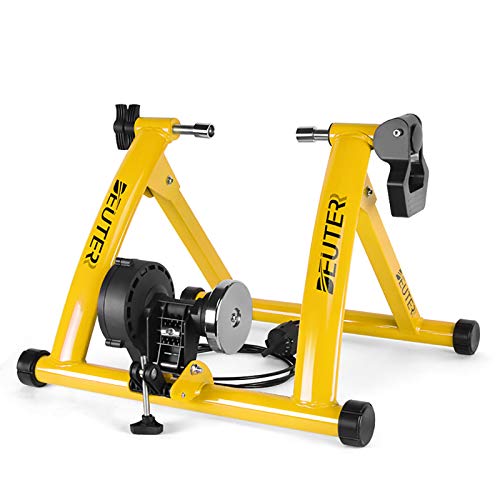
This CXWXC stand stays close to the classic wheel-on formula, with magnetic resistance and a front-wheel riser block to level the bike. In a shared room or apartment, that simple layout is appealing because it keeps the setup predictable and easy to store.
The wheel fit list covers 26 to 29 inch wheels plus 700C, so it reaches a broad slice of road setups without getting fussy. The honest read is that this is a straight-ahead training tool, which suits riders who want repeatable indoor miles more than fancy extras.
Upsides
- Magnetic resistance gives you a familiar indoor training feel.
- Included quick-release skewer supports faster installation on compatible bikes.
- Front wheel riser block helps keep the bike position more natural.
- Wide wheel-size fit covers many road-bike setups.
Worth Noting
- Magnetic trainers can feel more linear than fluid units, so the resistance curve is less organic.
- The setup still takes floor space, which matters in tighter rooms.
Core Details
Made For
Road-bike owners who want a straightforward indoor stand without extra complexity will feel at home here.
Another Choice May Suit
Sportneer Bike Trainer Stand makes more sense for you if six resistance levels matter more than a basic magnetic setup.
Same CXWXC layout, same wheel-size coverage, and the same kind of no-drama indoor riding approach. That makes this listing a sensible second-bike option for households that want a matching trainer without learning a new setup.
Because the source details mirror the other CXWXC model so closely, the main appeal is consistency rather than feature spread. For most garages, that’s enough, though you may still prefer the fluid feel of Alpcour’s stand or the richer control on Sportneer.
Positives
- Wheel compatibility reaches 26 to 29 inch sizes and 700C.
- Quick-release skewer support keeps mounting more convenient on compatible bikes.
- Front wheel riser block helps stabilize the riding angle.
Points To Note
- Feature overlap with the other CXWXC model leaves little to distinguish the two.
- Magnetic resistance is dependable, though it feels more basic than fluid systems.
At A Glance
The Right Fit
You’ll like this more than the average basic stand if you want a familiar trainer for a road bike and nothing extra to manage.
Look Elsewhere When
FDW Bike Trainer Stand suits you better when a lower-commitment magnetic trainer with a magnetic flywheel matters most.
Six resistance levels give this Sportneer model a clearer tuning range than the simpler magnetic stands above. For interval work in a basement or garage, that control is useful because you can change the effort without changing your whole setup.
The quick-release lever and front wheel riser block keep the basics tidy, while the 26 to 28 inch and 700C fit still covers most road-bike use. The catch is that a more adjustable trainer usually asks a little more attention during setup, and that’s the price of having finer control.
Highlights
- Six resistance levels give you more control over workout intensity.
- Quick-release lever makes mounting and removal less cumbersome.
- Front wheel riser block helps maintain a more level riding position.
- Wheel support reaches 26 to 28 inch sizes plus 700C.
- Good fit for riders who want structured indoor sessions.
Small Caveats
- More adjustment means more setup attention than a plain fixed-resistance stand.
- Magnetic resistance is practical, though it won’t feel as fluid as Saris Fluid2.
Quick Facts
Built With In Mind
Riders who want more control over indoor effort, especially for structured sessions, will get the most from this stand.
Swap It Out When
Alpcour Fluid Bike Trainer Stand suits you better if you care more about a smoother fluid feel than level-by-level resistance.
FDW keeps the formula simple: magnetic flywheel, five resistance settings, and a design meant for regular indoor riding. That kind of setup works well in a busy house because it gives you a predictable session without asking for much from the room.
The noise-reduction note matters here, though it still sits inside the normal limits of a wheel-on trainer, so tire contact remains part of the experience. It’s a sensible fit for riders who want a budget-conscious stand and do not need the finer tuning of Sportneer’s six-level setup.
Bright Spots
- Five resistance settings give you enough range for steady indoor rides.
- Magnetic flywheel keeps the training feel familiar and easy to understand.
- Noise-reduction design helps it stay more living-room friendly than many basic stands.
Areas To Watch
- Five levels give less control than the six-level Sportneer model.
- As with most wheel-on trainers, tire wear remains part of ownership.
Details At A Glance
Whose Shelf It Belongs On
Riders who want a low-fuss trainer for routine workouts and do not need advanced control should feel comfortable here.
Reach For A Different Pick When
TacX Galaxia Roller Trainer suits you better if you want a freer riding feel and more balance work from the trainer itself.
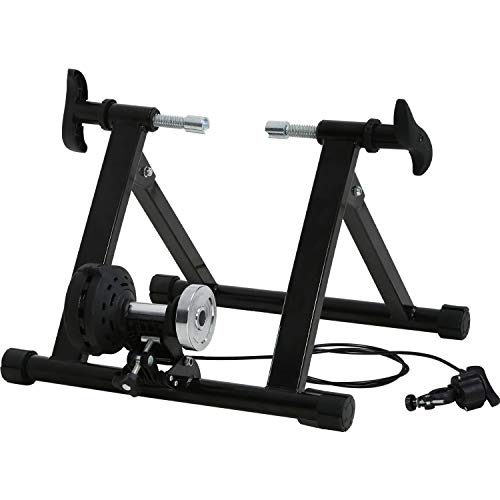
This is the pure roller option in the group, and that changes the whole character of the ride. Instead of clamping the bike, the conical rollers guide the wheels toward center, so your balance and line matter more, which suits experienced riders working on smooth cadence.
The patented swing system adds side-to-side movement to absorb acceleration and deceleration, a useful detail for riders who want a more dynamic indoor feel. It folds down neatly too, and the maintenance-free, no-power design keeps ownership simple in a home office, studio, or garage.
Reasons To Buy
- Conical rollers help keep the bike centered during use.
- Swing system softens acceleration and deceleration movement.
- Foldable form is easier to store than a fixed roller platform.
- No power requirement keeps the setup simple and portable.
- Front roller spins equally, which supports a steadier riding feel.
Room For Improvement
- Rollers demand more balance than wheel-on trainers like the CXWXC and Sportneer stands.
- The learning curve is higher for first-time indoor riders.
Core Details
Best Suited To
Experienced cyclists who want balance practice and a more road-like indoor motion will appreciate this most.
A Better Fit Elsewhere
FDW Bike Trainer Stand suits you better if you want a simpler entry point with less balance demand.
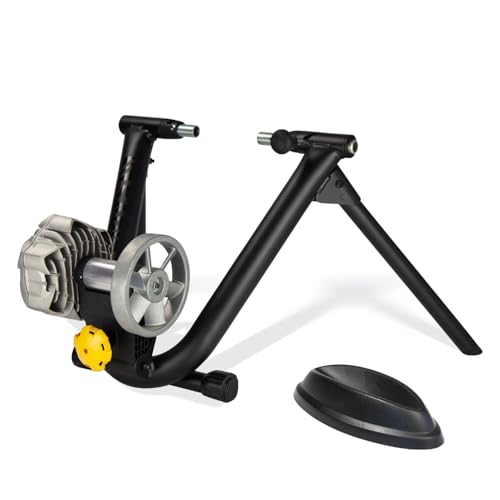
Saris puts fluid resistance and smart-equipment compatibility in the same package, which is a strong sign that this trainer is meant for connected indoor sessions. For road and mountain bike owners who already use training software, that combination makes the trainer feel more like part of a system than a standalone stand.
The fluid unit should feel smoother than the magnetic stands earlier in the list, and that extra polish is usually what nudges the higher tier upward. The trade-off is simple enough, you’re paying for a more refined ride path and app-friendly setup rather than just a basic way to spin indoors.
Standout Traits
- Fluid resistance gives a smoother indoor ride feel than basic magnetic units.
- Smart-equipped design supports connected training use.
- Fits both road and mountain bikes.
- Well suited to structured sessions and software-led workouts.
Honest Caveats
- More capable features make it a step up from simpler stands.
- Best value lands with riders who will actually use the smart side.
Feature Rundown
Right Fit For
Connected riders who want a smoother indoor trainer and plan to use training software will get the most from this model.
Consider Something Else When
CXWXC Magnetic Bike Trainer suits you better if you want a simpler stand for basic indoor miles without software hooks.
How To Choose The Right Bike Roller Trainers
Match The Trainer Type To Your Ride Style
Wheel-on magnetic and fluid trainers clamp the bike and give you a familiar stationary feel. Rollers work differently, because your bike sits on three drums and you stay more involved with balance and line control.
That difference matters more than it sounds. Riders who want steady indoor miles after work often prefer a wheel-on stand, while riders chasing smooth cadence and better handling skill tend to lean toward rollers like TacX Galaxia.
Check Fit Before You Chase Features
Wheel size and axle style are the first things to verify, especially with road bikes that use quick-release hardware. CXWXC and Sportneer cover common road sizes, while TacX Galaxia supports 26 to 29 inch wheels and Saris Fluid2 fits road and mountain bikes.
Space matters too. A foldable trainer can vanish into a closet more easily, but a roller platform still needs enough room to set up, step on, and step off without crowding the walls.
Think About Resistance Feel And Noise
Magnetic trainers are simple and predictable, with resistance that steps up in a straightforward way. Fluid trainers usually feel smoother, which is why Alpcour and Saris stand out for riders who care about the shape of the effort rather than just the number of settings.
Noise also deserves a hard look in apartments and shared homes. Noise-reduction design helps, yet wheel-on contact still creates more sound than many people expect, so a mat and a solid floor can matter just as much as the trainer itself.
Choose The Control Level You’ll Actually Use
Six resistance levels can be handy for intervals, but only when you want to change effort often. Sportneer makes sense for that kind of use, while FDW is more appropriate for steady sessions where simple adjustment is enough.
The expensive option is not always the right one. Higher-tier trainers usually pay for smoother resistance, better compatibility, or app support, so the upgrade only earns its place when your routine will use those extras.
What To Weigh Before You Order
Wrong Turns To Avoid
A common mistake is treating every trainer like the same tool. Rollers and wheel-on stands behave differently, and that changes the learning curve, storage, and the kind of ride feel you’ll get.
Another slip is ignoring tire wear and room layout. A wheel-on trainer usually asks for more cleanup and maintenance around the contact point, while a compact roller or foldable frame may suit a smaller home better.
The Upgrade Payoff
Spending more in this category usually buys smoother resistance, better build quality, or app-ready compatibility. Saris Fluid2 makes that case clearly, while TacX Galaxia spends the extra value on balance-focused roller design and portability.
The upgrade pays off for regular indoor cyclists, structured training plans, and homes where the trainer stays out often. For casual use, a simpler magnetic stand can still do the job without pushing the budget or the footprint.
Frequently Asked Questions
What’s the difference between rollers and wheel-on trainers?
Rollers let your bike sit on drums, so you ride with more balance input and a lighter, freer feel. Wheel-on trainers clamp the bike and give you a more planted indoor setup.
Do magnetic trainers work well for home use?
Yes, magnetic trainers handle routine indoor workouts well and keep the setup straightforward. They usually feel more linear than fluid models, though, so the ride sensation is a bit less natural.
Will a trainer fit a road bike with 700C wheels?
Several picks here do, including the CXWXC and Sportneer stands plus TacX Galaxia rollers. Always match the wheel-size range and axle style before you order.
Are foldable trainers worth the extra attention?
They are useful in apartments, garages, and shared rooms where storage space is tight. The trade-off is that you still need a stable spot to open and close the frame safely.
Which trainer style is better for connected workouts?
Saris Fluid2 is the most direct fit here because it supports Zwift compatibility. That makes it a better match for riders who want indoor sessions tied to software.