
RVs turn bike transport into a space puzzle. You need a rack that matches your receiver, bumper, or ladder, while keeping weight, folding clearance, and loading effort under control.
This roundup focuses on the real trade-offs that matter on the road. Some picks suit family cruising, others are better for e-bikes, and a few make more sense for travel trailers than motorhomes.
Quick Look At Our Shortlist
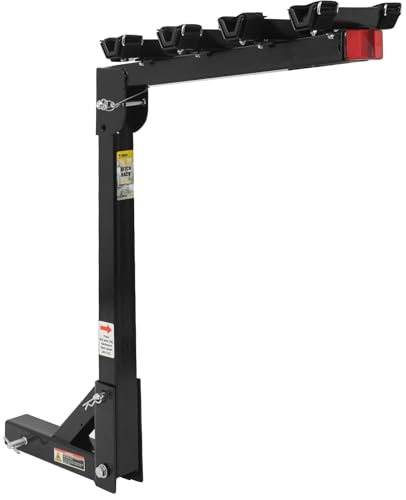
MaxxHaul Hitch Mount 4 Bike Rack 150 lb Capacity Heavy-Duty Swing Down Design (70210)

Camco RV Ladder Mount Bike Rack (51492)
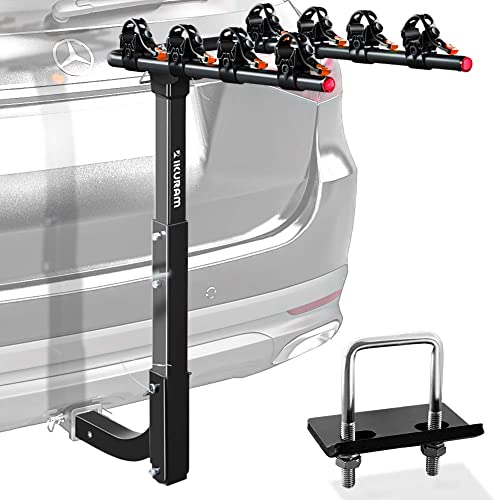
4 Bike Rack Bicycle Carrier Racks Hitch Mount Double Foldable Rack (2" Hitch Receiver)
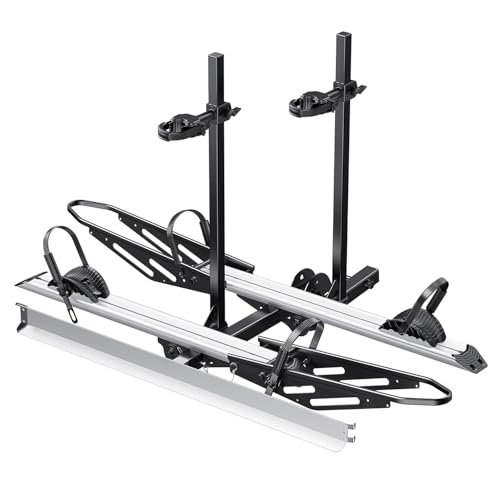
Young Hitch Mount Bike Rack with Ramp (2 E-Bikes)
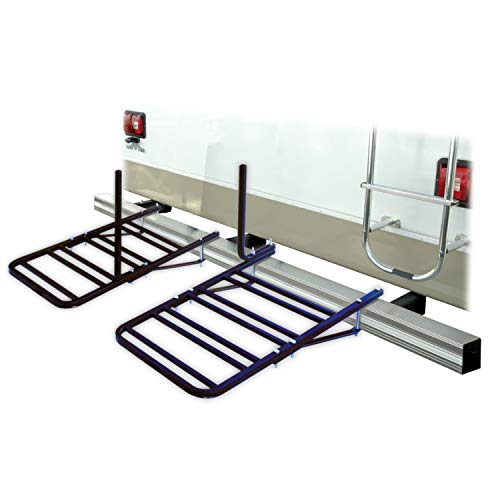
Swagman RV Approved 4 Bike RV Bumper Mount Rack (U-Bolt Mounted Carrier)

Ebike Hitch Rack, 2-Bike Foldable Platform Hitch Mount Carrier (85 lbs Each)
More Details On Our Top Picks
For family road trips, this hitch rack leans into capacity first. The swing-down design matters because you can get to the rear area without fully unloading the bikes, which is a practical touch in campground parking and motel stops.
The trade-off is size, since a four-bike carrier asks for more rear clearance than the two-bike options from Camco and Swagman. Still, for daily hauling with a standard 2-inch receiver, that extra room can be worth it.
Strong Points
- Holds four bikes, so family setups fit without splitting gear across vehicles.
- Swing-down access makes rear storage easier in tight parking spots.
- Fits cars, trucks, SUVs, and minivans, which broadens its use beyond RV duty.
- Safety reflector adds visibility in dim campgrounds or roadside pull-offs.
Things To Consider
- Bigger rack footprint means more rear overhang to manage.
- Four-bike carriers can feel bulky during installation and storage.
- Best suited to standard hitch setups, not smaller mounting points.
Feature Snapshot
Who It Suits Best
Families with a 2-inch receiver and mixed bike sizes get the most out of this one, especially for weekend travel and longer camping loops.
A Better Fit Elsewhere
ARKSEN’s Ebike Hitch Rack makes more sense for heavy electric bikes, since its per-bike rating and platform layout are built around that use.
Camco takes the ladder-mount route, which keeps the floor and hitch free for other gear. That makes sense on a packed RV where every inch of bumper or receiver space already has a job.
The foldable frame is the useful part here, because storage on board stays simpler than with the larger hitch racks above. The honest read is that you’re trading raw capacity for a cleaner footprint.
What We Like
- Uses ladder space instead of the hitch area.
- Folds down for easier stowage inside the rig.
- Heavy steel construction suits routine travel use.
- Two-bike layout keeps loading straightforward.
Room For Improvement
- Two-bike capacity may feel tight for larger families.
- Ladder mounting depends on your RV’s ladder layout and condition.
- Steel construction adds sturdiness, but also extra heft during handling.
Details At A Glance
Whose Shelf It Belongs On
Couples and solo RV travelers who want to keep the hitch open will appreciate this ladder-mounted format.
Swap It Out When
MaxxHaul’s 4-bike hitch rack suits larger families better, since it spreads capacity across a standard receiver rather than the ladder.
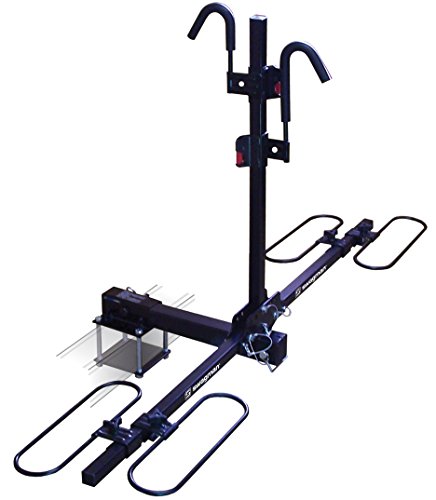
This platform carrier lands in a more controlled lane than the MaxxHaul and IKURAM options. The ratcheting hook system gives you a cleaner clamp-down feel for two bikes, which suits longer highway runs where movement control matters.
Adjustable wheel trays add a useful layer of fit flexibility, and the foldable layout helps keep the rear end less cluttered while parked. A platform rack does ask for a bit more lifting than a ladder model, so that’s the small trade-off.
Highlights
- Ratcheting hook system helps secure bikes with a more controlled hold.
- Platform style is a good match for frequent road travel.
- Adjustable trays improve fit across different bike frame lengths.
- Folding shape eases storage at campsites or at home.
Points To Note
- Two-bike capacity only, so it fits smaller cargo plans.
- Platform loading can take more effort than a ladder-mounted option.
- Works through a 2-inch receiver, so compatibility depends on the vehicle setup.
Core Details
Who Should Grab It
Two-bike travelers who want a more secure platform carrier than a basic ladder mount will find this fit persuasive.
Where A Sibling Pick Shines
Camco’s RV Ladder Mount Bike Rack works better for you when rear storage space matters more than platform-style support.
IKURAM R keeps the formula simple: a four-bike hitch rack with a foldable frame and an included anti-rattle hitch tightener. That tightener matters more than the name suggests, because less side-to-side noise helps on rough roads and long interstate stretches.
Compared with the MaxxHaul, this one leans a little harder into straightforward utility than broader feature talk. It fits well for households that want a plain, workable carrier without stepping into heavier e-bike territory.
Positives
- Four-bike capacity suits family travel and group outings.
- Foldable design helps reduce bulk while parked.
- Anti-rattle tightener supports a steadier ride feel.
- Works with cars, trucks, SUVs, and minivans, so it covers multiple garage setups.
Softer Spots
- Four-bike racks can crowd the rear of smaller vehicles.
- Heavier frames usually take more effort to mount and store.
- Standard hitch fit means it’s less suited to ladder-only RV setups.
Feature Card
Built With In Mind
Families with a standard receiver and a need for simple, folded storage will get the cleanest fit here.
Look Elsewhere When
Swagman Traveller XC2 RV Bike Rack is the better match for you when two-bike platform security matters more than four-bike capacity.
The ramp changes the whole loading conversation. For heavy electric bikes, that matters because you avoid the awkward dead-lift that standard racks often demand, especially in a campground after a long drive.
Young Electric also gives you a broad fit range for fat-tire and standard bikes, plus cars, SUVs, RVs, and trailers with a 2-inch receiver. The trade-off is that a ramp rack naturally asks for more storage space and a little more setup room.
Reasons To Buy
- Ramp support reduces lifting strain during loading.
- 200 lb capacity gives room for two heavy bikes.
- Works with e-bikes, fat-tire bikes, and standard frames.
- Fits several vehicle types, including trailers with the right receiver.
- Platform style helps keep the bikes planted during transport.
Worth Noting
- Ramp accessories usually take more storage room than simpler racks.
- Heavier-duty carriers can feel more involved to install.
- Best suited to a 2-inch receiver, so fit checks matter.
Quick Facts
The Right Fit
Electric-bike owners who want a ramp instead of repeated lifting will get the most practical value from this model.
Not Your Match When
Camco’s RV Ladder Mount Bike Rack makes more sense for lighter two-bike travel where packing space matters more than loading assistance.
This one is built around bumper mounting, so it speaks directly to travel trailers, fifth wheels, and RVs with the right rear setup. That matters because a bumper-mounted carrier keeps the hitch free for towing-related tasks.
Compared with the hitch racks in this list, the mounting approach is more specific, not more flexible. The upside is clear for rigs that already use the bumper as a gear zone, though you do need to confirm the setup matches your trailer.
Best Bits
- Four-bike capacity supports larger family trips.
- U-bolt mounting is tailored to bumper-based RV setups.
- Works with travel trailers and fifth wheels, which narrows in on the right use case.
- Leaves the hitch area open for other towing needs.
Areas To Watch
- Designed for specific RV and trailer hardware, not every vehicle.
- Mounting fit depends heavily on your bumper arrangement.
- Less versatile than hitch-mounted models like MaxxHaul or IKURAM R.
Technical Sheet
Made For
Trailer owners with a proper bumper setup and no desire to occupy the hitch will find the fit most natural here.
Another Choice May Suit
MaxxHaul Hitch Mount 4 Bike Rack works better for you when you want a broader vehicle match and a swing-down rear-access design.
ARKSEN aims this rack at heavier electric bikes, and the numbers make that obvious. An 85-pound per-bike rating, plus the foldable platform build, gives you more breathing room than lighter carriers, especially on mixed road and camping routes.
Smart tilting and quick release are the useful extras here, because they make rear access and handling less awkward than a fixed-frame setup. The catch is that this much capability usually comes with a larger physical presence, so it suits people who can spare the space.
What We Like
- High per-bike limit supports heavier electric bikes.
- Foldable platform keeps the rack from feeling permanently in the way.
- Tilting design helps with rear access.
- Quick release adds convenience during loading and removal.
- Fits SUV, truck, and RV receivers, so it works across several platforms.
Minor Gripes
- Best suited to a 2-inch receiver.
- Platform racks usually take more room in storage than ladder mounts.
- Heavy-capacity hardware can take a little more effort to handle.
Feature Rundown
Perfect Match For
Electric-bike owners who want a foldable carrier with a strong load rating and easier rear access will find this especially relevant.
Reach For A Different Pick When
Young Hitch Mount Bike Rack with Ramp works better for you if loading support matters more than tilting hardware.
How To Choose The Right Bike Racks For Rv
Mount Type Comes First
Your first decision is the mounting point, because the wrong one ends the conversation quickly. Hitch racks suit rigs with a 2-inch receiver, ladder mounts preserve the hitch area, and bumper mounts make sense only for travel trailers or fifth wheels with the right rear hardware.
That choice shapes everything else: access, storage, and how much space stays open behind the RV. A swing-down hitch rack like MaxxHaul helps with rear access, while a ladder rack like Camco keeps the back end cleaner but limits capacity.
Weight, Bike Style, And Loading Effort
Weight rating matters more than most shoppers expect, especially with e-bikes and fat-tire frames. A light two-bike carrier may look tidy, yet heavier bikes can push it past its comfort zone long before the total count looks full.
Loading effort deserves equal attention. Ramp-equipped models such as Young Electric reduce lifting, platform racks like Swagman Traveller XC2 give steadier support, and simpler racks ask you to do more of the work by hand.
Capacity Versus Roadroom
Four-bike racks solve the family problem fast, but they also claim more rear space. That extra footprint can make backing into sites, opening rear doors, or walking around the vehicle feel tighter.
Two-bike models leave more breathing room and usually store more easily. For couples, solo travelers, or riders with two bikes at most, that smaller format often makes day-to-day travel smoother than a larger carrier that sits empty half the time.
Fit, Storage, And Real-World Use
Check the vehicle side as carefully as the bike side. A rack can have the right capacity on paper and still feel awkward if your ladder, bumper, or receiver setup adds clearance issues.
Storage matters too, because many RV trips involve packing and unpacking around the rack itself. Foldable frames, tilting mechanisms, and removable ramps can save time in camp, but they also add moving parts and a bit more handling.
What To Weigh Before You Buy
Common Shopping Slip Ups
A lot of problems start with the wrong mount style. A bumper rack won’t suit every rig, a ladder rack needs the ladder to be a proper match, and a hitch rack still depends on receiver size and rear clearance.
Another common miss is buying for bike count alone. Two heavy e-bikes can ask more of a rack than four lighter city bikes, so the weight limit deserves the same attention as the number of slots.
The Upgrade Payoff
Higher-tier models usually spend extra money on stronger frames, better bike control, and friendlier loading hardware. That shows up in tilt features, ramps, ratcheting hooks, and broader weight support, not just in a shinier finish.
The upgrade makes sense for frequent travel, heavier bikes, or anyone tired of wrestling frames at every stop. For lighter recreational use, a simpler carrier can be enough, especially when storage space is tight and the route stays short.
Frequently Asked Questions
What makes an RV bike rack different from a regular bike rack?
An RV rack has to handle travel conditions, rear clearance, and in some cases ladder or bumper mounting. That makes fit and stability more important than on a basic garage carrier.
Can you use a ladder-mounted rack on any RV?
No, the ladder has to be suitable for that mounting style. Camco is built for that setup, but a hitch rack is the better path when the ladder is not the right support point.
Are e-bikes harder to carry?
Yes, mostly because of weight and frame bulk. Models like Young Electric and ARKSEN handle that challenge better because they are built around heavier loads and platform support.
Why do some racks fold?
Folding helps reduce how much space the rack takes up when parked or stored. That matters on an RV, where rear access and campground maneuvering both benefit from a smaller footprint.
What should you check before installing a rack?
Start with the mount point, then confirm weight limits and bike size fit. After that, check rear clearance so the rack does not interfere with doors, ladders, or towing hardware.