
You need a hitch rack that matches the way you travel, not just the number on the product page. Some setups are built for family outings and compact cars, while others are tuned for e-bikes, fat tires, and heavier frames that need steadier support.
This roundup focuses on fit, load range, tilt and fold behavior, receiver size, and day-to-day handling. That makes it easier to sort out which rack suits a weekend ride, a long road trip, or a garage with limited space.
The Shortlist At A Glance
MaxxHaul Hitch Mount 4 Bike Rack 150 lb Capacity (70210)

TANX 2-Bike E-Bike Rack 160 lbs
Amazon Basics 4-Bike Hitch Rack 132-Pound Capacity


TRAILXPERT 2-Bike Hitch Mount 160lbs

CRINDAR 2-Bike Hitch Rack 160 Lbs
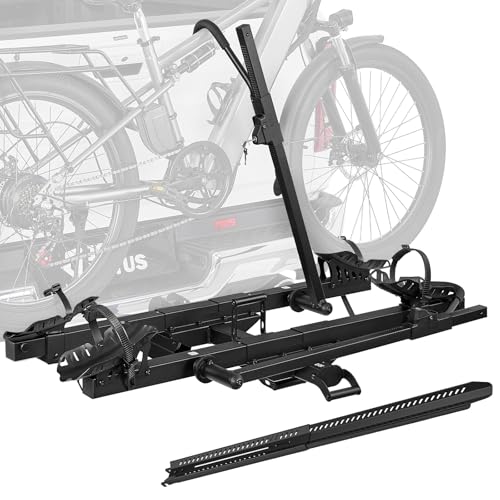
JOYTUTUS Hitch Ebike Rack with Ramp 200 LBS

PAULINN 2 Bike Heavy Duty Ebike Rack 200 LBS
More Details On Our Top Picks
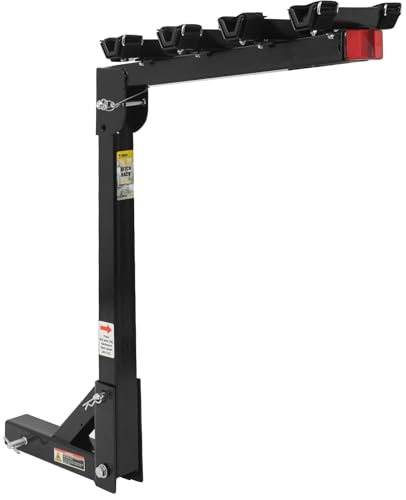
Four-bike capacity changes the conversation fast for weekend carpools and family trail days. The swing-down design matters too, because it gives you a cleaner shot at the rear hatch than a fixed frame usually does.
The steel build and safety reflector point this rack toward steady, everyday use rather than flashy design. You may find the size and weight better suited to SUVs, trucks, and minivans than smaller cars with tight rear clearance.
Reasons To Buy
- Holds up to four bikes for group outings.
- Swing-down movement helps access the cargo area.
- Steel construction adds a planted, work-ready feel.
- Safety reflector improves rear visibility in dim lots.
- Fits a wide range of vehicles with a hitch.
Points To Note
- Four-bike racks take more room to store and maneuver.
- The larger frame can feel overbuilt for solo riders.
- Regular bolt checks are sensible after long road use.
Core Details
Who It Suits Best
Families and casual group riders with an SUV, truck, or minivan get the most from this setup.
A Better Fit Elsewhere
TRAILXPERT 2-Bike Hitch Mount 160lbs suits e-bike owners better when two heavy bikes matter more than four lighter ones.
E-bike owners usually need more than a basic tray, and this TANX rack is built around that reality. The 160-pound total rating and fat-tire focus make it a serious fit for heavier commuter bikes and weekend adventure rigs.
The tilting and folding setup keeps daily handling more manageable, especially in garages where every inch counts. Compared with the MaxxHaul four-bike rack, this one trades group capacity for a stronger focus on two heavy machines.
What We Like
- Made for two heavier bikes instead of a lighter four-bike spread.
- Works with fat tires, which broadens real-world bike compatibility.
- Tilt function helps with hatch access in day-to-day parking.
- Folding design is useful for compact storage between trips.
Areas To Watch
- Two-bike capacity is a tighter fit for families.
- Heavier platform racks are less convenient to move by hand.
- Busy garages may need extra wall or floor space for storage.
Feature Rundown
Made For
Two-bike households with e-bikes or fat tires get the clearest fit here.
Another Choice May Suit
Amazon Basics 4-Bike Hitch Rack 132-Pound Capacity fits riders who need room for more bikes and can live with lighter loads.
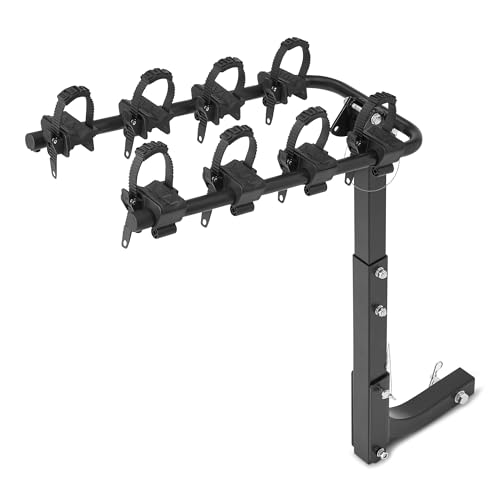
This Amazon Basics rack aims straight at straightforward ownership. A steel frame, foldable layout, and anti-rattle stability give it a practical profile for road trips, neighborhood rides, and weekend storage.
The 132-pound ceiling is lower than the heavier-duty e-bike options in this list, so it makes more sense for standard bikes than dense electric models. That trade-off is useful for households that want room for four without stepping into the bulkier, more specialized racks above it.
Highlights
- Four-bike layout works well for active families.
- Foldable frame helps cut down storage bulk.
- Anti-rattle stability is valuable on rougher roads.
- Steel construction supports regular use without looking delicate.
Softer Spots
- Weight limit sits below the heavier e-bike choices.
- Large four-bike frames can crowd smaller garages.
- Standard-bike focus makes it less specialized for fat tires.
Details At A Glance
The Right Fit
Households with standard bikes and a regular 2-inch receiver will get the most practical use here.
Where A Sibling Pick Shines
JOYTUTUS Hitch Ebike Rack with Ramp 200 LBS suits heavier electric setups better because it is built around more demanding loading.
Soarify leans into broad vehicle compatibility, which helps when your driveway has more than one ride in it. The 143-pound rating and rubber strap retention make it appealing for general use across cars, SUVs, and RVs.
The tilt release is the useful part here, since access to the rear cargo area tends to matter more than shoppers expect. Compared with the Amazon Basics rack, this one steps up slightly in load capacity, though the trade-off is that it still sits in the standard-bike category rather than the heavier e-bike lane.
Strong Points
- Fits cars, SUVs, and RVs, so it adapts well across garages.
- Rubber straps help hold bikes in a familiar, low-fuss way.
- Tilt release keeps cargo access more practical on road days.
- 143-pound rating gives it a little more headroom than lighter basics.
Room For Improvement
- Four-bike racks still take planning for storage and parking.
- Standard-bike focus leaves heavier e-bike owners wanting more capacity.
- Rubber straps can call for routine checking after repeated use.
Spec Overview
Best Suited To
Mixed-vehicle households that need one rack for several common body styles will appreciate this most.
Reach For A Different Pick When
CRINDAR 2-Bike Hitch Rack 160 Lbs is the better call for compact storage and a two-bike setup with heavier frames.
TRAILXPERT targets the kind of setup that standard bike racks often gloss over, namely e-bikes and fat tires up to 5 inches. The 160-pound rating gives you more room than the lighter four-bike models above it, but in a two-bike format that feels more focused and less sprawling.
The tilting platform is the sort of feature you notice most in daily use, especially with a loaded trunk or hatch. One thing worth considering is that this style still takes more storage thought than a compact frame, so garage space matters.
Upsides
- Built for two bikes with heavier modern frames in mind.
- Up to 5-inch tire support broadens compatibility.
- Tilting platform makes rear access more manageable.
- 160-pound capacity gives the rack solid hauling headroom.
Things To Consider
- Two-bike layout does not suit larger family trips.
- Platform racks usually need more room than bare-bones frame carriers.
- Heavier builds can feel less nimble during setup.
Feature Card
Built With In Mind
E-bike owners and fat-tire riders get the clearest match from this rack.
Look Elsewhere When
MAXXHAUL Hitch Mount 4 Bike Rack 150 lb Capacity makes more sense for families that need four-bike capacity over tire width.
CRINDAR sits in the useful middle ground between heavy-duty e-bike hardware and simpler family racks. The smart tilting layout and easy-fold design make it easier to live with than more brute-force carriers, especially in garages where storage matters as much as road behavior.
The 5-inch fat-tire support keeps it relevant for modern bikes, and the 160-pound rating is enough for many heavier two-bike loads. Compared with TRAILXPERT, this one leans more into everyday convenience than headline-topping specialization.
Bright Spots
- Tilting and folding features help with storage and rear access.
- Supports fat-tire e-bikes up to 5 inches wide.
- Two-bike platform keeps the setup focused and manageable.
- 160-pound rating gives useful load room for heavier bikes.
Minor Gripes
- Platform format still needs more storage space than a minimal rack.
- Two-bike capacity may feel tight for family outings.
- Moving parts deserve routine checks after repeated folding and tilting.
Feature Snapshot
Who Should Grab It
Two-bike households with heavier bikes and limited storage space will get the cleanest fit here.
Skip It When
Amazon Basics 4-Bike Hitch Rack 132-Pound Capacity is a better fit for riders who need four slots more than fat-tire compatibility.
The ramp changes the day-to-day experience here, especially for heavier e-bikes that are awkward to lift onto a platform. JOYTUTUS adds a pin-free tilt-fold layout and keyed locks, so the rack feels aimed at owners who value convenience and security-minded hardware in one package.
Compared with TRAILXPERT and CRINDAR, this model pushes harder on loading ease and total capacity. That extra equipment adds complexity, though, so it suits riders who want a more complete system rather than the simplest possible rack.
Best Bits
- Loading ramp reduces the lift needed for heavier bikes.
- Dual keyed locks add a useful security layer for stops.
- 200-pound capacity gives strong headroom for two e-bikes.
- Pin-free tilt and fold handling feels more convenient in regular use.
- Fits 5-inch fat tires, which broadens bike compatibility.
Worth Noting
- Ramp-equipped racks need more storage planning than simpler trays.
- More moving parts can mean more upkeep over time.
- Two-bike capacity still limits larger family transport.
Core Details
Perfect Match For
E-bike owners who want easier loading and stronger cargo control will get the most from this rack.
Swap It Out When
PAULINN 2 Bike Heavy Duty Ebike Rack 200 LBS makes more sense if you want similar capacity without the ramp hardware.
PAULINN keeps the shape simple, and that simplicity is part of the appeal. With a 200-pound rating and a 2-inch hitch receiver fit, it speaks directly to owners of heavier e-bikes and sturdy two-bike setups.
Compared with JOYTUTUS, this rack skips the ramp and some of the extra hardware, which makes the package feel cleaner but less assisted during loading. You may find that trade-off worthwhile when your bikes are manageable enough to lift and you want a more straightforward platform.
Plus Points
- 200-pound capacity suits heavier two-bike loads.
- Heavy-duty build profile fits demanding e-bike use.
- 2-inch hitch receiver matches common vehicle setups.
- Cleaner design avoids extra ramp hardware.
Small Caveats
- No ramp means more lifting during loading.
- Two-bike capacity keeps it out of larger family use.
- Heavy platform style still needs storage space and careful handling.
Quick Facts
Whose Shelf It Belongs On
Owners of heavier two-bike setups who want simple, high-capacity hauling will find the best fit here.
Another Choice May Suit
JOYTUTUS Hitch Ebike Rack with Ramp 200 LBS suits you better when loading help matters more than a cleaner, ramp-free layout.
How To Choose The Right Bike Racks For Hitch
Start With Bike Weight And Tire Width
Load rating comes first because it tells you how much total bike weight the rack is built to carry. A standard four-bike rack can suit lighter family bikes, while e-bikes and fat-tire setups need more headroom and often a platform design.
Tire width matters just as much. The TANX, TRAILXPERT, CRINDAR, and JOYTUTUS racks all speak more directly to fat tires, while the Amazon Basics and MaxxHaul options make more sense for conventional bikes and mixed household use.
Match The Rack To Your Vehicle And Hitch
Most of the racks here use a 2-inch receiver, which is common on SUVs, trucks, and many crossovers. That said, a hitch rack still has to clear your tailgate, rear camera area, and parking space without making every stop awkward.
The MaxxHaul swing-down layout and the tilt features on several platform models show why rear access should stay on your checklist. A good fit feels almost invisible during errands, while a poor fit turns every grocery run into a shuffle.
Decide How Much Loading Help You Want
Some racks stay simple, with straps or standard trays, and that keeps them lighter and easier to store. Others add tilting, folding, or ramps, which improves daily convenience but also adds parts, weight, and a bit more upkeep.
For frequent e-bike use, a ramp can be worth the extra bulk. For occasional weekend rides, a cleaner rack like PAULINN can be enough, especially when lifting the bikes doesn’t feel like a hassle.
Think About Storage, Security, And Road Use
Hitch racks rarely live on the vehicle full-time, so garage space matters more than people expect. Foldable arms, compact platforms, and anti-rattle hardware all help with storage and steadier road behavior.
Security details also matter during quick stops. Dual keyed locks, stronger frame construction, and simpler attachment points can make the rack feel more composed, particularly on longer trips or in public parking areas.
What To Weigh Before You Buy
Hidden Buying Traps
Shoppers often fixate on bike count and miss the receiver size, tire width, or total weight limit. That’s how a rack ends up looking right on paper but awkward in a driveway.
Another common miss is assuming all hitch racks handle e-bikes the same way. Heavy frames, wide tires, and battery weight change the picture fast, so the load rating needs to match the real bikes at home.
Where The Extra Money Goes
Higher-tier racks usually spend the money on steel thickness, stronger weight ratings, folding joints, and easier loading systems. Ramp-equipped or heavy-duty platform racks also tend to add locks and more refined tilt mechanisms.
That upgrade can make sense for heavier bikes, frequent travel, or households that hate wrestling with awkward lifts. For light, occasional use, a simpler rack often gets the job done with fewer parts to maintain.
Frequently Asked Questions
What size hitch do most of these racks need?
Most of the racks in this roundup are built for a 2-inch receiver. That size is common on SUVs, trucks, and many crossovers.
Can a hitch rack carry e-bikes safely?
Only models with enough total capacity and the right platform design make sense for e-bikes. The heavier-duty two-bike racks in this list are the better starting point.
Why choose a platform rack over a hanging rack?
Platform racks usually suit heavier bikes, wider tires, and more stable loading. Hanging styles can be simpler, but they are less forgiving with odd frame shapes.
Do tilt and fold features really matter?
They matter most when you use the rear cargo area often or park in tight spaces. Tilt and fold functions make the rack easier to live with between trips.
Which rack makes sense for four standard bikes?
The MaxxHaul and Amazon Basics racks are the strongest fits for that job. They give you more bike slots without moving into the extra weight and bulk of the e-bike-focused options.