
Moving bikes without turning the rear of your vehicle into a puzzle takes the right rack. Some jobs call for trunk straps, others need a hitch setup that can carry heavier e-bikes, fat tires, or four bikes at once.
That’s the gap this roundup fills. You get a clear read on which rack suits commuting, family outings, and road-trip loading, plus the trade-offs that matter once the rack is hanging on your car.
Quick Look At Our Shortlist
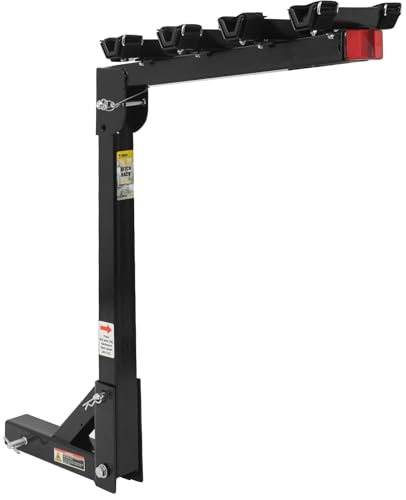
MaxxHaul Hitch Mount 4 Bike Rack 150 lb Capacity (70210)

TANX 2-Bike E-Bike Rack 160 lbs

Allen Sports Deluxe+ 2-Bike Trunk Mounted Carrier

Thule Apex XT Bike Hitch Rack
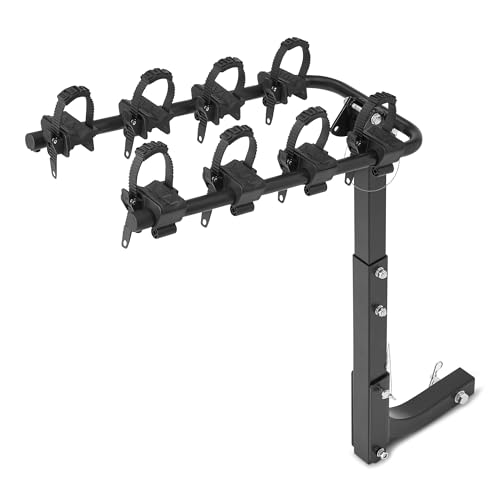
Amazon Basics 4-Bike Hitch Rack 132-Pound Capacity

Thule Outpace 2 Bike Hitch Rack 110lb Capacity

Thule Revert Vertical Hitch Rack 4 Bikes 220lb Capacity
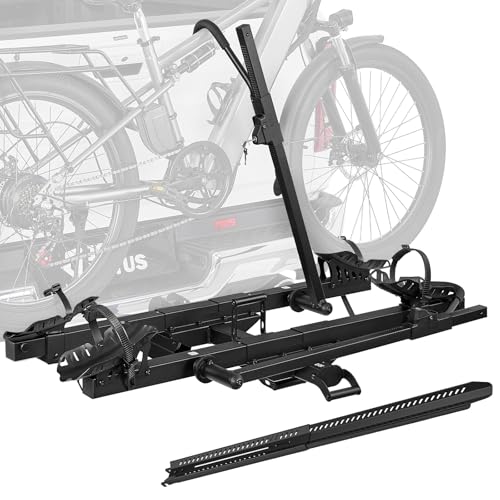
JOYTUTUS Hitch Ebike Rack with Ramp 200 LBS Capacity
More Details On Our Top Picks
The MaxxHaul 70210 lands in the practical middle ground for households that move several bikes and want a hitch-mounted setup. Its swing-down design matters in daily use because you can reach the rear hatch without unloading the rack first, which keeps quick errands from becoming a chore.
That 150-pound limit points to ordinary adult and youth bike hauling rather than heavy cargo duty, and the safety reflector adds a bit of visibility behind the vehicle. The honest trade-off is size, since a four-bike hitch rack will ask for more storage space and more attention during mounting than a trunk carrier like the Allen Sports Deluxe+.
Strong Points
- Holds four bikes, so family outings stay organized.
- Swing-down access helps with hatchback and cargo access.
- Fits a broad mix of vehicles, including SUVs and minivans.
- Safety reflector adds a clear rear-facing cue.
Things To Consider
- Four-bike hardware takes more room in the garage.
- Hitch mounting asks for more lifting than a trunk carrier.
- Heavier bikes quickly use up the capacity ceiling.
Key Specs
Who It Suits Best
You benefit most here if you shuttle several standard bikes and want one rack that can stay mounted for weekend use.
A Better Fit Elsewhere
JOYTUTUS Hitch Ebike Rack with Ramp 200 LBS Capacity suits riders moving heavier e-bikes, since the loading ramp changes the whole ownership experience.
This TANX hitch rack is built around heavier electric bikes, and that focus shows in the 160-pound capacity and 2-inch receiver fit. Compared with the MaxxHaul four-bike carrier, it gives up extra bike slots in exchange for a setup that makes more sense for two loaded e-bikes or fat-tire machines.
The wobble-free framing and smart tilting design matter most in real driveways, where loose movement and awkward hatch access get old fast. One thing worth considering is storage and lift effort, since a two-bike rack for heavier frames still asks more from your back than a trunk-mounted option like the Allen Sports Deluxe+.
What We Like
- Higher weight capacity suits heavier electric bikes.
- Fat-tire support broadens compatibility beyond slim road bikes.
- Tilt function helps with cargo-area access.
- Wobble control supports a steadier feel on the receiver.
Points To Note
- Two-bike layout limits group transport.
- Heavier frames can be more awkward to mount alone.
- Receiver-only fit narrows compatibility to hitch-equipped vehicles.
Feature Rundown
Built With In Mind
You fit this rack best when your garage holds two heavy e-bikes and you want a hitch system that keeps them steadier on the road.
Swap It Out When
Amazon Basics 4-Bike Hitch Rack 132-Pound Capacity suits families with multiple standard bikes, especially when slot count matters more than e-bike support.
The Allen Sports Deluxe+ stays appealing because trunk mounting avoids the need for a hitch receiver. That makes it a clean match for occasional riders, smaller cars, or anyone who wants bike transport without a more permanent rear setup.
Compared with the hitch racks in this list, it’s lighter on hardware and easier to store, though it also carries only two bikes and depends more on the shape of your vehicle’s rear end. The trade-off is plain enough, but for a low-drama weekend carrier, that can be exactly the point.
Upsides
- Trunk mount keeps installation simple on many vehicles.
- Two-bike format stays compact for storage.
- Works well for occasional use and short trips.
- Lower hardware bulk makes handling less awkward.
Room For Improvement
- Two-bike limit leaves no room for larger crews.
- Trunk fit depends on vehicle shape and rear clearance.
- Strap-based carriers usually need more placement care before each trip.
At A Glance
Made For
You get the most out of this carrier for weekend rides, light storage needs, and vehicles that never had a hitch installed.
Where A Sibling Pick Shines
MaxxHaul Hitch Mount 4 Bike Rack 150 lb Capacity suits households that keep adding bikes, because the extra slots matter more than trunk convenience.
The Apex XT sits in the more polished end of the hitch-rack group, and that usually matters to people who load bikes often enough to notice small annoyances. Compared with the MaxxHaul and Amazon Basics racks, this one reads as the cleaner fit for frequent road use rather than the biggest-haul option.
Because the source data keeps the detail light, the practical read is simple: it’s aimed at a buyer who already wants Thule hardware and expects a more refined hitch experience. That usually pairs well with commuters and weekend travelers who value a steadier, less fussy rear setup.
Best Bits
- Hitch format suits repeat loading and unloading.
- Brand positioning points toward a more polished build approach.
- Good fit for people who already rely on rear hitch transport.
Minor Gripes
- Source details leave limited feature transparency.
- Higher-end positioning usually brings a heavier hardware feel.
- Hitch setup still asks for receiver compatibility.
Details At A Glance
Best Suited To
You fit this rack best when you want a hitch-mounted solution from a premium-oriented brand and use it often enough to value a cleaner ownership experience.
Consider Something Else When
Allen Sports Deluxe+ 2-Bike Trunk Mounted Carrier makes more sense for a vehicle without a hitch or for lighter, occasional hauling.
This Amazon Basics rack aims squarely at practical cargo duty, with four-bike capacity, a heavy-duty steel frame, foldable construction, and anti-rattle stability. That mix makes sense for families that want a hitch rack to live in the garage and come out for school runs, trail days, and group rides.
Compared with the MaxxHaul 70210, it carries a slightly lower weight ceiling but keeps the same general four-bike purpose. The foldable format helps with storage, though steel hardware still takes up more room than a simple trunk carrier like the Allen Sports Deluxe+.
Highlights
- Four-bike format gives room for family hauling.
- Steel frame supports a more durable-feeling structure.
- Foldable design helps reduce garage clutter.
- Anti-rattle stability targets a steadier ride feel.
Softer Spots
- Heavier build means more lift and storage effort.
- Four-bike layout can feel overbuilt for solo use.
- Receiver mounting still depends on a fitted hitch.
Core Details
Whose Shelf It Belongs On
You suit this rack best if you want an affordable-feeling four-bike hitch carrier and don’t mind handling a heavier frame.
Look Elsewhere When
JOYTUTUS Hitch Ebike Rack with Ramp 200 LBS Capacity is the smarter match for loading heavy electric bikes without repeated lifting.
The Outpace is the cleanest fit in this list for someone who only needs two bikes and wants a more compact hitch footprint. It accepts both 2-inch and 1.25-inch hitches, which gives it a wider vehicle match than many rear carriers that lock you into one receiver size.
Compared with the heavier e-bike racks above, this one is the lighter-duty, easier-to-place route for everyday bikes. The trade-off shows up in capacity, since 110 pounds is enough for many two-bike setups but not the right answer for loaded e-bikes or large family trips.
Reasons To Buy
- Two receiver sizes broaden vehicle compatibility.
- Compact profile suits smaller storage spaces.
- Two-bike format keeps loading straightforward.
- Useful for riders who don’t need bulkier hardware.
Areas To Watch
- 110-pound capacity leaves less room for heavy bikes.
- Two-bike limit is narrow for group travel.
- Still requires a hitch, so cars without one are out.
Feature Snapshot
The Right Fit
You suit this rack best if you want a compact hitch carrier for two regular bikes and need flexible receiver compatibility.
Reach For A Different Pick When
Thule Revert Vertical Hitch Rack 4 Bikes 220lb Capacity makes more sense for larger riding groups that need a much bigger carrying ceiling.
The Revert stands apart because it moves four bikes in a vertical layout instead of the more common horizontal hitch shape. That makes sense for serious riders and group travel, especially when 220 pounds of capacity gives you room to work with heavier setups.
Tilt assistance is the practical detail that keeps it livable, since rear access matters once a rack lives on the vehicle for regular trips. Compared with the MaxxHaul and Amazon Basics racks, this is the more specialized, higher-capacity answer for crews that treat bike transport as part of the routine.
Bright Spots
- Vertical layout saves a different kind of rear space.
- Four-bike capacity supports group rides.
- 220-pound limit gives more room for heavier setups.
- Tilt assistance helps preserve hatch access.
Small Caveats
- Vertical loading can feel less familiar at first.
- High-capacity hardware usually means more storage burden.
- Group-oriented design is more rack than some households need.
Spec Overview
Who Should Grab It
You suit this rack best if your trips usually involve several bikes and you want a higher-capacity hitch system with a more specialized layout.
Skip It When
Allen Sports Deluxe+ 2-Bike Trunk Mounted Carrier is the easier route for smaller vehicles and occasional riders who don’t need vertical four-bike hardware.
JOYTUTUS leans hard into e-bike convenience, and the loading ramp is the detail that changes the job for heavier frames. For riders moving two electric bikes on a 2-inch receiver, that ramp plus the 200-pound capacity keeps the setup centered on real-world handling rather than just raw numbers.
The dual keyed locks and fit for 5-inch fat tires add reassurance and flexibility, especially on mixed pavement, trailheads, and long weekend drives. The catch is the same one you see with most feature-rich hitch racks, it asks for more storage space and more setup attention than a simpler trunk carrier.
Best Bits
- Ramp simplifies loading heavier bikes.
- 200-pound capacity leaves room for two substantial e-bikes.
- Dual keyed locks add an extra layer of hardware security.
- Fits fat tires up to 5 inches wide.
Worth Noting
- Two-bike design stays focused on pair transport.
- Ramp hardware adds more parts to store and handle.
- Best fit remains tied to a 2-inch receiver.
Core Details
Perfect Match For
You suit this rack best if you haul heavier e-bikes and want a ramp-assisted hitch system that keeps loading more manageable.
A Better Fit Elsewhere
Thule Outpace 2 Bike Hitch Rack 110lb Capacity works better for lighter conventional bikes and smaller storage spaces.
How To Choose The Right Bike Racks For Car
Start With How You Actually Ride
The right rack begins with your real routine, not the biggest number on the page. Weekend riders usually do fine with a two-bike trunk carrier or compact hitch model, while families and club groups need more slots, more stability, and a storage plan for a larger frame.
Vehicle type matters just as much. A hatchback, sedan, SUV, or truck changes whether a trunk mount, 1.25-inch hitch, or 2-inch receiver makes sense.
Match Rack Style To Bike Weight
Standard bikes are one story, e-bikes are another. Heavier frames demand higher load limits, stronger arms, and, in some cases, a ramp so you’re not deadlifting awkward weight onto the tray.
Fat tires, wheelbase length, and the number of bikes all change the fit. A four-bike carrier can sound ideal until you realize two heavy electric bikes use up the carrying budget faster than expected.
Think About Access, Storage, And Handling
Rear access sounds minor until you need the hatch for groceries or a cooler. Swing-down and tilt functions save a lot of friction in day-to-day use, especially on road-trip weekends.
Storage is the quiet issue that catches many people off guard. A folded rack can still take real garage space, and a heavier steel frame is less pleasant to move than a lighter trunk carrier.
Pay Attention To Receiver Size And Security
Hitch size is not a small detail, because 1.25-inch and 2-inch receivers point to different vehicles and different carrying habits. A snug receiver fit also helps cut sway, which matters once the rack is loaded and you hit rough pavement.
Locking hardware, anti-rattle features, and tilt controls are worth the extra attention on frequent-use racks. They do not make a rack indestructible, but they do make ownership calmer and cleaner.
Things Worth Knowing First
Common Shopping Slip Ups
The biggest mistake is treating all bike carriers as interchangeable. Hitch racks, trunk mounts, and e-bike racks solve different problems, and the wrong style usually shows up as annoying setup, poor access, or not enough capacity.
Another common miss is ignoring the vehicle’s hitch size or rear shape. That’s where a strong-looking rack can become a poor fit before the first ride even starts.
Where The Extra Money Goes
Higher-tier racks usually spend more on hardware refinement, better tilt systems, locks, thicker tubing, and easier loading aids. Those parts matter most for riders who use the rack often enough to notice sway, awkward lifting, or fiddly latches.
Spending up makes sense for e-bikes, long trips, and repeated weekend loading. For light occasional use, the premium may add convenience more than necessity.
Frequently Asked Questions
What size hitch do most bike racks use?
Many hitch racks are made for either 1.25-inch or 2-inch receivers, and some fit both. The receiver on your vehicle decides which options are in play.
Are trunk-mounted carriers a good choice for regular use?
They work well for occasional outings and smaller bike loads. For repeated hauling, a hitch rack usually feels steadier and easier to manage.
How much capacity do you need for e-bikes?
E-bikes need more capacity than lighter road or hybrid bikes because the frames and batteries add weight. A higher load limit and, in some cases, a ramp are worth a close look.
Can a four-bike rack fit smaller vehicles?
It can, but the rack size and rear clearance matter a lot. Smaller vehicles usually feel happier with a lighter two-bike setup or a more compact hitch design.
Why do some racks tilt or swing down?
Those features give you access to the rear cargo area without fully removing the rack. That saves time during errands and makes road trips less awkward.