

Four-bike hauling asks a lot from one rack, especially when you mix family rides, weekend group outings, and the usual stop-and-go driving. The right pick keeps bikes steady, leaves usable access to the vehicle, and matches your hitch, storage space, or garage setup without turning every trip into a puzzle.
That’s why this roundup separates hitch racks from floor and gravity stands, since those solve very different problems. You’ll see where each one fits best, where the trade-offs show up, and which models make the most sense for commuters, casual riders, and households with multiple bikes.
Quick Look At Our Shortlist
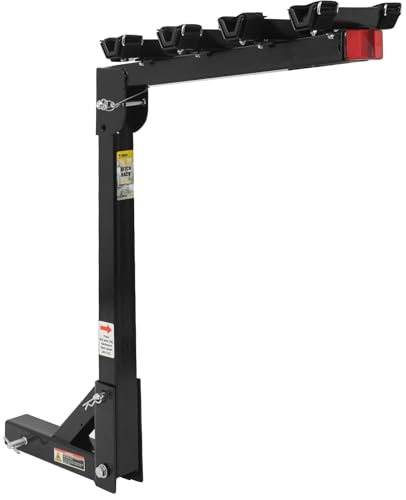
MaxxHaul Hitch Mount 4 Bike Rack 70210

Trimax RMBR4 Road-MAX Hitch Mount Tray


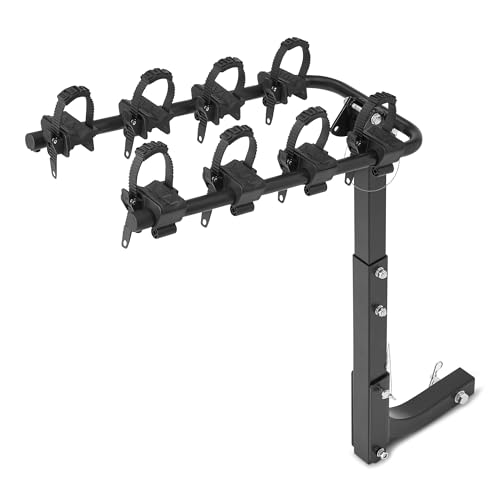
Amazon Basics 4-Bike Hitch Rack

Soarify Hitch Bike Rack 4 Bikes


Thule Revert Vertical Hitch Rack
More Details On Our Top Picks
This MaxxHaul model leans into steel-based utility rather than clever styling. The swing-down setup matters in the real world, because rear access to cargo or a tailgate stays more manageable than on fixed racks.
You’ll feel the fit most on family trips, weekend trail runs, or any drive where four bikes need to ride on one hitch platform. The honest read is that heavy-duty construction usually brings more bulk, so garage storage and vehicle clearance deserve a glance before you commit.
Strong Points
- 150-pound capacity supports a full family bike load with some headroom.
- Swing-down movement helps you reach the rear area without unloading the rack.
- Works across cars, trucks, SUVs, and minivans, which broadens vehicle matching.
- Safety reflector adds a visible cue at the back of the vehicle.
- Heavy-duty build suits repeat use on school runs and trail weekends.
Things To Consider
- The bulkier frame can take more room in storage than lighter rack styles.
- Suspension and wheel contact details are less specialized than on tray racks.
- Installation still depends on a proper hitch fit, so measuring matters first.
Feature Snapshot
Who It Suits Best
Families and casual riders who want a sturdy hitch carrier with simple access to the rear hatch get the most from this design.
A Better Fit Elsewhere
Thule Revert Vertical Hitch Rack suits riders who want a more vertical, efficiency-first approach for heavier hauling.
Tray-style racks usually appeal to people who want a calmer ride feel than a basic cradle setup. The locking arms are the standout detail here, since they help keep bikes steadier on long drives where road chatter can become annoying fast.
Compared with the swing-down MaxxHaul, this Trimax leans more into bike-position control than rear-access convenience. That trade-off makes sense for SUV, truck, and van owners who care more about security of placement than quick hatch access.
What We Like
- Tray format gives each bike a more defined resting position.
- Locking arms help reduce movement during highway trips.
- Foldable design makes day-to-day storage less awkward.
- Built for 2-inch receivers, a common hitch size on larger vehicles.
Worth Noting
- Tray racks can take more time to set up than simpler hang-style carriers.
- The fold mechanism adds another moving part to keep clean and checked.
- Vehicle fit still depends on receiver compatibility, so measure first.
Core Details
Who Will Love This
You’ll get the most out of this rack during frequent highway travel or weekend rides that start far from home.
Another Choice May Suit
Amazon Basics 4-Bike Hitch Rack fits shoppers who want a simpler steel-frame option without moving into tray-rack territory.
Thule’s Apex XT sits in the part of the category where clean packaging and road-ready behavior start to matter as much as raw capacity. For daily use, that usually means a rack that feels less fussy during loading and less distracting once you’re on the move.
Compared with the Trimax tray model, this one reads as a more polished all-around hitch solution rather than a purely mechanism-focused rack. The catch is that premium build direction often brings a more serious price profile and a little less forgiveness on budget.
Highlights
- Brand reputation in the rack space signals a more finished design approach.
- Hitch format keeps bikes outside the cabin and off the roofline.
- Strong fit for repeat weekend loading and regular road travel.
- Cleaner overall presentation suits owners who care about a neater setup.
Points To Note
- The listing gives less technical detail than some other picks here.
- High-end positioning can be overkill for occasional neighborhood rides.
- Storage needs still matter, since hitch racks never vanish into nothing.
Details At A Glance
Built With In Mind
You’ll appreciate this most as a regular traveler who wants a cleaner hitch-rack experience with fewer rough edges.
Where A Sibling Pick Shines
MaxxHaul Hitch Mount 4 Bike Rack 70210 suits households that want a clearer value angle and a swing-down access feature.
This Kingarage pick changes the job entirely, since it’s a floor stand rather than a vehicle carrier. That makes it a better fit for garages, sheds, and patios where you want the bikes upright and ready without touching a hitch.
The disc-brake and derailleur-friendly design matters because those parts can sit awkwardly on sloppy storage racks. You may find the 12-inch to 29-inch tire range especially useful in mixed-bike homes, though the bigger trade-off is that floor space becomes part of the equation.
Upsides
- Waterproof construction suits indoor and outdoor storage zones.
- Tube diameter and steel build point toward steady floor placement.
- Designed around sensitive bike parts, which helps in mixed collections.
- Fits a wide tire range, so it works with more bike types.
Areas To Watch
- Floor stands solve storage, not transport, so this is the wrong tool for road hauling.
- You’ll need enough open floor area for four bikes in a vertical layout.
- Garage clutter can make placement less convenient than a wall-mounted setup.
Technical Sheet
Best Suited To
Garage owners and mixed-bike households get the most value here, especially when storage space is organized rather than crowded.
Reach For A Different Pick When
Suchtale 4 Bike Rack works better for tight indoor storage corners where a simpler gravity-style footprint makes more sense.
This Amazon Basics rack keeps the design language plain, which can be exactly what you want for routine transport. The anti-rattle stability point matters because play in the hitch area turns into extra noise and motion on rough roads.
Compared with the more specialized Trimax tray and Thule options, this one aims at broad usefulness instead of advanced handling tricks. For most households, that balance works well, though the 132-pound ceiling means you’ll want to think about total bike weight instead of just counting frames.
Best Bits
- Heavy-duty steel frame gives the rack a straightforward, durable feel.
- Foldable layout helps reduce storage hassle after the ride is done.
- Anti-rattle design supports a steadier hitch connection.
- 2-inch hitch fit keeps it aligned with common towing setups.
- 132-pound limit suits many family combinations without feeling oversized.
Room For Improvement
- The broad design is practical, but it does not feel especially specialized.
- You’ll still need to manage strap placement and frame contact carefully.
- Heavier racks are less pleasant to move in and out of storage.
Feature Rundown
The Right Fit
Practical-minded households and first-time hitch-rack shoppers will usually get a clean fit from this one.
Skip It When
Trimax RMBR4 Road-MAX Hitch Mount Tray suits you better when you want more bike-position control and a tray-based layout.
Soarify sits in a useful middle ground for household hauling, with a load rating that gives you a bit more breathing room than some simpler racks. Rubber straps are the key detail here, since they create a more forgiving hold than bare-metal contact points on basic carriers.
That mix works well for cars, SUVs, and RV setups where hitch use needs to stay flexible. The tilt-release feature also adds day-to-day convenience, though strap-based systems usually ask for a little more care during loading than more rigid tray designs.
Positives
- 143-pound load rating gives you useful headroom for four bikes.
- Rubber straps offer a gentler interface with bike frames.
- Tilt-release function helps with rear access and parking convenience.
- Fits cars, SUVs, and RVs, so it covers a wide vehicle spread.
Softer Spots
- Strap-based retention can take more attention during setup.
- The design is practical, but not as structured as a tray rack.
- Frequent use may call for regular strap checks and cleaning.
Core Details
Whose Shelf It Belongs On
Budget-conscious households that still want a workable tilt function and wide vehicle fit will feel at home here.
Look Elsewhere When
Thule Apex XT Bike Hitch Rack suits you better when you want a more polished hitch-rack experience with a premium finish.
The Suchtale stand is about order, not transport, and that distinction matters. A freestanding gravity-style holder makes sense in a garage where you want four bikes upright without wall drilling or a vehicle hitch involved.
Compared with the Kingarage floor rack, this one reads as a simpler vertical organizer for tighter parking zones. One thing worth considering is that gravity-based storage works best on reasonably flat floors, so a cluttered or sloped area will make setup feel less graceful.
Reasons To Buy
- Freestanding layout avoids wall mounting and hitch hardware.
- Adjustable vertical support helps with changing bike sizes and layouts.
- Good fit for garages and indoor storage corners.
- Helps keep bikes off the floor in a neat vertical line.
Small Caveats
- This is storage equipment, so it does not solve road hauling.
- Gravity stands need sensible floor space to feel stable and tidy.
- Busy garages may make bike placement slower than expected.
Spec Overview
Perfect Match For
Homeowners who want an orderly floor-based parking spot for a mixed bike collection will get the most from this stand.
A Better Fit Elsewhere
Kingarage 4 Floor Bike Rack fits you better when tire range and disc-brake-friendly storage matter more than a lighter gravity layout.
Thule’s Revert moves the category into more serious hauling territory with a vertical layout and a 220-pound capacity. That matters for riders who want to carry four bikes without wasting as much rear footprint as a wider horizontal design.
Compared with the MaxxHaul and Amazon Basics racks, this one is the more capacity-focused step up, though it also looks more specialized than a casual family rack. The honest read is that this style makes the most sense for frequent transport and bigger loads, not occasional errands.
Best Bits
- 220-pound capacity gives it a strong hauling ceiling for the category.
- Vertical layout helps reduce how far the rack spreads behind the vehicle.
- Tilt assistance adds convenience during loading and rear access.
- Clear fit for riders who move multiple bikes on a regular basis.
Honest Caveats
- Specialized vertical design can be more rack than some homes need.
- Higher-capacity hardware usually means more weight and more storage effort.
- Frequent users will want to keep the moving parts clean and checked.
Feature Card
Who Should Grab It
You’ll get the most from this rack when four-bike transport is a routine part of your schedule and vehicle space is at a premium.
Where Shoppers Go Wrong
Amazon Basics 4-Bike Hitch Rack is the more sensible choice for households that want a simpler, less specialized setup.
How To Choose The Right Bike Racks For 4 Bikes
Match The Rack Type To Your Job
Start with the use case, not the label on the box. Hitch racks suit transport, floor and gravity stands suit storage, and the two should not be treated like substitutes just because both hold bikes. That split matters in a garage where one family wants weekend travel and another just wants a cleaner parking spot.
Receiver size matters as much as shape for hitch models. A 2-inch receiver is common on SUVs and trucks, while smaller vehicles may need a different setup or may not suit a heavy carrier at all. In practical terms, a mismatch here turns a promising rack into dead weight.
Look Hard At Stability Hardware
Anti-rattle systems, locking arms, tilt releases, and swing-down frames all solve different annoyances. Anti-rattle pieces reduce shake inside the hitch, locking arms help keep the bikes settled, and tilt or swing features make the rear of the vehicle easier to reach.
The trade-off is complexity. More moving parts can mean more upkeep, more time at setup, and more pieces to keep clean after wet road trips or dusty trail runs.
Weigh Capacity Against Real Bike Weight
Capacity numbers should be read as a combined limit, not a promise that any four bikes will fit without thought. Heavier mountain bikes, e-bikes, and mixed-size frames add up fast, so the total matters more than the count alone.
That is where a stronger frame can be worth the step up. A household that moves bikes every weekend benefits from headroom, while occasional riders often do fine with a simpler, lighter rack.
Plan For Storage And Daily Handling
Four-bike racks are never tiny, even when they fold. You need somewhere to store them off the vehicle, and you need enough room to load and unload without knocking pedals, rotors, or handlebar ends into each other.
For garages, a stand with an adjustable vertical layout can be a calmer fit than a hitch carrier. For road use, a rack that folds or swings away saves frustration because you spend less time removing the whole unit just to open a hatch.
Things Worth Knowing First
Wrong Turns To Avoid
A common mistake is choosing a road rack for storage or a storage stand for transport. Another is overlooking receiver size and total load, then discovering the rack works on paper but not on the vehicle or with the actual bikes.
It also helps to think about where the rack lives between uses. Hitch models need a place to rest, and floor racks need enough room to stay orderly without turning the garage into a maze.
The Case For Spending Up
Higher-tier models usually put money into steel quality, tighter hardware, better movement controls, and more polished fit. Those details matter most when the rack rides often, carries expensive bikes, or needs to feel steady on long highway trips.
That extra cost can be worth it for frequent use, especially for households that keep four bikes moving every week. Occasional riders, though, may get more value from a simpler rack with fewer moving parts and less storage hassle.
Frequently Asked Questions
What kind of rack works best for four bikes?
A hitch rack usually fits the transport job best because it keeps all four bikes outside the cabin. A floor or gravity stand makes more sense for garage storage.
Do I need a 2-inch hitch?
Many four-bike hitch racks use a 2-inch receiver, especially on SUVs, trucks, and vans. You should match the rack to your vehicle’s hitch size before anything else.
Are tray racks better than hanging racks?
Tray racks usually give each bike a more defined resting position, which helps with stability. Hanging racks are often simpler and easier to store.
Can a four-bike rack fit e-bikes?
Some can, but total weight matters more than the bike count. Check the combined load rating and the frame style before assuming fit.
What matters most for garage storage racks?
Floor space, tire fit, and stability matter most in a garage setup. Adjustable vertical designs help when the bikes have different sizes or shapes.