
Bike Platform Hitch Racks solve a familiar problem: you want stable transport without wrestling bikes onto a roof or folding them into a cabin. That matters most when your bikes are heavy, your frame geometry is awkward, or your weekend starts before sunrise. The right rack also saves time at the curb, which is where good hardware proves its value. This roundup focuses on platform-style hitch racks that suit SUVs, trucks, vans, RVs, and daily drivers with a 2-inch receiver.
The Shortlist At A Glance

Trimax RMBR4 Road-MAX Hitch Mount Tray 4 Bike Rack

ARKSEN 2-Bike Hitch Mount Platform Rack

TANX Ebike Fat Tire Bike Rack Tow Hitch 2-Bike

Young Electric Ebike Rack with Ramp 200 lbs Hitch Mount Bike Carrier
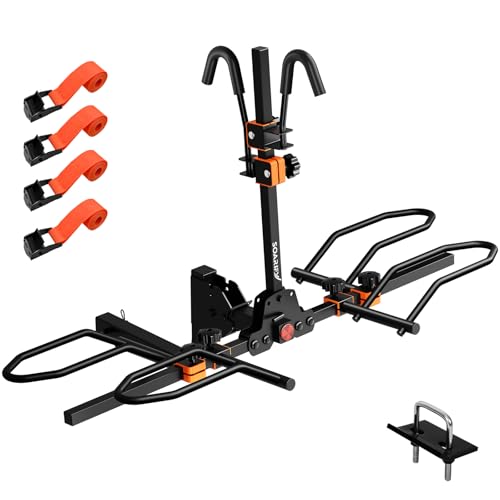
Soarify Platform 2 EBike Rack for Car Hitch Bike Rack

TRAILXPERT 2-Bike Rack Hitch Mount Fits E-Bikes Fat Tires 160lbs
More Details On Our Top Picks
The four-bike format gives you room for family rides, mixed frame styles, and the occasional backup bike, which is exactly where a tray rack earns its keep. Compared with the lighter two-bike picks below, this one is built around capacity first, so it suits bigger households and group outings more naturally.
The foldable layout helps with storage in a garage or cargo area, and the locking arms add a layer of bike hold that matters on rougher roads. The trade-off is size, because a rack meant to carry more bikes usually asks for more rear clearance and a bit more care during loading.
Strong Points
- Four-bike layout suits family trips and carpool rides.
- Tray-style support helps keep bikes separated.
- Foldable construction makes garage storage less awkward.
- Locking arms add a steadier feel on the road.
Things To Consider
- Four-bike hardware takes more space behind the vehicle.
- Loading the outer bikes can feel slower than on two-bike racks.
- Cleaning around the trays and arms takes a little extra effort after wet rides.
Feature Snapshot
Who It Suits Best
Families, weekend riders, and anyone moving several standard bikes from one place to another will get the most from this setup.
A Better Fit Elsewhere
ARKSEN B0BV2MQSLP suits you better when two heavier bikes are the main job and a smaller rack makes daily handling easier.
Two-bike capacity keeps this rack simpler to live with, especially for commuters or weekend riders moving heavier frames. Compared with the Trimax four-bike tray above, the ARKSEN is easier to manage at curbside and less cumbersome in tight parking spots.
The 75-pound-per-bike rating gives it a clear role with e-bikes and fat-tire builds, and the tilt function helps you reach the rear of the vehicle without removing the entire rack. That tilt mechanism is handy in a grocery lot or at a trailhead, though it also adds another moving part to keep clean and aligned.
What We Like
- Handles heavier bikes with more confidence than light-duty trays.
- Tilt feature improves rear access on SUV and pickup setups.
- Two-bike format keeps loading more direct.
- Works well for mixed errand and trail use.
Room For Improvement
- Two-bike capacity limits larger family outings.
- Tilting hardware can add maintenance points over time.
- Heavier bikes still need deliberate lifting during mounting.
Technical Sheet
Best Suited To
Shoppers with two heavier bikes, especially e-bikes, will appreciate the load rating and the simpler footprint.
Another Choice May Suit
Young Electric B0CGX5G436 makes more sense for you when ramp loading matters and you want less lifting at the hitch.
The TANX rack sits in the heavier-duty corner of the two-bike group, and that matters for e-bikes that feel less forgiving during loading. Compared with the ARKSEN, it pushes farther into load capacity, so it suits riders who care more about frame weight than about keeping the rack light in the hand.
Its wobble-free, tilting, folding layout points to real-world use in driveways, garages, and trail parking lots where stability matters. The honest read is that this kind of rack rewards careful setup, because a sturdier frame usually asks you to pay attention during the first install and occasional re-tightening.
Upsides
- 160-pound total rating gives room for heavier bike pairs.
- Fat-tire compatibility broadens the range of bikes it can carry.
- Tilting design helps you reach the rear hatch.
- Folding structure makes storage less awkward in a garage.
- Wobble-resistant design suits longer drives with less drama.
Minor Gripes
- Heavier construction is less convenient to lift into place.
- Careful setup helps keep the rack steady over time.
- The more substantial frame can take up room when stored.
Core Details
Who Will Love This
Riders with heavier e-bikes or fat-tire bikes who want a two-bike rack with more muscle will find the fit strong.
Swap It Out When
ARKSEN B0BV2MQSLP is the easier fit for you when a slightly lighter, simpler two-bike rack is enough.
The ramp changes the loading experience in a practical way, especially for heavier e-bikes that are awkward to lift straight onto a tray. Compared with the TANX rack, this Young Electric model leans harder into convenience during loading, which makes a difference in a driveway after a long ride.
The 200-pound rating and 5-inch fat-tire support put it in a more serious bracket for heavy bikes, and the foldable frame helps it stay manageable when not mounted. One thing worth considering is that ramp hardware adds another piece to store and position, so this pick suits you best when ease of loading matters more than keeping the kit minimal.
Reasons To Buy
- Ramp helps reduce awkward lifting at the hitch.
- 200-pound rating gives it room for tougher e-bike setups.
- Fits fat tires up to 5 inches wide.
- Foldable design helps reclaim space in the garage.
- Works well for riders who load bikes alone.
Softer Spots
- Ramp adds an extra part to keep track of.
- More features usually mean more setup steps.
- The rack makes the most sense for heavier bikes, not light casual carry.
Feature Card
Built With In Mind
Solo riders, older cyclists, and anyone loading a heavy e-bike without much help will get the most out of the ramp.
Look Elsewhere When
TANX B0D1TTB5SY makes more sense for you when you want a heavy-duty two-bike tray without the ramp to store.
The Soarify rack keeps the design direct, which is useful when you want a platform mount that does the job without a lot of extra hardware. Compared with the Young Electric model, it gives up the ramp advantage, but that also keeps the setup a little less involved for routine use.
Its 2-inch receiver fit makes it a practical match for SUVs, RVs, and trucks with the common hitch size, and the platform layout should feel familiar to anyone who wants a steady rear carrier for regular rides. In most garages, that simpler shape also makes it easier to store without rearranging half the wall.
Positives
- Platform style keeps bike placement straightforward.
- Works across SUVs, RVs, and trucks with the right receiver.
- Fewer extra parts can mean simpler routine handling.
- Good fit for regular weekend transport.
Points To Note
- No ramp means heavier bikes still need lifting.
- Basic layout leaves less loading help than premium alternatives.
- Storage space still matters in smaller garages.
Details At A Glance
The Right Fit
Drivers who want a straightforward two-bike platform for regular suburban or camping trips will feel at home with this one.
Reach For A Different Pick When
Young Electric B0CGX5G436 is the smarter move for you when ramp loading matters more than keeping the rack simple.
TRAILXPERT packs a lot into a two-bike platform, and that makes it appealing for riders who want more adjustment and a sturdier feel without moving up to a larger rack. Compared with the Soarify pick, this one is the more feature-forward choice, especially for heavy e-bikes and fat tires.
The tilting frame helps with rear access, while the 160-pound total rating keeps it in serious-hauler territory for two bikes. The trade-off is familiar: more capability usually means more parts to manage, so this suits someone who values function over a stripped-down setup.
Bright Spots
- Supports e-bikes and fat tires up to 5 inches wide.
- Tilting design makes rear access more practical.
- 160-pound rating suits heavier two-bike transport.
- Platform format keeps the bikes seated more securely than basic hanging racks.
Areas To Watch
- Feature-heavy racks usually take longer to set up.
- Tilting hardware and fold points need occasional attention.
- More capability can mean more stored bulk in the garage.
Core Details
Whose Shelf It Belongs On
Fat-tire e-bike owners and riders who want a more capable two-bike rack with tilt function will get the best fit here.
Where A Sibling Pick Shines
Soarify B0D6LQHBCL is the simpler match for you when you want a less feature-heavy rack for routine trips.
How To Choose The Right Bike Platform Hitch Racks
Match The Rack To The Bike Weight
Load rating matters more here than on lighter trail carriers. E-bikes, long-wheelbase frames, and fat tires can push a rack harder than a standard hybrid, so the listed per-bike and total capacity should line up with your heaviest setup, not your lightest one.
Higher capacity often comes with a thicker frame and more hardware around the hitch. That adds stability, but it also adds weight and storage bulk, which matters in a garage with limited room or for anyone lifting the rack alone.
Check Receiver Size And Vehicle Shape
These picks center on 2-inch receivers because that size is common on SUVs, trucks, vans, and many RVs. A platform rack with a correct receiver fit feels steadier on the road and less fussy during install than an improvised setup.
Rear hatch shape matters too. A tilting rack helps on vehicles that need cargo access often, while a fixed rack may feel simpler but can block the liftgate more completely.
Think About Loading Style, Not Just Capacity
Ramp-assisted models make sense for heavier bikes, especially when lifting onto the tray feels like the hardest part of the job. That convenience carries a storage cost, because ramps need their own place in the garage or cargo area.
Folding racks are easier to park indoors than fixed ones, and locking arms help the bike stay settled during longer drives. For daily use, the most useful rack is usually the one that makes loading feel like a routine instead of a chore.
Balance Rack Complexity With Maintenance
More moving parts often mean more cleaning and occasional adjustment. Tilt joints, fold points, and frame clamps collect road grit, so a shopper who rides in wet or dusty conditions should favor simple access and straightforward hardware.
A cleaner design can be the smarter long-term choice for casual riders, while a feature-heavy rack suits heavier bikes and more frequent hauling. The right call depends on whether you want a tool that disappears into the background or one that does more work for you.
Before You Click Buy
Hidden Buying Traps
The easiest mistake is matching the rack to bike count instead of bike weight. A two-bike rack can still be the wrong fit for a pair of heavy e-bikes, and a four-bike model can be awkward for solo loading or tight parking spaces.
Another common miss is forgetting rear access. A rack that doesn’t tilt can make cargo use annoying, while a larger foldable unit may still block the hatch more than you expect.
The Upgrade Payoff
Higher-tier racks usually spend extra money on stronger frames, better load handling, and loading aids like ramps or tilting mechanisms. That extra hardware pays off most for heavier e-bikes, frequent hauling, or anyone who loads bikes without help.
For lighter weekend use, a simpler platform can be enough and easier to live with. Spending up makes the most sense when you value less lifting, more stability, and a rack that feels built for regular abuse from pavement, weather, and storage cycles.
Frequently Asked Questions
What makes a platform hitch rack different from a hanging rack?
A platform rack supports the bike at the wheels or trays, which helps with heavier frames and odd tube shapes. Hanging racks rely more on the frame, so they are less convenient for many e-bikes and fat-tire bikes.
Do you need a 2-inch receiver for these racks?
All six picks in this roundup use a 2-inch hitch connection. That size is common on many SUVs, trucks, vans, and RVs.
Are ramp-style racks worth the extra bulk?
They make the most sense for heavy e-bikes, especially for solo loading. The trade-off is extra storage space and one more piece to manage.
How much weight should a two-bike rack handle?
Use the heavier bike as the guide, then compare that with the rack’s per-bike and total load ratings. A rack that looks sturdy can still be the wrong fit on paper.
Which type suits frequent weekend hauling?
A folding platform rack with a tilt feature usually gives the best blend of access and storage convenience. That combination works well for trail rides, errands, and family trips.