
Bike mirrors make everyday riding easier to manage, whether you’re threading through city traffic, commuting on mixed roads, or keeping an eye on a group ride behind you. The right mirror can reduce shoulder-checks, but fit matters just as much as image clarity. Some attach to bar ends, some clamp to frames, and one mounts on a helmet, so the best choice depends on your bike and your riding posture.
Quick Look At The Shortlist

Hafny Drop Bar Bike Mirror (Silver Glass)


RUBY.Q Handlebar Bike Mirrors 2pcs
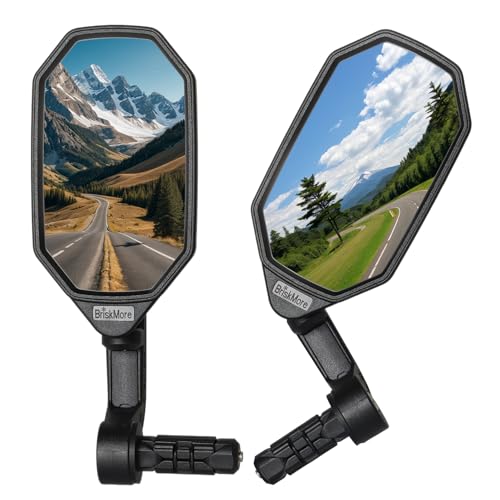
BriskMore Bar End Bike Mirrors

BriskMore Bar End Bike Mirrors BT-022L

Zefal Spy 15 Mini Bike Mirror


PidZoom Bike Helmet Mirror
More Details On Our Top Picks
Drop-bar riders usually want a mirror that stays out of the way, and this Hafny model is built around that exact need. The glass lens matters here, because it tends to give a cleaner, less milky view than plastic on fast city commutes or longer road rides.
The fit range runs from 16 mm to 24 mm inner diameter, so you’ll want an open-ended bar before you settle on it. That trade-off is simple: better optical clarity than many plastic options, but a narrower compatibility window than more universal clamp-on styles like the Zefal Spy 15.
Strong Points
- Glass mirror gives a sharper rear view than common plastic lenses.
- The super-convex shape widens what you can see without moving your head as often.
- Low-glare design helps on bright morning routes and open roads.
- It suits drop-bar setups better than the flatter, more general-purpose mirrors in this list.
Points To Note
- It only works with open-ended drop bars, so fit checking comes first.
- Users with tighter bar-end spaces may need to spend time on positioning.
- Glass feels more premium, though it also makes careful handling a smart habit during installation and cleaning.
Feature Snapshot
Who It Suits Best
Road riders and daily commuters with open-ended drop bars will get the most from it.
Where A Sibling Pick Shines
BriskMore Bar End Bike Mirrors suits riders who want a more universal fit on flat bars, e-bikes, or scooters.
Accmor takes a straightforward route, which suits riders who want two mirrors and simple adjustability without fuss. The convex acrylic lens is the practical part of the story, because it broadens the rear view for neighborhood rides, bike paths, and everyday errands.
It also rotates a full 360 degrees at the base, with a 180-degree mirror adjustment, so you can fine-tune the angle more freely than with fixed-position styles. The trade-off is that plastic optics usually feel less crisp than glass, but the payoff is a lighter, more forgiving setup for rougher use.
What We Like
- Two mirrors in the set make it useful for bikes that need matching left and right coverage.
- 360-degree base movement gives you more room to dial in the view.
- Acrylic construction helps keep the mirrors practical for casual riding and frequent handling.
- The wide field of view helps in traffic where quick glances matter.
Room For Improvement
- Plastic lenses can show less crisp detail than glass in some lighting.
- The shipping film needs removal before use, so first setup takes a small extra step.
- Best results depend on careful angle setting, especially on uneven handlebars.
Core Details
Built With In Mind
You’ll like this most on a commuter bike, mountain bike, or road bike where simple rear awareness matters more than premium materials.
Swap It Out When
Hafny Drop Bar Bike Mirror fits better for riders who want a glass lens and ride open-ended drop bars.
This pair lands in the middle ground nicely, especially for riders who want a compact handlebar-mounted mirror without spending time on complicated hardware. The acrylic convex lens gives a broad rear picture, which helps during stop-and-go riding in town or on shared paths.
The included Allen wrench is a useful touch, since it keeps installation close to standard bike-tool territory rather than special-kit territory. Compared with Accmor’s more open adjustability, this one feels a bit more mechanically focused, and the folding design helps it tuck away near obstacles.
Highlights
- Two mirrors give you a matched set for dual-bar use or a spare.
- The folding design is helpful in tight parking spots and crowded garages.
- A high-impact nylon body adds a tougher feel than lighter plastic-only builds.
- The included wrench simplifies setup for many home installations.
Softer Spots
- Acrylic optics are practical, though they do not have the same feel as glass.
- The mirror needs correct angle setting to make the most of its field of view.
- Foldable parts are useful, but they also mean another point to keep clean over time.
Details At A Glance
Right Fit For
Commuters and casual off-road riders who want a compact, two-piece mirror set will feel at home with this one.
A Better Fit Elsewhere
Zefal Spy 15 Mini Bike Mirror suits riders who need a tiny, strap-on option for unusual frame spots.
BriskMore leans harder into hardware quality than some of the lighter options above, and that shows in the PA6 plus 30 percent glass-fiber frame, stainless steel screw, and gear-shaped connector. For riders on e-bikes, mountain bikes, or scooters, that kind of build tends to feel reassuring on rough pavement and mixed surfaces.
The octagonal glass lens is another practical detail, because it gives you a wide rearward picture while staying closer to the feel of a traditional mirror than an acrylic version. The catch is fit, since it only works with open-ended grips and a 14 mm to 24 mm inner diameter, and it does not suit drop bars.
What We Like
- The glass lens offers a clean rear view with a more substantial feel.
- Stainless hardware adds confidence for riders who cover a lot of ground.
- The patented expansion plug structure is built for a steadier bar-end hold.
- Left and right use gives you more mounting flexibility.
Areas To Watch
- It only works on open-ended grips, so compatibility checks matter.
- Drop-bar bikes are out, which narrows the audience a good bit.
- Glass and metal parts call for careful cleaning and storage after wet rides.
Feature Rundown
Whose Shelf It Belongs On
Mixed-use riders on flat bars, e-bikes, or scooters will get the most out of this sturdy design.
Look Elsewhere When
Hafny Drop Bar Bike Mirror is the better call for anyone riding an open-ended road bar.
This BT-022L version sits close to the heavier BriskMore set above, but it reads as the more focused left-side option. The same PA6 plus glass-fiber build, stainless screw, and glass lens are here, so you’re getting the same sturdy feel with a narrower use case.
That narrower lane can be helpful for scooter and e-bike setups where one side mirror is all you want, and the scratch-resistant lens adds a little peace of mind during regular parking and storage. The limitation is obvious too, since it’s a left-side mirror and still asks for an open-ended grip within the 14 mm to 24 mm range.
Positives
- Glass optics keep the rear image crisp for quick traffic checks.
- Sturdy mounting parts suit riders who prefer a solid, fixed feel.
- The left-side format matches many scooter setups neatly.
- It shares the durable BriskMore hardware style without extra bulk.
Room For Improvement
- Single-side coverage won’t suit riders who want mirrors on both sides.
- Fit is still tied to open-ended handlebars, so measure first.
- The glass lens deserves a little care during wiping and storage.
Core Details
Who Should Grab It
Scooter and e-bike riders who want a sturdy left-side mirror will get the best match here.
Where A Sibling Pick Shines
BriskMore Bar End Bike Mirrors suits you better if you want a pair and more left-right flexibility.
Zefal takes a very different path from the bar-end mirrors above, because this one clips on with a rubber strap and fits a much wider range of 22 mm to 86 mm frames or handlebars. That broad fit makes it handy for riders who move mirrors between bikes, or for anyone with a frame shape that doesn’t suit a bar-end insert.
The 28 g weight and 15 cm² mirror keep the footprint tiny, so it stays out of the way on crowded bars and narrow frame sections. The mirror surface is chrome-plated ABS rather than glass, which keeps it light and impact-friendly, though it won’t feel as crisp as the better glass picks in this roundup.
Bright Spots
- Rubber strap mounting makes it versatile across frames, handlebars, and forks.
- The compact size suits bikes where bar space is already crowded.
- Light weight helps it disappear visually and mechanically on smaller setups.
- Chrome-plated ABS is useful for riders who want a less fragile mirror surface.
Things To Consider
- The small mirror surface gives you less visual area than larger options.
- Clip-on placement can take a little fiddling to get just right.
- Plastic mirror material is practical, though not as sharp as glass in many lighting conditions.
Quick Facts
Who Will Love This
Travelers and minimalist riders who want a tiny, flexible mirror will probably appreciate this most.
Not Your Match When
BriskMore Bar End Bike Mirrors suits you better for a larger glass lens and a fixed bar-end setup.
XIFOWE is the style-led pick in this group, and the galvanized steel frame gives it a more retro, metal-heavy look than the plastic or glass-fiber alternatives. For a cruiser, vintage commuter, or e-bike with old-school styling, that visual match can matter almost as much as the mirror itself.
The convex shatterproof mirror and chromium coating add practical value too, because they support durability and make wiping off road grime less of a chore. The trade-off is that this one is more about look and solid materials than broad fit details, so it rewards riders who care about the visual theme of the bike.
Best Bits
- The galvanized steel frame suits retro builds and cruiser bikes well.
- Convex mirror shape gives a wider rearward glance.
- The metal finish feels more substantial than lightweight plastic styling.
- Chromium coating helps the surface feel easier to keep clean.
Worth Noting
- Style is the main attraction, so this won’t suit every bike theme.
- The listing does not spell out the fit details as clearly as some other picks here.
- Metal parts can show wear more visibly if they’re stored wet for long stretches.
Feature Card
Made For
Riders building a cruiser or retro-style bike will get the strongest visual match here.
Consider Something Else When
Zefal Spy 15 Mini Bike Mirror fits better for riders who want a tiny, travel-friendly clip-on instead of a vintage look.
PidZoom solves a different problem from the bar-end mirrors in the rest of the list, because it follows your helmet rather than your handlebars. That setup can feel natural for commuters and touring riders who keep changing posture, since the mirror stays with your line of sight instead of your frame.
The two mount options, 3M tape and an O-ring base, give you some flexibility, and the dual ball joints make angle changes quick. The 2.6-inch convex option is better for a broader view, while the 3-inch flat option leans toward sharper detail, so the choice depends on whether you value sweep or precision more.
Positives
- Helmet mounting puts the mirror close to your sightline.
- Two mounting methods give you more setup flexibility.
- Two mirror shapes let you choose between broader awareness and sharper detail.
- Tool-free angle changes are handy on rides with frequent posture shifts.
Small Caveats
- Adhesive mounting needs careful surface prep and patience before full use.
- Helmet placement won’t suit every rider’s comfort preference.
- The setup is more personal than a bar-end mirror, so initial alignment matters.
Technical Sheet
The Right Fit
Commuters and touring cyclists who like helmet-mounted rear awareness will get the most from this design.
Another Choice May Suit
Hafny Drop Bar Bike Mirror is the better call for riders who want a fixed mirror on open-ended road bars.
How To Choose The Right Bike Mirrors
Mounting Style Comes First
Bar-end mirrors suit drop bars, flat-bar mirrors suit upright bikes, and helmet mirrors suit riders who want the view tied to head position. That first choice matters more than lens shape, because a clear mirror is useless on the wrong mount.
Open-ended grips are a recurring fit point in this category, especially for bar-end picks like Hafny and the BriskMore models. Clip-on options such as the Zefal Spy 15 help when your bike doesn’t have the right opening, which is handy on rentals, commuters, or bikes with crowded handlebar space.
Lens Material Changes the Feel
Glass usually gives a cleaner, more stable image, which is why the Hafny and BriskMore mirrors feel more premium. Acrylic and ABS are lighter and less fragile in day-to-day handling, though the image can look a little less crisp in certain light.
That trade-off matters most on fast roads and busy intersections, where quick glances need as much clarity as possible. On neighborhood rides or mixed-use paths, a lighter plastic mirror often feels perfectly sensible.
Adjustability Affects Daily Comfort
Some mirrors rotate at the base, some tilt at the face, and the helmet pick adds dual ball joints for fine-tuning. More movement is useful for different riding postures, but too much looseness can mean extra checking after rough roads.
For riders who stay in one position for long stretches, a firmer fixed angle can be easier to live with. For stop-and-go commuting, the ability to nudge the mirror a few degrees without tools is a real convenience.
Durability Should Match Your Miles
Metal hardware, glass-fiber reinforcements, and stainless screws make sense for riders who log frequent miles or park outdoors. The XIFOWE vintage mirror and the BriskMore models lean into that sturdier feel, while lighter designs keep things simpler and easier to mount.
You don’t always need the heaviest build, though. Short errands and fair-weather rides can be just as well served by the lighter Zefal or Accmor options, especially when low bulk matters more than a tank-like frame.
Before You Click Amazon
Common Shopping Slip Ups
Fit mistakes are the biggest one, especially with bar-end mirrors that only work on open-ended handlebars. Measure the inner diameter and check bar shape before you commit.
Another easy miss is choosing a mirror by size alone. A larger lens sounds reassuring, but the mount, bike posture, and handlebar space matter just as much.
What The Higher Tier Buys
Higher-tier mirrors usually spend money on better materials, sharper lens surfaces, and more stable mounting hardware. That shows up in glass lenses, reinforced frames, stainless screws, and cleaner adjustment mechanisms.
The upgrade makes sense for daily commuters, long-distance riders, and anyone who wants a mirror that feels settled after rough pavement. For casual weekend use, a lighter and simpler design can still be the smarter call.
Frequently Asked Questions
Do Bike Mirrors Help On Busy Roads?
They make rear checks easier and can reduce how often you turn your head. That matters most in traffic, on commuting routes, and during group rides.
Are Glass Mirrors Better Than Plastic Ones?
Glass usually gives a clearer image and feels more like a traditional rearview mirror. Plastic and acrylic are lighter, which can be useful on rougher rides or smaller setups.
Can You Use A Bar-End Mirror On Every Bike?
No, bar-end mirrors need the right handlebar opening and bar shape. Drop bars, flat bars, and e-bike bars often call for different styles.
Is A Helmet Mirror Hard To Live With?
Most riders adapt quickly, especially when they want the view to follow head movement. It does take a little more personal adjustment than a fixed bar-end mount.
Which Mirror Style Works Best For Commuting?
That depends on your bike and posture, but bar-end and helmet mirrors are both strong commuting options. A clip-on mirror works well when your handlebar space is already crowded.
Closing Thoughts
The right bike mirror depends less on hype and more on your frame, riding posture, and how much rearward clarity you want. Hafny and BriskMore suit riders who want firmer bar-end options, while Zefal and PidZoom make more sense when flexibility matters. Accmor and RUBY.Q bring practical value, and XIFOWE adds a style-first route for cruiser setups. Match the mirror to your bike, and the ride tends to feel calmer from the first mile.