
Choosing the right bike setup for an RV trip saves you from awkward loading, rattling hardware, and bikes that feel like they’re working against the road instead of riding with it. You want a rack that matches your receiver, ladder, trailer tongue, or hitch setup, then fits your bikes without making storage a chore. That matters just as much on weekend getaways as it does on long cross-country drives.
Quick Look at the Shortlist
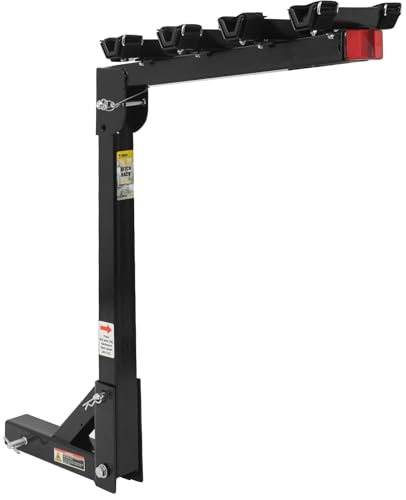
MaxxHaul Hitch Mount 4 Bike Rack (70210)

Camco RV Ladder Mount Bike Rack (51492)
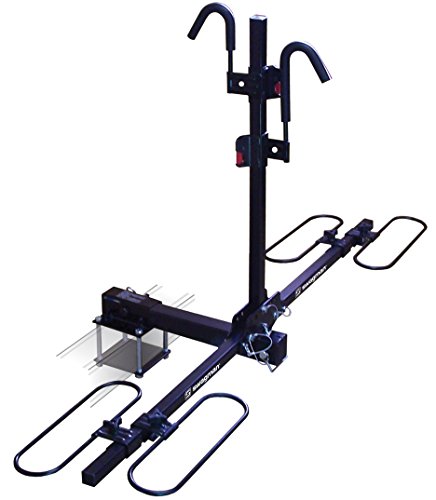
Swagman Traveller XC2 RV Bike Rack
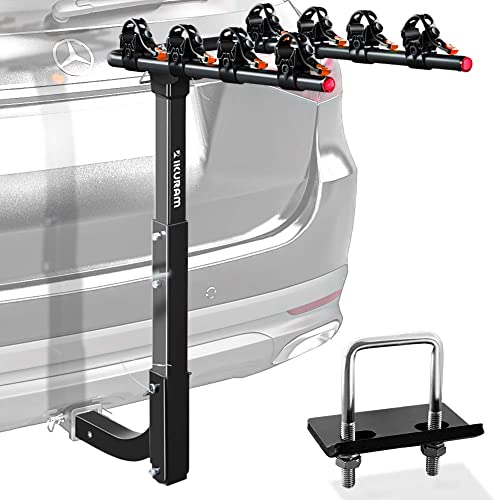
IKURAM R 4 Bike Hitch Rack
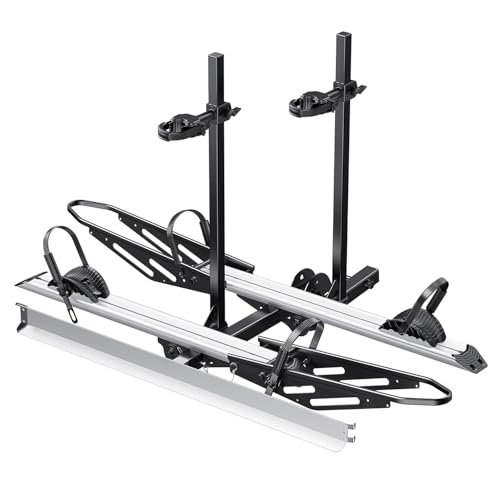
Young Hitch Mount Bike Rack with Ramp
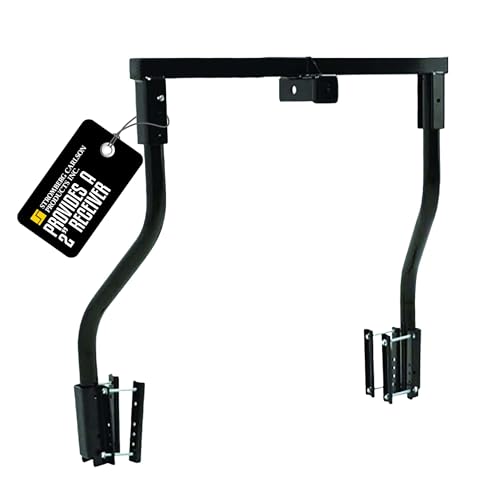
Stromberg Carlson CC-275 Bike Bunk

XtraEzzy Hitch-Mount Bike Rack for Ebike
More Details On Our Top Picks
This rack makes sense for families that need to carry several bikes without giving up hitch access. The swing-down design matters on RV stops, because you can reach the rear area without unloading everything first.
The 150 lb capacity gives you room for a fuller load, though the trade-off is size and weight compared with lighter two-bike options like the Camco ladder mount. For larger rigs, that extra structure is part of the appeal, not a nuisance.
Strong Points
- Holds up to four bikes, so you can keep one setup for the whole group.
- Swing-down access helps you get into the back of the vehicle more easily.
- Fits common hitch-equipped vehicles, which keeps it practical for mixed travel days.
- The included reflector is a useful visibility touch for roadside awareness.
- Heavy-duty framing usually feels better suited to frequent hauling than ultra-light racks.
Things To Consider
- Four-bike carriers take up more room in storage than compact ladder-mounted options.
- Loading a full rack calls for more care to keep handlebars and pedals from tangling.
- The heavier build can feel like overkill for solo trips or two-bike weekends.
Feature Snapshot
Who It Suits Best
Traveling families and RV owners carrying four bikes will get the most from this layout.
Another Choice May Suit
Swagman Traveller XC2 RV Bike Rack fits you better when you only need a steadier two-bike platform with less bulk.
After the larger hitch racks, this one feels neatly pared back for RV owners who want less hardware hanging off the rear. It mounts to a ladder, folds for storage, and keeps the footprint modest in a way that suits lighter travel setups.
Steel construction should help it feel more confidence-inspiring than plastic-heavy alternatives, though a ladder mount naturally depends on the ladder’s condition and layout. That makes it a tidy fit for shorter trips and well-matched RV hardware.
What We Like
- Two-bike capacity keeps loading simple for couples or solo travelers with a spare bike.
- Folding design helps the rack tuck away more neatly between trips.
- Steel build points toward a sturdier feel than lightweight novelty mounts.
- Ladder mounting keeps the hitch free for other towing needs.
Room For Improvement
- It depends on a rear ladder, so it won’t suit every RV body style.
- The 60 lb limit narrows its fit for heavier bikes or oversized frames.
- Storage still needs care, since folded metal hardware can scratch nearby surfaces.
Core Details
Who Should Grab It
Couples with a ladder-equipped RV and moderate bike weight will get the cleanest fit here.
Look Elsewhere When
MaxxHaul Hitch Mount 4 Bike Rack (70210) suits bigger families that need to carry more bikes from a hitch receiver instead of a ladder.
This platform-style carrier leans toward a steadier, more controlled bike hold than a simple hanging rack. The ratcheting hook system helps secure the frame, while the adjustable wheel trays give you more room to line up the bikes cleanly.
Compared with the ladder-mounted Camco, this is the more road-focused choice for a 2″ receiver setup. For RV owners who prefer a platform feel and a foldable frame, it lands in a sensible middle ground.
Highlights
- Platform design usually keeps bikes sitting more confidently than hanging-style carriers.
- Ratcheting hook system adds a more deliberate frame hold.
- Adjustable wheel trays help with bike spacing and setup alignment.
- Foldable construction is handy for storage between trips.
- The 2″ receiver fit suits many RV towing setups.
Softer Spots
- Two-bike capacity leaves less room for bigger families.
- 35 lb per-bike capacity means heavier bikes need a different pick.
- Platform racks can feel bulkier to maneuver than compact ladder mounts.
At A Glance
Right Fit For
RV travelers with two standard bikes and a 2″ receiver will appreciate the balanced layout most.
Skip It When
Young Hitch Mount Bike Rack with Ramp suits heavier e-bikes better, especially when loading effort matters more than compact storage.
Here you get a familiar four-bike format with a foldable frame and an anti-rattle hitch tightener, which helps the rack sit more securely in the receiver. That tighter interface matters on rough roads, where loose movement can turn into noise you keep hearing all the way to camp.
Compared with the MaxxHaul, this one reads more like a straightforward utility rack than a heavier-duty hauler. It should suit mixed vehicle use well, especially for households that want one rack they can move between cars, trucks, and SUVs.
Upsides
- Four-bike capacity works for larger groups without moving into specialty territory.
- The anti-rattle tightener helps reduce receiver play during travel.
- Foldable form makes it less awkward to store than fixed-frame carriers.
- It fits a broad spread of common vehicles with 2″ hitch receivers.
Points To Note
- Four-bike loading can take patience, especially with mixed frame styles.
- Folded storage is better than rigid racks, but it still takes room.
- Hitch racks need periodic checking, since fasteners can loosen over repeated trips.
Technical Sheet
Whose Shelf It Belongs On
Households that want a four-bike hitch rack for shared road trips will get the most from it.
Reach For A Different Pick When
Camco RV Ladder Mount Bike Rack (51492) suits you better when your RV ladder setup matters more than hitch capacity.
The ramp changes the feel of this rack right away, because loading heavier bikes becomes less of a lift-and-wrestle moment. That makes it especially relevant for RV travelers moving e-bikes, fat-tire bikes, or standard bikes that still feel awkward on a high hitch.
Its 200 lb capacity and 2-bike layout give it a serious hauling focus, though that also means you’re paying for strength rather than compactness. Compared with the Swagman Traveller XC2, this is the better call for bikes that need easier roll-on loading.
Reasons To Buy
- The ramp helps reduce strain during loading, which is a real plus with heavier bikes.
- Built for two e-bikes, so it suits many electric and fat-tire setups.
- 200 lb capacity gives you more room for substantial frames and accessories.
- Works with cars, SUVs, RVs, and trailers using a 2″ receiver.
- The broad bike fit makes it useful for households with mixed wheel styles.
Small Caveats
- The ramp adds another piece to handle and store.
- Two-bike capacity is enough for many trips, but not for larger groups.
- Heavier-duty parts often mean more weight to manage at the hitch.
Details At A Glance
Perfect Match For
E-bike owners who want easier loading for an RV trip will get the clearest benefit here.
A Better Fit Elsewhere
IKURAM R 4 Bike Hitch Rack makes more sense for families that need more bike slots than a two-bike heavy-haul setup.
This one serves a very specific RV problem, namely how to add a raised 2″ receiver at the trailer tongue. That makes it a clever fit for travel trailers with A-frame mounting needs, and the adjustable width range helps it adapt to a wider set of tongue layouts.
Compared with the hitch-mounted racks above, the Bike Bunk changes the conversation entirely, because it creates the platform for an RV-approved bike rack instead of carrying the bikes by itself. That extra step is the point, and it works best for RV owners who want a cleaner trailer-tongue solution.
Best Bits
- Creates a raised receiver on the trailer tongue for rack mounting.
- Supports up to 100 lb, which helps with common bike-rack pairings.
- Adjustable A-frame width range increases fit flexibility.
- Works with RV-approved 2″ receiver bike racks, so it pairs with known rack styles.
Areas To Watch
- You still need a compatible bike rack to complete the setup.
- It suits trailer tongue use, not every RV layout.
- Installation is more involved than a simple hitch slide-in carrier.
Core Details
Built With In Mind
Travel trailer owners with A-frame tongues and a separate RV-approved rack will get the best use from it.
Where A Sibling Pick Shines
MaxxHaul Hitch Mount 4 Bike Rack (70210) is the easier all-in-one route for shoppers who want the bikes carried without adding a separate base system.
This rack targets the heavy-bike problem directly, which makes it useful for RV travelers hauling two electric or fat-tire bikes. The 2″ receiver fit keeps it in the standard hitch-rack lane, so the setup stays familiar even with bulkier bikes.
Compared with the Young rack, you don’t get the ramp detail here, so loading effort depends more on your bike weight and lifting comfort. Still, for straightforward two-bike transport, the heavy-duty format is a practical middle ground.
Best Bits
- Built for two electric or fat-tire bikes, which narrows in on a real travel need.
- Heavy-duty design suits heavier frames better than lighter casual racks.
- 2″ receiver fit keeps compatibility broad across RVs and tow vehicles.
- Also works with cars, SUVs, trucks, and minivans, so it can move between vehicles.
Honest Caveats
- No ramp is listed, so loading effort stays manual.
- Two-bike capacity keeps it focused, not family-sized.
- Heavy-duty racks usually take more space in the garage or storage bay.
Quick Facts
Who Will Love This
RV owners hauling two heavier bikes and wanting a simple hitch format will find the fit natural.
Where Shoppers Go Wrong
Young Hitch Mount Bike Rack with Ramp is the smarter path for anyone who knows a loading ramp will save effort.
How To Choose The Right Bike Holders For Rv
Start With Your RV’s Mounting Point
Your first decision is the mounting point, because the rack has to match the hardware already on your rig. A ladder rack like the Camco makes sense for some RVs, while hitch racks such as the MaxxHaul and IKURAM R keep the load on a receiver instead.
Trailer tongue setups are a different lane altogether, and the Stromberg Carlson CC-275 exists for that exact job. That matters because a rack that fits the wrong location is not a small mismatch, it is a dead end.
Match Bike Weight And Shape
Bike weight changes the whole search, especially once e-bikes and fat-tire frames enter the picture. The Young rack’s ramp and 200 lb capacity speak to that heavier category, while the Swagman XC2 and Camco suit lighter or more moderate loads.
Wheelbase, tire width, and frame style all affect how calmly the bikes sit on the carrier. A platform rack often feels more controlled, while a hanging rack can ask for more patience with spacing and straps.
Think About Storage And Access
Foldable frames help a rack disappear more neatly after the trip, which is useful in tight garages or storage bays. The MaxxHaul swing-down style also stands out here, because access to the back of the vehicle stays easier than with a fixed mount.
That kind of convenience matters more on RV trips than many people expect. The rack is only part of the experience, the day-to-day handling is the rest of it.
Choose For Your Travel Pattern
Short weekend drives often reward simpler designs, while longer routes tend to favor sturdier hardware and more deliberate loading systems. If you carry bikes often, a tighter hitch fit, folding frame, or ratcheting hold pays back in routine comfort.
For lighter use, a compact ladder mount may feel perfectly enough. For heavier bikes or repeated trips, spending more usually buys you less hassle at the start and less worry on the road.
Things Worth Knowing First
Mistakes Worth Dodging
A common mistake is choosing by bike count alone and forgetting weight limits. Another is skipping the mount type check, then finding out the rack needs a ladder, a 2″ receiver, or a trailer tongue layout you do not have.
Storage gets overlooked too, especially with larger hitch carriers. Foldable or swing-down designs help, but the real win comes from matching the rack to the space you actually have at home and at camp.
The Case For Spending Up
Higher-tier racks often cost more because they add stronger materials, heavier frames, and better fit features like ramps, ratcheting hooks, or anti-rattle hardware. Those details matter most when your bikes are heavier, your roads are rougher, or your trips run longer.
That extra spend makes the most sense for frequent travel and premium bikes. For occasional rides around a campground, a simpler carrier can still be the wiser choice.
Frequently Asked Questions
Can one rack handle both RV travel and daily vehicle use?
Yes, several hitch-mounted options work across RVs, SUVs, trucks, and minivans. The key is matching the receiver size and weight limit to your heaviest load.
What matters more, bike count or bike weight?
Bike weight matters first, because it affects safe loading and fit. Bike count comes next, since a four-bike rack is useful only when the weight and spacing still work.
Are ladder-mounted racks a good fit for every RV?
No, they depend on a suitable rear ladder and enough structural support for that style of mount. They are a neat solution for the right RV, but not a universal one.
Why do some racks fold while others swing down?
Folding racks usually aim to save storage room. Swing-down racks focus more on rear access while the carrier stays installed.
Do e-bikes need a different kind of holder?
They usually benefit from stronger weight support and, in many cases, easier loading help such as a ramp. A standard light-duty carrier can feel out of place with heavier electric bikes.
Final Thoughts
The right bike holder for your RV depends less on brand hype and more on the way you actually travel. A ladder mount works for some rigs, a platform rack feels steadier for many families, and heavier e-bikes deserve a more deliberate setup. Once you match the mount, weight, and storage style, the choice gets much easier. Pick the rack that fits your trip pattern, and the road feels a little calmer before you even pull out of the driveway.