

Flat tire gear looks simple until you’re standing beside the road with a tube that won’t hold air. You need a kit that matches how you ride, whether that means quick roadside inflation, a slow patch job at home, or a compact backup tucked into a saddle bag. The right choice saves time, cuts frustration, and keeps you moving with less fuss. This roundup focuses on practical kits for commuters, road riders, mountain bikers, and anyone who wants a calmer repair routine.
Quick Look At The Shortlist

Kadacha CO2 Inflator Kit with 5 x 16g Cartridges
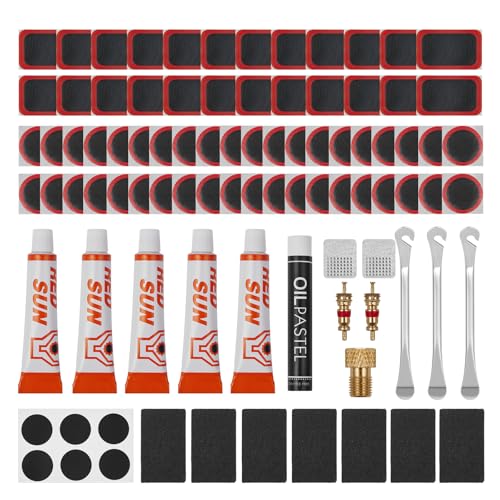
Zacro Bike Tire Repair Kit 90 PCS with 3 Steel Levers

ETENWOLF Flat Tire Repair Kit with Plugs 16 Pcs

Park Tool GP-2 Super Patch Kit

Beanewone Bike Tire Repair Kit, Bicycle Inner Tube Patch Kit
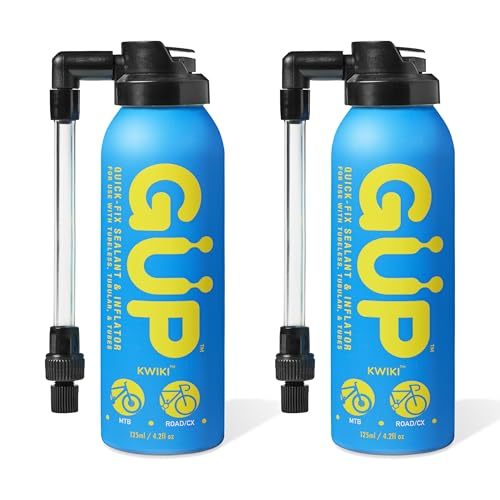
G U P Kwiki Quick Fix Tire Sealant and Inflator

G U P Kwiki Quick Fix Tire Sealant and Inflator

PXZBLG Bike Repair Kit, Bike Bag With Tire Pump
More Details On Our Top Picks
Road riders tend to like CO2 because it trims the repair down to the part that matters, air in the tire. This Kadacha kit pairs a threaded inflator with five 16g cartridges, plus tire levers, punch pieces, and a rasp, so you’ve got both inflation and tube prep in one bag.
The compact format makes sense for a jersey pocket or saddle bag, especially on a commute or a fast group ride. The trade-off is simple, disposable cartridges, so it suits quick fixes more than repeated shop-style work at home.
Strong Points
- Presta and Schrader support broadens fit across road and hybrid bikes.
- The five cartridges give you more than one roadside attempt.
- The included levers, rasp, and glueless patches cover the basic steps of a puncture repair.
- Its small footprint fits neatly into a pocket-sized carry setup.
- Recycled steel construction and zinc coating point to a practical, corrosion-aware build.
Things To Consider
- CO2 is best for fast inflation, not a long-term workshop solution.
- Disposable cartridges create more waste than a reusable pump.
- The glueless patch approach still depends on good surface prep, so rushed repairs can be shaky.
Feature Rundown
Who It Suits Best
You’ll appreciate this most as a commuter or road rider who wants a tiny, fast repair kit for sudden flats.
A Better Fit Elsewhere
Zacro Bike Tire Repair Kit 90 PCS with 3 Steel Levers suits home mechanics who want more patch variety and consumables for repeated tube repairs.
This Zacro kit leans toward the person who wants a full patch bench in one box. You get a large patch mix, glue tubes, rasps, sandpaper, valve cores, a marker, and a Presta-to-Schrader converter, so the repair flow feels more complete than the smaller, travel-first Kadacha setup.
The three stainless steel levers also matter in real use, because stiff commuter and mountain tires can fight back. In a garage, basement, or tool drawer, the bigger assortment makes repeat tube repairs less annoying, though you’ll still want a clean hand and a little patience with adhesive work.
What We Like
- Seventy patches across multiple shapes give you room to match different punctures.
- The glue supply and prep tools support repeated repair sessions.
- Stainless steel levers feel sturdier than basic plastic tools.
- The converter adds flexibility for mixed valve setups.
- It suits home storage well, especially for riders who keep several bikes in rotation.
Room For Improvement
- The kit is more spread out than a pocket repair set, so it’s less suited to ultra-minimal carry.
- Glue-based repairs need careful cleaning and drying time.
- The large parts count can feel a little busy for first-time patch work.
Details At A Glance
Who Will Love This
You’ll get the most from this as a home-based rider who wants a roomy repair kit for mountain, road, or commuter bikes.
Where A Sibling Pick Shines
Park Tool GP-2 Super Patch Kit fits better for riders who want a simpler, smaller patch tin for basic on-the-go tube fixes.
This one steps outside the bicycle lane, but it still belongs in a flat-fix roundup because plug kits solve a different kind of roadside problem. ETENWOLF’s 16-piece set is aimed at larger tires on vehicles like trucks, ATVs, and motorcycles, so it makes sense for mixed-garage households or riders who also maintain outdoor equipment.
The plug format is more about sealing from the outside than opening a tube and patching it, which is a very different repair path from the Park Tool and Beanewone kits. That makes it less relevant for pure bike use, yet very practical for anyone who needs a tougher repair kit in the vehicle rather than the saddle bag.
Highlights
- Plug-style repair suits larger pneumatic tires and rougher-duty use.
- The compact 16-piece format is easy to store in a truck or garage box.
- It fills a gap that standard bicycle patch kits don’t cover.
Points To Note
- It’s not a direct match for inner-tube bike repair.
- Bike commuters usually get more value from a patch or CO2 kit.
- The listing data here is light, so exact accessory details are harder to compare.
Core Details
The Right Fit
You’ll want this mainly for garage storage, overland rigs, or mixed equipment where bike-style patch kits won’t go far enough.
Swap It Out When
Zacro Bike Tire Repair Kit 90 PCS with 3 Steel Levers is the better match for cyclists who need true tube patch supplies.
Sometimes the most useful repair kit is the plain one you can understand at a glance. Park Tool’s GP-2 keeps things simple with six patches, sandpaper, and a small carry box, which is exactly the sort of no-drama layout that helps during a roadside pause or a late-night garage repair.
The included sandpaper lightly roughens the tube surface so the patch has a better grip, and that step matters more than people often expect. Compared with the larger Zacro kit, this one is smaller and less sprawling, so it suits riders who like a tidy bag and don’t want a pile of extras.
Best Bits
- Small box format stores neatly in a jersey pocket or tool drawer.
- Six patches cover the basic needs of occasional tube repair.
- The prep step is straightforward, which helps keep the process calm.
Softer Spots
- The patch count is modest compared with larger all-in-one kits.
- You won’t get levers or glue, so the kit stays narrow in scope.
- Frequent riders may want a more expanded backup set at home.
Feature Card
Built With In Mind
You’ll like this most as a rider who wants a spare patch kit for basic tube repairs and very little bulk.
Look Elsewhere When
Zacro Bike Tire Repair Kit 90 PCS with 3 Steel Levers suits you better for full home maintenance and a wider spread of patch supplies.
Beanewone goes after the rider who wants a tiny repair case without giving up glue-based patching. The case weighs only 3 ounces, and that matters on a weekend tour or camping trip where every bit of pack space starts feeling precious.
You also get 18 patches in three sizes, two glue tubes, and two tire levers with non-slip grip, so it covers the basic roadside sequence without much bulk. Compared with the Park Tool tin, this one carries more consumables, though it still stays compact enough for a pocket or small bag.
Bright Spots
- The 3-ounce case is easy to carry on long rides or trips.
- Three patch sizes help you match the repair to the puncture.
- The glue and lever combo supports a complete tube-fix routine.
- Non-slip levers are helpful on tighter rims and worn tires.
Areas To Watch
- Glue repairs still need patience and a tidy prep step.
- The kit is focused on inner tubes, not inflation tools.
- Frequent mechanics may want a larger station kit for the garage.
Quick Facts
Perfect Match For
You’ll get the most from this as a traveler, camper, or touring cyclist who wants a tiny repair case that still feels complete.
Another Choice May Suit
Park Tool GP-2 Super Patch Kit fits better for riders who want a simpler, smaller pouch with fewer moving parts.
G U P’s Kwiki formula is built for riders who want a fast seal-and-fill approach instead of a traditional patch job. The hose-top adapter works with Presta and Schrader valves, and the push-button actuator keeps the process direct when a trail stop turns messy.
The 125 ml size also makes sense in the pack, especially for mountain, gravel, or cyclocross use where tubeless setups are common. One thing worth considering is that sealant-based repair feels more specialized than a patch kit, so it suits riders who already know their wheel setup.
Reasons To Buy
- Seals and inflates in one step, which trims roadside work.
- Presta and Schrader support keeps valve compatibility broad.
- The hose and push-button layout is easy to manage with cold hands or tired focus.
- The 125 ml format stays packable for trail or event use.
Small Caveats
- Sealant products work best when matched to the right tire setup.
- It’s less like a universal patch kit and more like a specialized backup.
- Valve and hose handling deserves a little care to avoid a messy pack.
Spec Overview
Whose Shelf It Belongs On
You’ll want this as a trail rider or gravel cyclist who prefers tubeless support and fast roadside recovery.
Where Shoppers Go Wrong
Beanewone Bike Tire Repair Kit, Bicycle Inner Tube Patch Kit is the better fit for tube-based riders who want glue and patches instead of sealant.
This version of the G U P Kwiki leans into backup performance for race day or harder riding. The 122 g canister keeps the profile light, and the push-button style means you are not juggling extra tools when the tire needs help fast.
Compared with the 125 ml version above, this one is positioned as a broader flat backup, including tubeless, tube, and tubular use. The foaming action is also described for sidewall tears and burped tires, so it serves riders who want a more aggressive rescue option than a basic patch tin.
Plus Points
- Light canister format suits event bags and race kits.
- Works across tubeless, tube, and tubular setups.
- Push-button use keeps the repair flow direct.
- Foaming action widens the kinds of roadside problems it can address.
Worth Noting
- Specialized sealant tools suit committed cyclists more than casual riders.
- You still need to understand your wheel setup before packing it.
- The canister format is better as backup gear than as a daily home fix.
Feature Snapshot
Who Should Grab It
You’ll appreciate this most as a competitive cyclist or serious gravel rider who wants a more flexible flat backup.
Reach For A Different Pick When
Park Tool GP-2 Super Patch Kit is the calmer choice for riders who want a basic tube patch kit with less complexity.
PXZBLG takes the carry-all route, bundling a bike bag with a tire pump, a multitool, and Allen wrenches. That makes it a neat fit for riders who like to keep the repair gear together instead of scattering pieces across a jersey pocket and saddle bag.
This is less about a single puncture material and more about having the basics in one place for a mountain or road bike outing. Compared with the dedicated patch kits above, it feels broader but not as deep on tube-repair supplies, so the honest read is that it works best as a general ride companion.
Standout Traits
- The included bag helps keep tools organized on the bike.
- Tire pump, multitool, and Allen wrenches cover common trail-side needs.
- The all-in-one format suits riders who prefer one compact carry system.
Minor Gripes
- The listing gives less detail about the pump and tool build than some focused kits.
- It’s broader than a dedicated patch set, so it may leave tube repair shoppers wanting more.
- Pack organization matters here, since a mixed kit can feel cluttered fast.
Core Details
Made For
You’ll get the most value from this as a rider who wants a tidy, all-around bag for regular bike outings.
Where Shoppers Go Wrong
Kadacha CO2 Inflator Kit with 5 x 16g Cartridges is the smarter choice for riders who want faster roadside inflation and more puncture-specific tools.
How To Choose The Right Bike Flat Tire Repair Kits
Match The Repair Style To Your Ride
Patch kits, CO2 inflators, sealant systems, and plug tools solve different problems. Tube riders usually want patches, glue, levers, and a small prep surface, while tubeless riders benefit more from sealant or plug-based backup tools.
Fast commuters often value a tiny carry kit that gets the bike moving again in minutes. Long-distance riders and people who work on several bikes at home usually get more value from a fuller repair set with extra consumables.
Check Valve And Tire Compatibility
Presta and Schrader are the two common valve types on bikes, and the best kit matches the valve you use most. Dual-compatible inflators and converters save frustration, especially when the garage holds more than one bike style.
That compatibility matters just as much as the repair method. A compact kit can still be the wrong fit if it needs extra adapters you won’t remember to pack.
Think About Carry Size And Repeat Use
Small kits suit jersey pockets, saddle bags, and race packs. Larger kits fit better in a home drawer, truck, or workshop bench where space isn’t tight and extra patches, glue tubes, and levers can stay organized.
Disposable CO2 cartridges and sealant can help in a rush, but repeated repair work often favors reusable tools and generous patch supplies. Riders who fix flats often usually prefer a kit that feels calm to use twice, not just once.
Look For Prep Tools, Not Just Patches
The part people skip most often is surface preparation. Sandpaper, rasps, and decent tire levers sound basic, yet they make the repair easier to seat and help avoid damaged fingers or bent patches.
That’s why fuller kits often feel more dependable in day-to-day use. They don’t just hand you a patch, they help you handle the whole sequence cleanly.
Things Worth Knowing First
Where Shoppers Go Wrong
A common miss is choosing the wrong repair style for the tire setup. Tube, tubeless, and larger vehicle tires ask for different tools, so the flashiest box is not always the most useful one.
Another slip-up is underestimating carry size. A garage kit can be great at home, but it becomes awkward in a jersey pocket or small frame bag.
The Upgrade Payoff
Higher-tier kits usually cost more because they include better materials, more patch variety, sturdier levers, and extra consumables such as glue tubes or valve cores. Sealant and CO2 systems also carry more specialized parts than a bare-bones patch tin.
That extra spend makes sense for riders who fix flats often, carry gear on long rides, or maintain several bikes. Casual riders who only want a simple emergency fix can stay with a smaller patch kit and miss very little.
Frequently Asked Questions
What type of kit works best for a roadside bike flat?
A compact patch kit or CO2 inflator works well for most roadside stops. Your best choice depends on whether you want a fast inflation fix or a more durable tube repair.
Do you need both patches and tire levers?
Yes, that combination covers the repair sequence more smoothly. Levers help remove the tire, and patches handle the puncture once the tube is exposed.
Are sealant kits only for tubeless bikes?
They are strongest in tubeless setups, but some sealant products also work with tubes or tubular systems. The key is matching the product to your wheel setup before you pack it.
Which kit is easiest for a beginner?
Park Tool GP-2 Super Patch Kit keeps the process simple and compact. A fuller kit like Zacro gives more parts, but that can feel like extra noise for a first repair attempt.
What should you keep in a repair kit for regular commuting?
Look for a compact bag with patches, levers, and a way to inflate the tire. A small CO2 setup or a tidy patch tin usually fits commuting better than a bulky bench kit.
Closing Thoughts
You get the best result when your flat-tire kit matches the kind of riding you actually do. For quick road fixes, the Kadacha CO2 setup makes a lot of sense, while Zacro and Park Tool lean harder into steady tube repairs. Riders who live around tubeless setups will probably prefer the G U P sealant options, and commuters who want one tidy carry system may lean toward PXZBLG. Pick the format that fits your bag, your valve type, and your patience, and flat days get a lot less annoying.