
Hauling a little passenger changes every ride, whether you’re heading to daycare, circling the neighborhood, or squeezing in weekend miles. The right setup needs to match your bike, your child’s age, and the kind of roads you actually use, because a trailer and a front seat solve different problems. Some options put comfort first, others focus on compact storage or easier mounting. This roundup helps you sort that out without guessing.
Quick Look At The Shortlist
Allen Sports Deluxe Steel Child Trailer
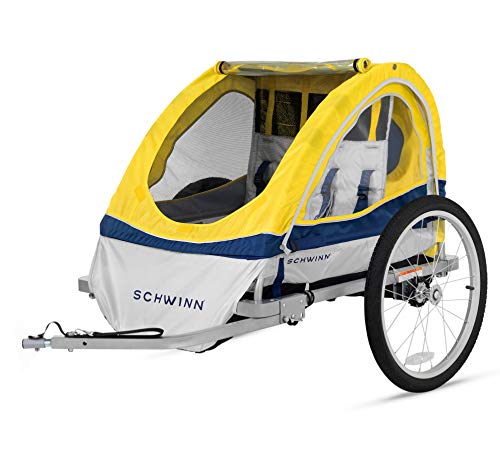
Schwinn Echo Child Bike Trailer

Schwinn Trailblazer Plus Kids Bike Trailer
Child Bike Seat, Front Mount Kids Bike Seat
Bell Mini Shell Front Carrier Gray
XIEEIX Child Bike Seat with Guardrail
Ercabikker Front Child Carrier Bike Chair
Ercabikker Front Child Carrier Bike Chair
More Details On Our Top Picks
Steel framed trailers tend to suit everyday family mileage because they feel steadier than lightweight seat-only setups. This Allen model fits that role well, especially for park loops, grocery detours, and school-run routes where a trailer’s extra cargo space helps. The trade-off is bulk, so storage in a narrow hallway or compact garage takes a little planning.
For parents who want a familiar trailer format, this one stays easy to understand and straightforward to live with. It sits closer to the Schwinn Echo than to the front-mounted UrRider seat, since your child rides behind the bike rather than directly in front of you.
Strong Points
- Steel construction gives the frame a reassuring, no-frills feel for regular neighborhood use.
- Trailer layout leaves room for a child plus gear, which helps on longer outings.
- The setup suits riders who want extra separation between handlebars and passenger space.
Things To Consider
- Trailers take more storage space than front seats, so a cramped garage may feel tight.
- Turning radius and parking around the bike are less convenient than with a mounted seat.
Feature Snapshot
Who It Suits Best
You suit this pick best when you want a trailer for steady family rides and extra room for errands or picnic gear.
Where A Sibling Pick Shines
Schwinn Trailblazer Plus Kids Bike Trailer suits you better when folding storage matters more than the steel-frame feel of the Allen Sports Deluxe Steel Child Trailer.
The Echo leans into family flexibility, since it can carry two children and handles up to 80 pounds total. That makes it a strong match for siblings or shared weekend rides, and the canopy plus 20-inch air-filled tires point toward a smoother, more sheltered trip than a bare-bones carrier. The honest read is that a two-child trailer takes more room to tow and store, so it suits households that plan around it.
Compared with the Allen Sports trailer, this one’s clearer strength is passenger capacity rather than a steel-first identity. It also feels more trailer-centric than the front seat picks from UrRider or Bell, which keep the child closer to the rider’s line of sight.
Highlights
- Two-child capacity gives you more flexibility for siblings or shared rides.
- Air-filled 20-inch tires usually help soften rough pavement and trail chatter.
- The canopy adds useful overhead coverage for bright or breezy routes.
- Total load limit of 80 pounds supports a broad range of young riders.
Room For Improvement
- A larger trailer is harder to tuck away in a small apartment or shed.
- More capacity also means more weight to manage while attaching and moving it.
- The wider shape can feel less nimble on tight paths than a front-mounted seat.
At A Glance
Who Will Love This
You suit this trailer best when you ride with two children or want one carrier that can flex between solo and shared trips.
Another Choice May Suit
Schwinn Trailblazer Plus Kids Bike Trailer fits you better when you want a single-seat trailer that folds down more easily after the ride.
Folding frames earn their keep fast in a real garage, and that’s the Trailblazer Plus story. Quick-release wheels help the trailer shrink down more cleanly, while the universal coupler broadens bike compatibility in a practical way. The canopy with bug screen and weather shield points to a rider who wants more seasonal coverage than the simpler Allen trailer offers.
You may find this one easier to live with than bulkier trailers, especially on days when the ride ends at a crowded entryway or small trunk. It sits between the larger Echo and the front-mounted seats, giving you trailer comfort without quite as much storage strain.
Bright Spots
- Folding frame design makes post-ride storage less awkward.
- Quick-release wheels help the trailer pack down with less fuss.
- Universal coupler broadens fit across many common bike setups.
- Bug screen and weather shield add practical coverage for changing conditions.
Areas To Watch
- Single-seat capacity keeps it focused on one child at a time.
- Trailer storage still asks for more room than a front-mounted seat.
Core Details
Built With In Mind
You suit this trailer best when storage space matters and you still want a proper trailer rather than a front-mounted seat.
Look Elsewhere When
Schwinn Echo Child Bike Trailer fits you better when you need room for two children instead of a single-seat layout.
Front-mounted seats change the riding feel in a noticeable way, because your child sits in your line of sight instead of behind the bike. That setup helps on short city rides, quick errands, and quiet park loops where close supervision matters more than cargo room. The tool-free, quick-release design also suggests less fuss during installation and removal, which is handy for riders who swap setups often.
Compared with the Schwinn trailers, this style stays much more compact and easier to park in tight spaces. The trade-off is that front seats usually feel more intimate and less spacious, so they suit smaller children and calmer routes.
What We Like
- Front placement keeps your child visible during the ride.
- Tool-free setup helps reduce the usual mounting hassle.
- Quick-release design is useful for riders who store the seat between trips.
- Compatibility with mountain, cruiser, and folding bikes broadens practical use.
Softer Spots
- Front seats leave less room between handlebars and passenger space.
- Smaller riders tend to fit this style better than older or taller children.
- Frequent removal means you’ll want a tidy storage spot for the hardware.
Details At A Glance
Perfect Match For
You suit this seat best when you want your child up front and your routes stay short, calm, and predictable.
Skip It When
Schwinn Echo Child Bike Trailer fits you better when you need more room, two-child capacity, and a softer trailer ride.
The Bell Mini Shell keeps the front-carrier idea simple, and that can be a good thing for city riders who want less bulk on the bike. A shell-style front carrier usually feels neat and tidy compared with trailers, and it suits quick neighborhood trips where easy mounting matters more than extra capacity. The one-size layout keeps the focus on straightforward use rather than lots of adjustment.
Compared with the UrRider seat, this Bell option reads as the cleaner, more minimal choice. It also feels more compact than the Schwinn trailers, though that comes with less room and less versatility for longer outings.
Positives
- Front carrier format keeps your child close and easy to check on.
- Gray finish gives it a calm, neutral look on the bike.
- Compact build suits riders who dislike trailer bulk.
Small Caveats
- Front carriers usually offer less space than trailer-style setups.
- One-size products can be less flexible for unusually shaped bikes or storage needs.
Feature Card
Whose Shelf It Belongs On
You suit this carrier best when you want a compact front option for short urban rides and a cleaner-looking bike profile.
Reach For A Different Pick When
Child Bike Seat, Front Mount Kids Bike Seat fits you better when you need listed bike-type compatibility and a more explicitly adjustable-style front seat.
Guardrail seating changes the feel of a child bike seat because it adds a more enclosed perch around a very young rider. That fits the XIEEIX model well for short, careful rides where a backrest and higher cushion can make the seat feel more structured than a simple front carrier. The product page points to children from 1 to 3 years old, so this is clearly aimed at a narrower age band than the trailer options.
Compared with the Bell Mini Shell, this seat looks more enclosed and more child-specific. It also keeps a lower profile than the trailers, which helps on rides where you want less bulk but still want a supported seating position.
Reasons To Buy
- Guardrail design gives the seat a more enclosed feel for smaller children.
- High cushion and backrest point toward better support on short rides.
- Front-seat format keeps your child close to your line of sight.
Honest Caveats
- The narrower age range makes it a specialized pick rather than a long-range option.
- Front seats need careful bike fit and regular hardware checks before riding.
Quick Facts
Right Fit For
You suit this seat best when your child is very young and you want a front-mounted option with a more guided seating feel.
Swap It Out When
Ercabikker Front Child Carrier Bike Chair fits you better when you want a similar front-seat format aimed at older toddlers around the 2 to 4 year range.
This Ercabikker front seat targets the everyday parent routine, the kind built around quick errands and short neighborhood spins. The 2 to 4 year range and 55-pound figure point to a toddler-focused fit, which makes it broader than the XIEEIX seat but still much smaller in scale than the Schwinn trailers. In most homes, that kind of middle ground feels easier to justify than a large tow-behind setup.
The front-carry layout keeps your child near you, which many riders appreciate on calm routes and in traffic-light city riding. The honest trade-off is that front seats ask for more attention to bike fit and a little more caution with balance than a trailer does.
Best Bits
- Front placement helps you keep a clear eye on your child during the ride.
- Age range from 2 to 4 years suits many early riding years.
- 55-pound limit gives the seat a clear weight target for planning.
Points To Note
- Front seats can feel cramped on bikes with busy handlebar setups.
- Regular mounting checks matter because small hardware issues affect day-to-day use.
Technical Sheet
Who Should Grab It
You suit this seat best when you want a compact front rider for short, frequent trips with a toddler-sized passenger.
A Better Fit Elsewhere
Schwinn Echo Child Bike Trailer fits you better when you need more carrying room and a trailer format for longer family outings.
This second Ercabikker listing points to the same front-seat style, which makes it a familiar fit for riders who want the child close and the setup compact. Because the source details mirror the earlier model so closely, the main value here is simply having another path into the same age and weight range. That can matter when you’re comparing availability or want the same general format with a different listing.
The trade-off is also the same, front carriers stay tidy but leave less room than trailers. For most short rides, that’s fine; for longer weekend loops, the Schwinn Trailblazer Plus or Schwinn Echo gives you more breathing room.
Upsides
- Front-mounted layout keeps your child within sight.
- Compact footprint works well for quick rides and tighter storage spots.
- Age and weight targets make the fit easier to judge.
Minor Gripes
- It shares the same tight-space limitations as most front seats.
- Duplicate-style listings can make comparison shopping a little repetitive.
Core Details
Who Will Love This
You suit this chair best when you want the familiar front-seat format for short neighborhood rides with a toddler.
Not Your Match When
Schwinn Trailblazer Plus Kids Bike Trailer fits you better when you want folding storage and a trailer setup instead of a front carrier.
How To Choose The Right Bike Child Carriers
Fit Starts With The Riding Style
Trailers and front seats solve different problems. A trailer gives you more room, more storage, and a lower-stress way to carry siblings or gear, while a front seat keeps your child closer and makes short rides feel more connected.
For daily errands in dense neighborhoods, front carriers usually feel easier to park and store. For longer park loops or mixed-surface routes, trailers generally bring a calmer ride and more space.
Age, Weight, And Position Matter
Age range and weight limit are the first numbers worth checking, because they tell you whether the seat or trailer suits your child’s size. The XIEEIX seat, for example, is aimed at ages 1 to 3, while the Ercabikker front chairs target ages 2 to 4 and up to 55 pounds.
Position matters just as much. Front-mounted options keep your child in view, but that closeness can feel crowded on bikes with wide handlebars or bulky accessories.
Storage And Setup Shape Real-World Satisfaction
Folding frames, quick-release wheels, and tool-free mounting all save time after the ride. The Schwinn Trailblazer Plus stands out here because it breaks down more neatly than a fixed trailer or a permanently mounted seat.
That kind of convenience matters most in apartments, small garages, or homes where the bike shares space with strollers and sports gear. A bulkier trailer can still be the better call, but only when you have room for it.
Comfort Features Should Match Your Routes
Canopies, air-filled tires, backrests, and guardrails all affect how settled the ride feels. Air-filled tires usually soften rough pavement, while a canopy helps with wind or bright sun on open paths.
Pick the comfort level that fits your roads, not a long feature list. A simple front seat can be enough for short trips, while a padded trailer with weather protection makes more sense for longer family outings.
What To Weigh Before You Decide
Where Shoppers Go Wrong
Many shoppers focus on the seat itself and forget the bike. Tire width, handlebar clutter, and frame shape all affect fit, especially with front-mounted carriers.
Another common miss is underestimating storage space. A trailer can be great on the road and awkward in a narrow shed or apartment entryway.
The Upgrade Payoff
Higher-tier options usually cost more because they add folding hardware, better wheel systems, extra coverage, or more thoughtful mounting parts. In this category, those extras show up as easier storage, smoother towing, or a more polished day-to-day feel.
Spending up makes sense for families who ride often or keep the carrier in regular rotation. For occasional neighborhood loops, a simpler seat or trailer can cover the basics without adding unnecessary complexity.
Frequently Asked Questions
Are trailers or front seats easier to live with?
Front seats usually feel simpler to store and park around the house. Trailers usually feel easier for cargo and sibling rides.
What matters most for toddler rides?
Age range, weight limit, and a secure mounting style matter most. A close, stable fit matters more than extra features.
Do folding trailers really help?
They help a lot in small garages and apartments. Quick-release wheels make storage less awkward too.
Can one seat fit many bike types?
Some front seats do, but fit still depends on frame shape and handlebar layout. Universal claims are helpful, but your bike still needs a proper check.
What should you prioritize for frequent rides?
Look for easy mounting, manageable storage, and comfort features that match your route. A smoother setup saves time every week.
Closing Thoughts
The right bike child carrier fits your routine more than it fits a trend. Front seats suit short, watchful rides, while trailers handle longer outings and more cargo with less compromise on space. The best match for you comes down to age range, storage room, and how often you’ll be loading and unloading the setup. Choose the style that makes family rides feel easy enough to repeat, and the rest tends to follow.