
Daily riding asks a lot from a bag: steady fit, sensible storage, and weather resistance that doesn’t turn your essentials into a soggy mess. This roundup focuses on rack trunks, panniers, handlebar pouches, frame bags, and seat packs that make errands, office runs, and mixed-surface commutes easier to manage. You’ll see where each shape works best, where it feels cramped, and which styles suit a light packout versus a fuller workday load.
Quick Look At The Shortlist

WOTOW Rear Bike Rack Bag 12L

ROCKBROS Bike Rack Bags 9L Hard Shell Trunk Pannier Bag

Rhinowalk Bike Pannier Bag Waterproof Rack Bicycle Bag 18L

WOTOW Bike Handlebar Bag Waterproof 2.4L

COTOUXKER Bike Frame Bag Small Black
Danuosie Bike Seat Bag Expandable 1.5-2L

RAINSMORE Bike Bags for Bicycle Rear Rack 15L Black
More Details On Our Top Picks
For a commute that mixes office gear, lunch, and a lock, this rear rack bag lands in a very usable middle ground. The 12L capacity gives you enough room for everyday carry without turning the bike into a bulky cargo rig, and the shoulder strap matters once you’re off the saddle.
The reflective details help in low light, while the water bottle pocket makes the shape more useful than a plain boxy trunk bag. Compared with the smaller WOTOW handlebar pouch later in the list, this one suits heavier carry better, though it still stays tidy enough for short trips across town.
Strong Points
- 12L space handles daily essentials without feeling oversized.
- Shoulder strap helps during station walks and office stops.
- Water bottle pocket adds useful everyday access.
- Reflective details support better visibility in dim conditions.
Things To Consider
- Rear-rack fit depends on the rack shape you already have.
- It gives you more room than a seat pack, but less than a full pannier setup.
- Rack trunk styles can collect road dust, so regular wipe-downs help.
Feature Snapshot
Who It Suits Best
You get the most from this bag as a commuter who wants one rear bag for weekdays and casual rides.
A Better Fit Elsewhere
RAINSMORE Bike Bags for Bicycle Rear Rack 15L Black suits you better if you want a little more cargo room on the same rack-bag style.
The hard shell gives this ROCKBROS bag a more structured feel than the softer WOTOW trunk bag above, so it suits riders who dislike saggy storage. A 9L interior sounds modest on paper, yet the two inner mesh pockets and elastic drawcord make day-to-day organization easier than a single open cavity.
The included rain cover matters for wet commutes, and the listed dimensions, 13.2 x 7.9 x 8.65 inches, point to a compact box that sits neatly on a rear rack. For a train-and-bike routine or a short office ride, that shape helps keep things orderly without asking much space from the bike.
What We Like
- Hard shell construction keeps the bag’s shape during daily use.
- Two mesh pockets help separate small items.
- Elastic drawcord gives you an easy way to secure extra gear.
- Rain cover adds a practical layer for wet-weather rides.
Worth Noting
- The rigid form leaves less give than a softer trunk bag.
- 9L is enough for essentials, but not a full work tote replacement.
- Hard-sided bags can take a little more room in tight storage spots.
Core Details
Who Will Love This
This suits a commuter who likes organized storage and a firm shape on the rear rack.
Where A Sibling Pick Shines
WOTOW Rear Bike Rack Bag 12L works better for you if extra capacity matters more than a rigid shell.
This Rhinowalk option is the roomy pick in the group, and the 18L size makes that clear right away. For a full workday, laptop carry, or a ride that doubles as a grocery stop, you’ll appreciate having more breathing room than the 9L ROCKBROS bag or the 12L WOTOW trunk bag.
The shoulder-bag setup broadens how you can carry it off the bike, which matters when your commute includes stairs, elevators, or a long walk from the rack to your desk. The trade-off is simple, more capacity usually means a larger footprint, so riders with compact racks may want to check fit carefully.
Highlights
- 18L capacity gives you the most room in this list.
- Shoulder-bag use helps during off-bike transitions.
- Waterproof design suits rough weather and longer errands.
- Laptop-friendly layout makes sense for work commuting.
- Works as a rack bag and a carry bag.
Points To Note
- The larger format asks for more rack space than smaller packs.
- More room can tempt overpacking, which adds bike weight fast.
- Mixed-use bags need more careful packing to keep items from shifting.
Technical Sheet
Built With In Mind
You’ll get the most out of this bag as a daily commuter who carries more than just a tube and a wallet.
Another Choice May Suit
ROCKBROS Bike Rack Bags 9L Hard Shell Trunk Pannier Bag fits you better when you want a smaller, more compact rear rack option.
Front-mounted storage changes the feel of a commute, because your small essentials stay closer at hand than they do in a rear trunk. The 2.4L size fits that role nicely, and the 900D Oxford fabric with PU coating gives you a tough outer shell that’s easier to wipe clean after a wet ride.
The laminated waterproof zippers are a smart detail, since zipper lines are often where rain sneaks in first. Compared with the larger rear bags in this roundup, this one makes more sense for keys, tools, snacks, or a phone than for carrying a full work load.
Upsides
- Front placement keeps small items easy to reach.
- Coated 900D Oxford fabric brings a sturdy feel.
- Laminated zippers add better rain resistance at the seams.
- Reflective details help the bag stand out more in dim light.
Areas To Watch
- 2.4L is limited, so it’s not made for larger carry.
- Handlebar space can feel crowded on some bikes.
- Front bags gather grime faster, so cleaning stays part of ownership.
Details At A Glance
Perfect Match For
You should grab this for short commutes, quick errands, and riders who prefer front access over rear storage.
Look Elsewhere When
WOTOW Rear Bike Rack Bag 12L makes more sense if you need a larger everyday hauler with room for more gear.
This frame bag keeps things low and tidy, which helps when you want storage without changing the bike’s balance much. Ultralight Oxford fabric makes the build feel restrained, and the high-frequency seamless welding on the zippers points to a more careful finish than a bare-bones pouch.
That kind of design works well for tools, a phone, and small ride essentials on road or mountain bikes. Compared with the WOTOW handlebar bag, it keeps the front end clear, though you sacrifice the quick reach that handlebar storage gives you.
Best Bits
- Frame placement keeps the bike profile clean.
- Ultralight Oxford fabric helps keep added weight down.
- Welded zipper construction suggests careful attention to sealing.
- Good use of space for small ride essentials.
Minor Gripes
- Small frame bags can be tricky around water bottles and cables.
- It’s best suited to compact carry, not larger commutes.
- Frame-mounted gear can collect grit, so cleaning around the bike area matters.
Quick Facts
Who Should Grab It
This fits cyclists who want a slim storage solution for tools and small personal items.
Swap It Out When
Danuosie Bike Seat Bag Expandable 1.5-2L suits you better if under-seat storage feels easier to access on your bike.
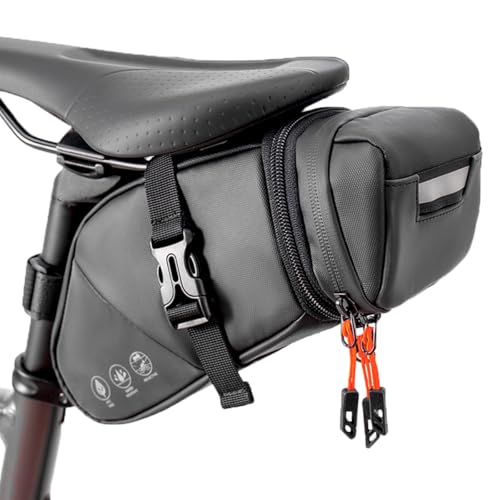
Seat packs like this one make sense when you want tools and spare tubes tucked out of the way. The expandable design gives you a little breathing room, moving from 1.5L to 2L, and the before-and-after dimensions show how it stretches to fit a slightly fuller load.
The 900D waterproof Oxford fabric with PU coating gives it a stronger weather-ready shell than a plain cloth pouch, though the note about prolonged heavy rain is worth respecting. For a short commute, a weekend ride, or a mixed road-and-trail setup, it feels like a sensible little utility bag rather than a catch-all carrier.
Reasons To Buy
- Expandable volume helps you match the load to the ride.
- Under-seat placement keeps the bike’s main frame clear.
- Waterproof Oxford fabric with PU coating adds practical weather resistance.
- Compact size suits repair kits and small essentials well.
Softer Spots
- 2L max capacity is small for commuting beyond essentials.
- It’s not the right match for prolonged heavy rain exposure.
- Under-seat bags can be awkward on bikes with limited clearance.
Feature Rundown
Whose Shelf It Belongs On
This suits commuters who want a compact under-seat pack for repair basics and small spares.
Not Your Match When
Rhinowalk Bike Pannier Bag Waterproof Rack Bicycle Bag 18L is the better choice for a larger everyday carry load.
RAINSMORE gives you one of the larger rear-rack volumes in this lineup, and the 15L size makes it a strong match for fuller commuting loads. The included rain cover adds peace of mind in messy weather, and the shoulder-bag setup helps once you detach it from the bike.
That extra room puts it a step above the 12L WOTOW trunk bag for riders who carry lunch, clothing, or a few more work items. The trade-off is predictable, a bigger bag asks for more rack space and a bit more care when packing so the contents do not shift around.
Positives
- 15L capacity gives you generous rear-rack storage.
- Rain cover adds a useful layer for damp commutes.
- Shoulder bag carry helps once you’re away from the bike.
- Good fit for riders who pack clothing or lunch.
Areas To Watch
- Larger bags need a more forgiving rack setup.
- Extra room can invite clutter unless you pack with purpose.
- Rear bags benefit from regular checking of straps and mounting points.
Spec Overview
Who It Suits Best
You’ll like this most as a commuter who wants a larger rear bag without moving to a full pannier setup.
Where Shoppers Go Wrong
WOTOW Bike Handlebar Bag Waterproof 2.4L is the smarter pick if your carry is small and front-access convenience matters more.
How To Choose The Right Bike Bags For Commuting
Match The Bag To Your Daily Load
Start with what you actually carry, not the biggest volume you can fit on the rack. A phone, tube, multitool, and lock fit a very different shape than a laptop, shoes, and a change of clothes. Rear trunk bags suit mixed loads, while handlebar pouches and seat packs work better for slimmer carry.
Capacity matters, but layout matters just as much. A 9L hard shell like ROCKBROS can organize small items neatly, while an 18L pannier like Rhinowalk gives you room to spread things out. Too much empty space can let gear shift, so a right-sized bag often rides better.
Think About Where You Want Access
Front bags keep essentials within easy reach. That helps for phones, transit cards, snacks, and small tools you grab often during a commute.
Rear rack bags usually carry more and stay out of the way, which feels calmer on a crowded bike path. Under-seat bags work best for repair kits and spares, since you rarely need them until you do. The right location saves you from digging around while stopped at a curb.
Check Weather Handling And Cleaning
Water resistance shows up in different ways, from coated fabric to laminated zippers to a separate rain cover. Those details matter most during wet parking lots, misty mornings, and rides that start dry but end in a shower.
Maintenance is simple, but it shouldn’t be ignored. Smooth outer fabrics wipe down faster than textured shells, and dark bags tend to hide road dust better between cleanings. That small difference adds up for year-round commuting.
Look At Mounting Style And Carry Comfort
Rack-mounted bags suit bikes that already have a solid rear carrier, while frame and seat bags make sense on lighter setups. Shoulder straps help once you leave the bike, especially for office commutes that include stairs or a train platform.
Check how the bag meets the bike before you assume it will sit neatly. A rigid hard shell can feel tidy, yet it may demand more space than a soft trunk bag. For most commuters, a simple, secure mount beats extra features you’ll rarely use.
What To Weigh Before You Decide
Common Shopping Slip Ups
Many people focus on capacity alone and miss the bag shape. A roomy bag still feels awkward if it crowds your knees, blocks bottle cages, or interferes with handlebar cables.
Mounting style gets skipped too often. Rear rack bags need the right platform, while frame bags and seat packs depend on clearance, tube shape, and saddle setup.
Why Top Tier Costs More
Higher-tier bike bags usually use firmer structures, better zipper sealing, more attachment hardware, and cleaner interior organization. That adds material and stitching, which is part of why structured models feel more composed on a daily ride.
Spending up makes sense for long commutes, rough weather, or a route that doubles as your grocery run. For short hops and light carry, a simpler bag often covers the job without extra bulk.
Frequently Asked Questions
What size bike bag works best for commuting?
For light daily carry, 2L to 9L usually handles the basics. For clothing, lunch, or a laptop, 12L to 18L makes more sense.
Are rear rack bags better than handlebar bags?
Rear rack bags carry more and stay out of your way. Handlebar bags are better for quick access to small items.
Do I need a rain cover?
A rain cover helps when weather shifts during the day. Coated fabric and waterproof zippers help too, but the extra layer can still be useful.
Which bag style is easiest to carry indoors?
Models with shoulder straps usually feel easiest once you park. That matters for office stops, transit transfers, and stairs.
Is a hard shell bag worth it?
A hard shell helps the bag hold shape and can keep gear organized. Soft bags usually pack more flexibly, so your choice depends on how tidy you want the load to stay.
Closing Thoughts
The right commuting bag should feel like part of the bike, not an afterthought hanging off it. For light carry, the WOTOW handlebar pouch and COTOUXKER frame bag keep things compact and easy to live with. For fuller days, the WOTOW 12L, ROCKBROS 9L hard shell, Rhinowalk 18L, Danuosie seat pack, and RAINSMORE 15L each solve a different version of the same problem. Match the bag to your route, your load, and how often you need to reach inside it, and the choice gets much easier.