
A suspension fork changes more than comfort, it shapes how your front wheel tracks over roots, curbs, washboard paths, and rough pavement. That matters for commuters, trail riders, fat-tire e-bike owners, and anyone replacing a worn fork without guessing at axle spacing or steerer type.
The seven picks below cover the common fit points, from 29-inch XC setups to 20 x 4.0 fat-tire builds. You’ll see where a light air fork makes sense, where a coil-style budget fork is enough, and where a double-shoulder design earns its keep.
The Shortlist At A Glance

RockShox Recon Silver RL 29, 100 mm, Straight, D1

BUCKLOS 29 MTB Suspension Fork 100 mm QR 9 mm

RockShox Judy Silver TK 29, 100 mm, A3

RockShox Judy Silver TK 27.5, 100 mm, Air, A3

Bike Suspension Fork 26/29, Double Shoulder, Triple Tree

BUCKLOS 20×4.0 Fat Tire Ebike Air Fork 9×135 mm
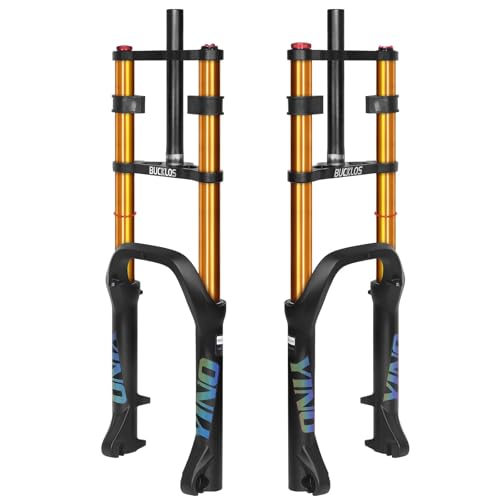
BUCKLOS 20×4.0 Fat Tire Ebike Air Fork 9×135 mm
More Details On Our Top Picks
For a 29-inch hardtail that needs a clean, modern front end, the RockShox Recon Silver RL lands in a familiar sweet spot. The Solo Air spring uses air pressure for setup, so you can tune support to your weight and terrain rather than live with a fixed coil feel.
The Motion Control damper helps the fork feel composed on choppy fire roads and mellow singletrack, and the 100 mm travel suits cross-country pacing more than aggressive descending. Compared with the BUCKLOS options below, this one reads as the more polished trail-focused fit, though the straight steerer and 9 x 100 mm axle still keep the compatibility check important.
What We Like
- Solo Air gives you easy setup flexibility for mixed terrain.
- Motion Control damping helps the front end stay settled over repeated bumps.
- 100 mm travel matches efficient XC riding and daily trail use.
- 29-inch wheel fit works well on modern hardtails.
Points To Note
- 9 x 100 mm spacing and a straight steerer limit compatibility to specific frames.
- It leans toward efficiency, so riders chasing big-hit travel may want more fork.
Feature Rundown
Who It Suits Best
Trail riders and XC commuters on compatible 29-inch hardtails get the most from this fork.
Where Another Pick Suits Better
BUCKLOS 29 MTB Suspension Fork 100 mm QR 9 mm suits budget rebuilds that need a simpler front-end match.
This BUCKLOS fork aims at straightforward XC replacement duty, especially on 29-inch builds that need 100 mm travel and 9 mm quick-release spacing. The aluminum alloy construction gives it a lighter, more practical feel for everyday trail use, while the crown lockout matters on smooth pavement or long climbs where you want less bob.
Compared with the RockShox Recon Silver RL, you give up some refinement and branded damping sophistication, but you also land in a simpler lane that suits value-focused rebuilds. The straight 28.6 mm steerer keeps the fit old-school in a useful way, though that also narrows frame compatibility.
Highlights
- 100 mm travel and 29-inch sizing fit a wide range of XC hardtails.
- Crown lockout helps on climbs and smoother pavement stretches.
- Aluminum alloy keeps the fork practical for daily riding.
- Simple setup suits first-time replacement work.
Worth Noting
- The 9 mm quick-release axle limits wheel and frame matching.
- It is built for basic function, so riders expecting plush damping should look higher up the list.
- Routine inspection around the crown and stanchions still matters for long-term upkeep.
Core Details
Built With In Mind
Budget-minded riders rebuilding a 29-inch hardtail get the best fit here.
Swap It Out When
RockShox Judy Silver TK 29, 100 mm, A3 fits riders who want a more developed chassis feel and can spend more for it.
The Judy Silver TK sits close to the Recon Silver RL, but its chassis story is different enough to matter. RockShox points to a newer frame design derived from the Pike line, plus BOOST spacing and Torque Cap compatibility, so the wheel interface and front-end stiffness get more attention than on the simpler BUCKLOS fork above.
That makes it a sensible upgrade path for a 29-inch trail bike that needs better front-wheel feel without jumping to a heavier, long-travel setup. The honest read is that the fit details deserve care, since a fork this specific rewards a frame and wheelset built around the same assumptions.
Standout Traits
- Newer chassis design gives it a more current platform.
- BOOST spacing broadens compatibility with Plus tire setups up to 2.8 inches.
- Torque Cap compatibility can improve front-end stiffness with the right wheel.
- 100 mm travel keeps the bike efficient for climbing and mixed trail use.
- It suits riders stepping up from basic entry forks.
Room For Improvement
- Compatibility checks matter more here than with a generic replacement fork.
- BOOST and Torque Cap support help only when the rest of the build matches.
Spec Overview
Perfect Match For
Trail riders building a 29-inch bike around modern compatibility points will appreciate this most.
Look Elsewhere When
RockShox Recon Silver RL 29, 100 mm, Straight, D1 fits simpler swaps where you want the same brand feel with less chassis specificity.
The 27.5-inch Judy Silver TK feels aimed at riders who want a shorter, more agile front wheel package. Its air spring gives you setup control, and the 100 mm travel keeps the bike in a lively lane rather than pushing it toward long-travel territory.
Compared with the 29-inch Judy above, this version is the cleaner match for compact trail frames and riders who prefer quicker handling in tight terrain. One thing worth considering is the 1-1/8 inch straight steerer, which is familiar and workable, but it narrows frame options the way older standards often do.
Bright Spots
- 27.5-inch sizing suits nimble handling on twisty trails.
- Air spring lets you tune support more precisely.
- 100 mm travel keeps the fork efficient for general trail riding.
- Gloss black finish gives it a clean, low-key look on a build.
Softer Spots
- The straight 1-1/8 inch steerer limits compatibility to specific frames.
- 9 x 100 mm spacing is suited to older quick-release setups, not every modern wheel.
- Basic maintenance around seals and dust keeps any air fork feeling consistent.
Details At A Glance
Who Should Grab It
You get the most from this fork on a compact 27.5-inch hardtail or trail bike with older headset standards.
A Better Fit Elsewhere
RockShox Judy Silver TK 29, 100 mm, A3 suits riders who want the same family feel on a larger wheel platform.
Double-shoulder, triple-tree forks have a very different personality from the RockShox models above. The layout puts more material around the crown area, which usually means a stiffer-looking front end for heavy bikes, custom builds, or riders who care more about structure than finesse.
That stiffness-first approach makes sense on a 26-inch or 29-inch project bike, especially where the fork is part of the visual statement as much as the ride setup. The trade-off is weight and a more specialized fit, so this is less of a casual swap and more of a build decision.
Reasons To Buy
- Double-shoulder construction suits rugged front-end demands.
- 26-inch and 29-inch support broadens project-bike use.
- Threadless 28.6 mm steerer keeps headset matching clear.
- Disc brake compatibility helps with modern stopping setups.
Areas To Watch
- The heavier structural style is less relaxed than a standard XC fork.
- Headset and frame fit need close checking before a build starts.
- Triple-tree designs can take more space in storage and transport.
Technical Sheet
The Right Fit
Custom builders and riders chasing a stiffer-looking front end on a project bike fit this fork best.
Another Choice May Suit
RockShox Recon Silver RL 29, 100 mm, Straight, D1 suits riders who want a lighter, more trail-oriented feel.
This BUCKLOS fork is built for fat-tire e-bikes that ride rough surfaces rather than classic trail bikes. The 180 mm travel is long by normal MTB standards, so the front end has room to absorb bigger hits on sand, snow, or broken pavement, and the 9 x 135 mm quick-release spacing points to a very specific wheel setup.
Compared with the RockShox forks in this roundup, it’s far more specialized and far less universal, which is exactly the point. Riders covering beach paths or winter streets may find the extra travel useful, while a standard hardtail owner would be better served by something tighter and lighter.
Best Bits
- 180 mm travel suits soft surfaces and rough utility riding.
- Fat-tire sizing matches 20 x 4.0 e-bike builds.
- Double-shoulder layout adds a strong visual and structural presence.
- Air setup gives you more adjustment than a fixed spring fork.
Minor Gripes
- The fork is very specific, so compatibility checks matter a lot.
- Long travel can feel excessive on normal pavement commutes.
- Storage and transport are less convenient than with a shorter travel fork.
Feature Snapshot
Whose Shelf It Belongs On
Fat-tire e-bike owners riding sand, snow, or rough utility routes get the cleanest match here.
Reach For A Different Pick When
RockShox Judy Silver TK 27.5, 100 mm, Air, A3 suits a lighter trail build with a more standard travel target.
The second BUCKLOS fat-tire fork mirrors the earlier model on the key fit points, so the real question is how your build and parts availability line up around it. The same 20 x 4.0, 9 x 135 mm, 180 mm recipe makes it most relevant for riders replacing a fork on a heavy e-bike that spends time away from smooth pavement.
Because the source details match so closely, this one is best thought of as the same specialized lane with a separate listing path. For a commuter or XC rider, that focus is too narrow, but for beach, snow, or utility duty, it stays squarely in the right conversation.
Positives
- Fat-tire format suits wide 20 x 4.0 e-bike wheels.
- 180 mm travel supports rougher riding surfaces.
- Double-shoulder construction gives the fork a sturdy stance.
- Air suspension makes setup more adjustable for different loads.
Small Caveats
- It remains a niche fit, so matching the frame and wheel is essential.
- Long-travel hardware needs a little more attention during cleaning and inspection.
- The fork is overbuilt for standard city paths.
Core Details
Who Will Love This
Riders of heavy 20-inch fat-tire e-bikes on sand, snow, or utility routes get the strongest fit here.
Skip It When
BUCKLOS 29 MTB Suspension Fork 100 mm QR 9 mm suits a lighter hardtail setup far better.
How To Choose The Right Bike Suspension Forks
Match The Front End First
Axle spacing, steerer type, and wheel size decide most of the compatibility story before you even look at travel or brand. A 9 x 100 mm quick-release fork does not belong on a boost-through-axle frame, and a straight 1-1/8 inch steerer won’t fit a tapered setup without the right headset arrangement.
Travel matters after that, because 100 mm, 180 mm, and everything between them change the bike’s body language. Shorter travel usually feels quicker and more efficient on climbs, while longer travel is better suited to rougher surfaces and heavier front ends.
Spring Type Shapes Setup Feel
Air springs let you tune pressure for rider weight, cargo, and terrain, which is why they show up in several of the stronger picks here. Coil-style forks, while not present in this list, usually bring a more fixed feel, so air is the more adjustable route for most riders upgrading a front end.
The trade-off is upkeep and attention, since air forks benefit from clean seals and the occasional pressure check. That’s not complicated, but it does reward the rider who likes a dialed-in setup rather than a forget-and-ride approach.
Damping And Lockout Affect Daily Riding
A damper controls how the fork moves through bumps, and that matters more than many shoppers expect. RockShox’s Motion Control and basic crown lockout options show two different philosophies, one tuned for composure, the other for simple on-demand firmness during smooth climbs or pavement stretches.
For commuting mixed with light trail use, a lockout can save effort on long stretches of even ground. For rougher riding, a more developed damper usually feels calmer and less abrupt.
Build Style Should Fit The Bike
Double-shoulder and triple-tree forks make sense on heavy-duty projects, fat-tire e-bikes, and custom builds where stiffness matters. Standard single-crown forks suit most XC hardtails better, especially when you care about weight, steering feel, and parts that stay easier to service.
The right choice is less about the most impressive-looking fork and more about the bike that sits underneath it. That front end should look like it belongs there, and more important, it should match the way you actually ride.
What To Weigh Before You Buy
Common Shopping Slip Ups
Shoppers often focus on travel first and discover too late that the axle type or steerer standard is wrong for the frame. That mistake wastes time because a fork can look close on paper and still miss the actual build by a few millimeters.
Another common miss is overbuying travel for normal use. A long-travel fat-tire fork makes sense on sand or snow, but it feels heavy and awkward on a daily pavement bike.
What The Higher Tier Buys
More expensive forks usually buy you better damping control, more precise chassis design, and wider compatibility with wheel systems or tire sizes. That extra hardware shows up in smoother tracking, cleaner steering response, and a front end that stays more composed when the trail gets repetitive.
The upgrade makes sense for riders who spend real time on rough ground or care about how the bike feels in motion, not just whether it rolls. For casual park paths, the extra money is harder to justify.
Frequently Asked Questions
What size fork fits a 29-inch hardtail?
You need a fork that matches both the wheel size and the frame’s steering standards. The RockShox Recon Silver RL 29 and Judy Silver TK 29 are the clearest examples in this roundup.
Is 100 mm travel enough for trail riding?
For cross-country routes, rolling singletrack, and mixed use, 100 mm is a common and practical target. It keeps the bike efficient without feeling rigid at the front.
What does quick-release axle spacing mean?
Quick-release spacing uses a 9 mm front axle rather than a thru-axle design. You need a wheel and frame built for that spacing, or the fork won’t fit correctly.
Why choose an air spring fork?
An air spring lets you adjust pressure for your weight and riding surface. That makes setup easier to tailor than a fixed-spring fork.
Are fat-tire suspension forks only for e-bikes?
No, but they make the most sense on fat-tire e-bikes and utility builds. The BUCKLOS 20×4.0 forks here show how specialized that fit can be.