
Moving bikes with a hitch rack sounds simple until you factor in frame shape, receiver size, tailgate access, and how much weight your vehicle can carry. The right pick saves time in the driveway and cuts down on the awkward wobble that can turn a short errand into a small chore.
This roundup focuses on practical fit, useful capacity, and the details that matter once the rack is on your vehicle. Some options suit family trail runs, while others are built around heavier electric bikes or fat-tire setups.
Quick Look At The Shortlist
MaxxHaul Hitch Mount 4 Bike Rack 70210

TANX Ebike and Fat Tire 2-Bike Rack

Young Electric Ebike Rack with Ramp

XtraEzzy Heavy-Duty Ebike Hitch Rack
Amazon Basics 4-Bike Hitch Rack

TRAILXPERT 2-Bike Tilting Hitch Rack

Thule Outpace 2 Bike Hitch Rack

WELLUCK 200LB Folding Ebike Rack
More Details On Our Top Picks
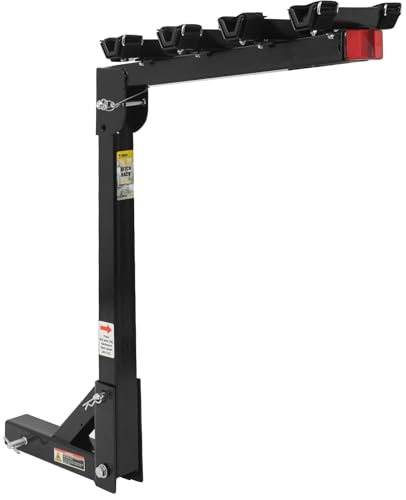
The MaxxHaul 70210 suits family outings and weekend shuttle duty, especially for cars, trucks, SUVs, and minivans that need room for more than one bike. The swing-down layout matters because rear access stays less awkward than with a fixed carrier, and that’s a real convenience in a busy driveway or trailhead lot.
The 150-pound capacity gives you a clearer sense of scale than many lighter two-bike options in this list, though it still asks you to watch bike spacing and vehicle fit carefully. You may find it a better match for mixed household use than for hauling heavy electric bikes, which is where the TANX, Young Electric, and WELLUCK picks start to pull ahead.
Strong Points
- Four-bike carrying capacity suits households that travel together.
- Swing-down design makes hatch or tailgate access easier.
- Fits a broad range of vehicle types with a hitch setup.
- Safety reflector adds a visible rear cue for low-light parking lots.
- Simple install profile keeps it approachable for casual use.
Things To Consider
- It is a heavier-duty style, so storage takes more space than compact two-bike racks.
- Four bikes can crowd one another on longer frames or wide bars.
- Regular bolt checks make sense after repeated highway use.
Feature Snapshot
Who It Suits Best
Households moving several standard bikes on a single hitch rack get the most from this setup.
A Better Fit Elsewhere
TANX Bike Racks for Ebikes and Fat Tire Rack fits better for riders hauling heavier electric bikes on a 2-inch receiver.
This TANX rack leans into the heavier end of the category, which is exactly what many electric-bike owners need. The 160-pound capacity and 2-inch receiver fit point to a platform made for sturdier loads, not casual weekend cruisers.
The wobble-resistant and tilting design details matter in daily use, because a rack that shifts less usually feels calmer on rough pavement and is easier to live with at the back of a vehicle. Compared with the MaxxHaul four-bike setup, this one gives up extra carrying count in exchange for a more focused heavy-bike build.
Highlights
- Designed around electric and fat-tire bikes.
- 160-pound rating supports heavier two-bike transport.
- Tilting layout helps you reach the rear area.
- Folding form should suit tighter garage storage.
Points To Note
- Two-bike capacity may feel limiting for larger households.
- Heavier racks are less convenient to lift onto the vehicle.
- Fat-tire fit helps a lot, but strap and arm placement still deserve attention during setup.
Core Details
Who Will Love This
Electric-bike owners hauling two heavier frames on a 2-inch hitch get the clearest match here.
Another Choice May Suit
MaxxHaul Hitch Mount 4 Bike Rack 70210 makes more sense for families that care more about carrying four standard bikes than about e-bike specific support.
The ramp is the headline here, and it changes the loading rhythm for heavier electric bikes more than a simple weight number ever could. A ramp reduces the awkward lift, which can matter a lot in a sloped driveway, a campsite, or anywhere you’d rather roll than muscle a bike upward.
The 200-pound rating and 5-inch fat-tire fit point to a more capable platform than the TANX rack, while the foldable structure still keeps storage in the conversation. The trade-off is obvious, though, because ramp-friendly hardware usually asks for a bit more room and setup discipline.
Reasons To Buy
- Ramp support makes loading less demanding.
- 200-pound capacity leaves generous room for heavier e-bikes.
- Accommodates fat tires up to 5 inches.
- Folding design helps reduce bulk between trips.
- Works with cars, trucks, SUVs, and minivans.
Areas To Watch
- The ramp adds another piece to manage and store.
- Large-capacity gear can feel overbuilt for lighter bikes.
- Loading tools work best on level ground, so uneven parking spots deserve a little extra care.
Feature Rundown
Best Suited To
Electric-bike owners who want less lifting and more loading control will appreciate this one most.
Look Elsewhere When
TANX Bike Racks for Ebikes and Fat Tire Rack makes more sense for a lighter, simpler two-bike setup without a ramp to store.
XtraEzzy keeps the pitch straightforward, and that can be refreshing in a category full of overloaded titles and long feature lists. It’s built for two electric or fat-tire bikes on a 2-inch receiver, so the shape of the rack tells you exactly where it belongs in a garage or truck bed routine.
Compared with the Young Electric option, this one sounds more stripped back, which may suit a shopper who wants less hardware to manage and fewer moving parts to think about. The honest read is that it looks better matched to straightforward hauling than to loading help or extra convenience features.
Bright Spots
- Clear fit for two electric or fat-tire bikes.
- 2-inch receiver compatibility keeps it on the heavy-duty side.
- Simple layout should be easier to live with day to day.
- Works across cars, SUVs, trucks, RVs, and minivans.
Softer Spots
- Two-bike capacity limits group outings.
- No ramp is mentioned, so loading heavier bikes may take more effort.
- Plain designs can still benefit from occasional strap and hardware checks after longer drives.
Details At A Glance
The Right Fit
Two-bike electric-bike households that want a plain, heavy-duty hitch rack get the strongest fit here.
Where A Sibling Pick Shines
Young Electric Ebike Rack with Ramp works better for anyone who wants ramp-assisted loading and a higher stated load rating.
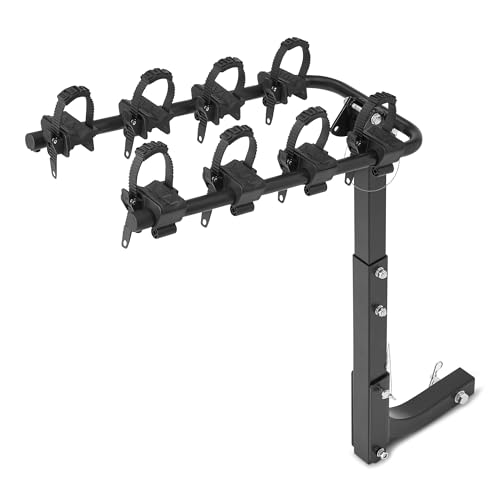
Steel frame construction gives this Amazon Basics rack a more grounded feel for everyday family transport, and the foldable format should help in a garage that already feels crowded. Anti-rattle stability matters too, because less play at the hitch usually means less noise and less nervous checking in the rearview mirror.
Compared with MaxxHaul’s similar four-bike focus, this version leans into the familiar no-frills lane, which makes sense for households that want a straightforward layout. The 132-pound capacity is lower than MaxxHaul’s 150-pound figure, so weight planning deserves a little attention.
Best Bits
- Four-bike capacity fits family and group outings.
- Steel frame adds a sturdy, familiar structure.
- Foldable design helps with storage between trips.
- Anti-rattle feature supports a steadier ride feel.
Room For Improvement
- 132-pound limit leaves less headroom than some four-bike rivals.
- Heavier steel builds are less pleasant to lift and store.
- Four-bike layouts can be tight for odd-shaped frames.
Core Details
Made For
Families that want a simple four-bike hitch rack with familiar steel construction fit this one well.
Reach For A Different Pick When
MaxxHaul Hitch Mount 4 Bike Rack 70210 is the better call for anyone who wants a higher stated weight limit on a similar four-bike layout.
TRAILXPERT sits in a useful middle zone for heavy two-bike transport, especially for electric bikes and fat tires up to 5 inches. The tilting platform shape matters more than it sounds, because access to the rear can still matter on grocery runs, kid pickups, or a packed road trip setup.
It reads as a practical everyday rack rather than a flashy one, and that’s a fair trade in this category. Compared with the TANX model, this one seems positioned as another straightforward heavy-bike option, while the Thule Outpace leans toward a cleaner, more premium structure.
Upsides
- Supports e-bikes and fat tires up to 5 inches.
- 160-pound rating suits heavier two-bike transport.
- Tilting layout helps preserve rear access.
- Platform style often feels steadier for heavier frames.
Small Caveats
- Two-bike format keeps capacity focused, not expansive.
- Tilting mechanisms add moving parts that deserve routine attention.
- Bulkier frames usually need a little more patience during mounting.
Quick Facts
Whose Shelf It Belongs On
Electric-bike households that want a tilting two-bike rack with room for fat tires fit this one best.
Skip It When
Amazon Basics 4-Bike Hitch Rack works better for families that need four-bike capacity more than heavy two-bike support.
The Thule Outpace brings a cleaner, more compact attitude to two-bike hauling, and its support for both 2-inch and 1.25-inch hitches widens the set of vehicles it can serve. That dual-hitch compatibility is a useful detail for people moving between cars, crossovers, or smaller SUVs.
The 110-pound capacity is lower than the heavier electric-bike picks here, so this one makes more sense for lighter two-bike setups and less for cargo-heavy e-bike duty. In practice, that narrower focus can be a strength, because you’re not paying attention to features you’ll never use.
Positives
- Supports both 2-inch and 1.25-inch hitches.
- Cleaner platform design keeps the profile tidy.
- Useful for lighter two-bike transport.
- Thule naming usually points to an organized, well-finished layout.
Worth Noting
- 110-pound capacity leaves less room for heavy e-bikes.
- Two-bike format keeps it focused, not family-scale.
- Smaller racks still benefit from periodic checkups on arms and straps after longer drives.
Feature Card
Perfect Match For
Smaller households moving two lighter bikes across more than one vehicle will get the cleanest fit here.
A Better Fit Elsewhere
TRAILXPERT 2-Bike Tilting Hitch Rack suits heavier e-bikes better, since it is built around a 160-pound load rating and a tilting platform.
WELLUCK piles on useful hardware for RV, truck, and SUV owners who want a two-bike platform with more capacity to work with. The 200-pound rating, 5-inch fat-tire fit, folding design, and anti-theft note make it feel built for travel routines where the rack stays in use rather than sitting idle.
That broader feature set separates it from the simpler XtraEzzy rack and puts it closer to the Young Electric option for heavier-duty hauling. The trade-off is the usual one with feature-rich racks, more moving pieces and more setup attention, though that’s often a fair exchange for added versatility.
Highlights
- 200-pound rating supports substantial two-bike loads.
- Fits fat tires up to 5 inches.
- Folding build helps with storage and day-to-day handling.
- Anti-theft note adds an extra layer of ownership confidence.
- Well matched to RV and larger-vehicle travel.
Minor Gripes
- More features usually mean more parts to keep track of.
- Heavy-duty racks tend to be less convenient in tight garages.
- Extra hardware can make first-time setup take a little longer.
Core Details
Built With In Mind
RV and SUV owners carrying two heavier bikes on long travel days will get the best match here.
Swap It Out When
Thule Outpace 2 Bike Hitch Rack is the calmer choice for lighter two-bike transport and for smaller hitches.
How To Choose The Right Bike Racks Hitch Mounts
Start With Receiver Size And Vehicle Match
The hitch receiver sets the frame for everything else. A 2-inch receiver is common on heavier-duty setups, while 1.25-inch hitches point more toward lighter vehicles and compact rack styles like the Thule Outpace.
Vehicle height matters too, because a tall SUV or truck makes loading feel different from a sedan. The right fit keeps the rack stable without forcing you into awkward reach angles every time you leave the driveway.
Match Capacity To Bike Weight, Not Just Bike Count
Bike count only tells part of the story. A four-bike rack such as the MaxxHaul or Amazon Basics model works well for standard bikes, but electric bikes and fat-tire frames usually ask for more attention to stated load limits.
That’s where heavier two-bike racks pull ahead. The TANX, TRAILXPERT, Young Electric, and WELLUCK picks all speak to weight-first use, which matters more than carrying extra slots you may never fill.
Look At Loading Style And Rear Access
Tilt and swing-down designs save hassle during real use. They let you reach the hatch, tailgate, or cargo area without removing the whole rack, which is handy during grocery runs or travel stops.
Ramp-equipped options go a step further for heavy e-bikes, since rolling a bike up often beats lifting it by hand. The trade-off is more hardware and a bit more storage space, so that upgrade makes the most sense for frequent heavy-bike transport.
Think About Frame Shape, Tire Width, And Storage
Fat tires, step-through frames, and long wheelbases all change how a rack should be set up. A model that fits up to 5-inch tires gives you more breathing room than a standard carrier, and that extra clearance can save frustration at load time.
Storage matters after the ride ends. Foldable racks are easier to tuck away in a garage, but heavier steel builds usually feel sturdier at the hitch, so your best choice depends on whether space or solidity matters more in your routine.
What To Weigh Before You Choose
Common Shopping Slip Ups
Many people focus on bike count and skip weight math. That mistake shows up fast with e-bikes, where a rack that seems roomy can still be underbuilt for the real load.
Receiver size is the other common miss. A 2-inch platform won’t solve a 1.25-inch hitch problem, and the wrong match turns an easy install into a return hassle.
The Case For Spending Up
Higher-tier racks usually cost more because they bring stronger materials, broader tire fit, and better access features such as tilt or ramp support. Those extras matter most for daily use, heavier bikes, and vehicles that get loaded often.
Spending up makes the most sense for e-bike owners, RV travel, and family setups where the rack stays in rotation. For lighter weekend rides, a simpler carrier is often enough and easier to store.
Frequently Asked Questions
Do hitch racks work with electric bikes?
Yes, but the rack needs the right load rating and tire clearance. Models built for e-bikes or fat tires are the safer fit for heavier frames.
What receiver size do most hitch racks use?
Many heavy-duty options use a 2-inch receiver. Some lighter models, like the Thule Outpace, also support 1.25-inch hitches.
Are swing-down and tilting racks worth it?
They help when you need rear access without removing the rack. That convenience matters during errands, road trips, and tight parking situations.
Can a 4-bike rack carry four electric bikes?
Not automatically, because total capacity still has to match the combined bike weight. Standard four-bike racks fit household bikes more comfortably than heavy e-bikes.
What makes a fat-tire rack different?
It leaves more room for wider tires and usually uses a steadier platform. That extra clearance matters with fat bikes and many electric-bike frames.