
Bike-hauling gets easier once the rack matches your bikes, your receiver size, and the kind of driving you actually do. Some of these picks suit family outings with standard bikes, while others are built with the weight and tire width of e-bikes in mind. That difference matters fast on steep driveways, long road trips, and quick errands where loading time is part of the routine.
Quick Look At The Shortlist
MaxxHaul Hitch Mount 4 Bike Rack (70210)
Young Hitch Mount Bike Rack with Ramp

TANX Fat Tire Bike Rack for Tow Hitch

Young Electric Ebike Rack with Ramp

XtraEzzy Hitch-Mount Bike Rack for Ebike Heavy-Duty
Amazon Basics 4-Bike Hitch Rack

TRAILXPERT 2-Bike Rack Hitch Mount
More Details On Our Top Picks
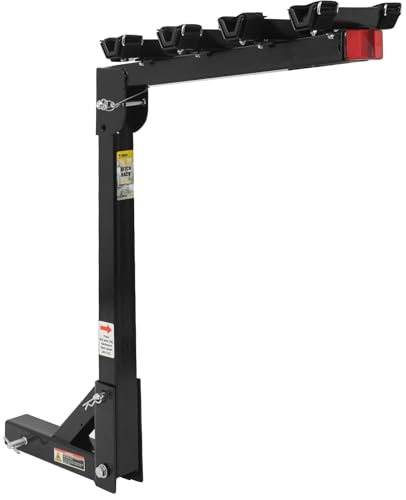
Four-bike capacity makes this MaxxHaul a practical family hauler, especially for weekend rides with mixed-size bikes. The swing-down layout matters in daily use, since access to the rear of the vehicle stays easier than with fixed-position racks.
The steel build and 150-pound capacity suit conventional bicycles better than heavy e-bikes, so the fit is clearer than the flashy title suggests. You may notice the trade-off in loading convenience, because a tray-style e-bike rack with a ramp, like the Young Hitch Mount, handles heavier bikes with less lifting.
Strong Points
- Holds up to four bikes, which helps for family outings and carpool-style trail days.
- Swing-down design keeps hatch or trunk access more usable than a fixed rack.
- Fits cars, trucks, SUVs, and minivans, so it works across a broad garage mix.
- Safety reflector adds visibility in low-light parking lots and roadside stops.
- Steel construction gives it a straightforward, workhorse feel for regular trips.
Things To Consider
- 150-pound capacity leaves less breathing room for heavier e-bikes and oversized frames.
- Four-bike racks can feel long behind shorter vehicles in tight parking spaces.
- Assembly and tightening matter, since rack stability depends on correct installation and periodic checks.
Feature Snapshot
Who It Suits Best
Families hauling multiple standard bikes for park loops, trail rides, and school-day errands will get the most from this layout.
A Better Fit Elsewhere
Young Hitch Mount Bike Rack with Ramp suits e-bike owners who want less lifting and a ramp for easier roll-on loading.
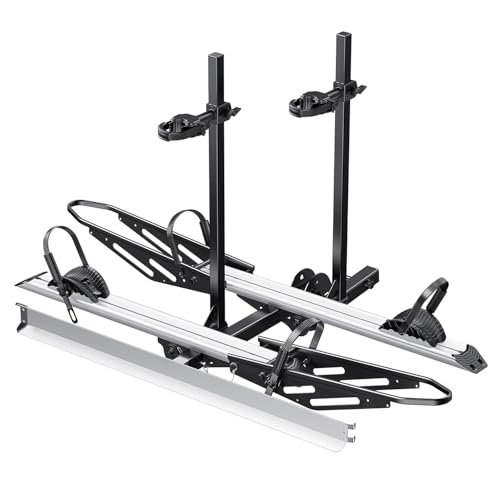
Ramp-assisted loading changes the experience here in a very practical way, especially for heavier e-bikes and fat-tire models. Young Electric gives you a 200-pound capacity and fitment for cars, SUVs, RVs, and trailers with a 2-inch receiver, so the use case is broader than a simple car rack.
That extra versatility comes with more bulk than the simpler Amazon Basics four-bike rack, but the trade-off is worth noting for anyone moving heavy frames by hand. The ramp is the point, and for garage-to-road loading it can feel like the difference between a staircase and a gentle slope.
What We Like
- Ramp helps you roll bikes into place instead of lifting them high.
- 200-pound capacity suits two heavier electric bikes with room to spare.
- Fits standard and fat-tire bikes, which helps in households with mixed equipment.
- Works with cars, SUVs, RVs, and trailers using a 2-inch receiver.
- Two-bike layout keeps the platform more manageable than larger family racks.
Areas To Watch
- Two-bike capacity is a narrow fit for larger groups.
- Ramp storage and handling add another part to keep track of on trips.
- Heavy-duty loading gear usually takes more garage space than compact racks.
Core Details
Made For
E-bike owners who want easier loading and a rack that treats heavy frames as the main job, not an afterthought.
Consider Something Else When
MaxxHaul Hitch Mount 4 Bike Rack fits families who need to carry more than two bikes and can live with lighter loads.
TANX sits in the middle of the pack in a useful way, with a 2-bike platform and a 160-pound capacity that fits many e-bike and fat-tire setups without overcommitting to a huge frame. The wobble-resistant, tilting, folding design matters most for driveway use and gas-stop errands, where a rack that folds out of the way is easier to live with.
Compared with the Young Hitch Mount, this one leans less on a ramp and more on a stable platform approach, so your loading style changes a bit. The honest read is that it suits people who want solid hitch-mounted carrying without the size of a four-bike setup.
Highlights
- 160-pound capacity covers many heavier bikes without stepping into oversized territory.
- Tilting setup helps with rear access on regular trips.
- Folding design makes garage storage and parking maneuvering easier.
- Fat-tire compatibility broadens the range of bikes it can carry.
- Two-bike format stays more compact than four-bike family racks.
Points To Note
- No ramp is listed, so loading height still matters for heavy frames.
- Two-bike capacity may feel restrictive for households with multiple riders.
- Platform racks usually need careful tightening after installation and occasional checks.
Spec Overview
The Right Fit
Two-bike households with heavier frames, including many fat-tire and e-bike setups, get the cleanest fit here.
Where A Sibling Pick Shines
Young Electric Ebike Rack with Ramp suits you better when ramp loading matters more than a compact tilting platform.
This Young Electric rack follows the same heavy-bike logic as the ramped Young Hitch Mount, but it adds a foldable form that helps in day-to-day parking and storage. Its 200-pound capacity and 5-inch fat-tire fit make it a strong match for bigger electric bikes, and the receiver size keeps compatibility focused on common towing setups.
For truck, SUV, and minivan owners, the foldable layout can be the detail that saves space in the garage. You may find the ramp especially helpful after long rides, since rolling a heavy bike into place usually beats wrestling one into a platform.
Upsides
- Ramp support makes loading heavy bikes less awkward.
- 200-pound capacity handles two substantial e-bikes.
- Foldable frame helps with storage and driveway clearance.
- 5-inch fat-tire fit widens compatibility for broad-tread bikes.
- Works across cars, trucks, SUVs, and minivans with a 2-inch receiver.
Softer Spots
- Two-bike capacity keeps it focused rather than family-size.
- Ramp pieces add another item to manage and store.
- Heavier-duty racks usually ask for a little more installation patience.
Details At A Glance
Who Will Love This
E-bike owners with wide tires and a 2-inch hitch will appreciate the ramp and the foldable structure most.
Another Choice May Suit
MaxxHaul Hitch Mount 4 Bike Rack fits better for larger families who need four-bike capacity more than ramp loading.
XtraEzzy keeps the format simple, and that simplicity works for electric and fat-tire bikes that need a sturdy two-bike platform. The 2-inch receiver fit makes it a sensible match for car, SUV, truck, RV, and minivan setups, especially for people who already know they want a dedicated heavy-bike carrier.
Compared with the ramped Young Electric and JOYTUTUS options, this one sounds more focused on brute-strength carrying than loading convenience extras. The trade-off is straightforward, less help during loading, but a cleaner heavy-duty rack profile once the bikes are mounted.
Best Bits
- Heavy-duty build target suits electric and fat-tire bikes.
- Two-bike format keeps the rack practical for regular solo or paired rides.
- Fits a wide set of vehicle types with a 2-inch receiver.
- Simple layout can mean fewer moving parts to keep track of.
Minor Gripes
- No ramp is specified, so lifting effort still matters.
- Two-bike capacity stays narrow for group transport.
- Heavy-duty racks can take more careful storage and periodic bolt checks.
Feature Card
Built With In Mind
Two e-bike owners who want a straightforward heavy-duty rack without extra loading hardware will feel right at home here.
Look Elsewhere When
JOYTUTUS Hitch EBike Rack with Ramp makes more sense for you when a built-in ramp matters more than a stripped-back heavy-duty layout.
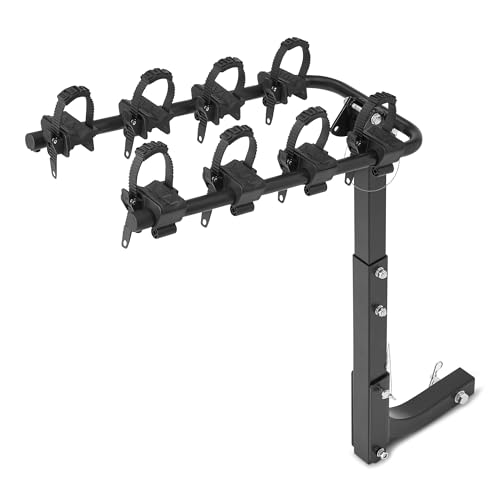
This Amazon Basics rack is the plainspoken option in the group, with a steel frame, folding form, and anti-rattle stability for a 2-inch hitch. The 132-pound capacity and four-bike layout make it a solid fit for standard bicycles, especially for families who want simple transport without extra loading hardware.
Compared with the MaxxHaul, it serves a similar job but leans into a cleaner, more stripped-back spec sheet. For most garage setups, that means less fuss and fewer parts, though it also means less room for heavier e-bikes than the ramp-equipped options.
Positives
- Four-bike capacity suits family routines and multi-bike outings.
- Steel frame gives the rack a durable, no-nonsense feel.
- Folding design helps with storage when the rack is off the vehicle.
- Anti-rattle stability is useful on rougher roads and longer drives.
- 2-inch hitch fit keeps compatibility aligned with common towing receivers.
Worth Noting
- 132-pound capacity leaves less margin for heavier bikes.
- No ramp is listed, so loading height still matters.
- Four-bike racks can feel bulky in tight garages or narrow parking spaces.
Core Details
Whose Shelf It Belongs On
Households carrying standard bikes on a regular basis will get the best match here, especially when price-conscious simplicity matters.
Skip It When
Young Hitch Mount Bike Rack with Ramp suits you better once heavy e-bikes and easier roll-on loading become the priority.
TRAILXPERT is the smallest-feeling pick here, and that’s a plus for smaller garages, shorter rear overhangs, and regular errands around town. The 160-pound capacity and 5-inch fat-tire fit keep it relevant for e-bikes, while the tilting platform adds everyday convenience at the hatch.
Compared with the heavier ramped models, this one asks you to handle lifting directly, so it suits people who value compact size more than assisted loading. For short commutes or simple weekend use, that trade-off can feel neatly balanced.
Bright Spots
- Two-bike platform stays compact behind the vehicle.
- Tilting function helps with access to the rear cargo area.
- 160-pound rating gives useful headroom for heavier bikes.
- Fat-tire support broadens compatibility for wider-tread setups.
- Smaller footprint can make parking and storage easier.
Small Caveats
- No ramp is specified, so loading heavy bikes still takes effort.
- Two-bike capacity is more focused than family-size racks.
- Tilting hardware usually rewards periodic hardware checks over time.
Quick Facts
Who Should Grab It
City drivers and small-SUV owners who want a two-bike carrier with a compact footprint will get the cleanest fit here.
Reach For A Different Pick When
Amazon Basics 4-Bike Hitch Rack makes more sense for you when four-bike capacity matters more than compact size.
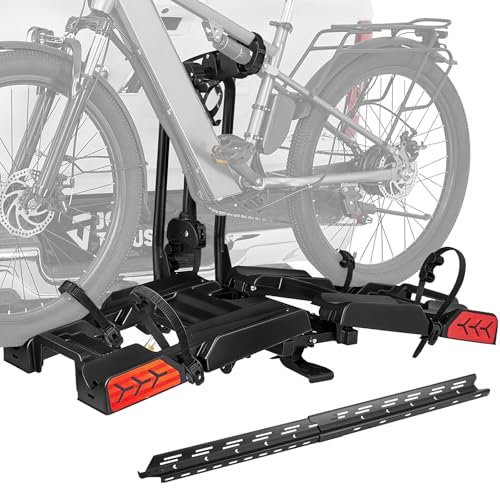
JOYTUTUS brings together the details that matter most for heavy electric bikes, a 200-pound capacity, a ramp, folding storage, and tilt-out access. That combination makes it a strong all-rounder for garages where lifting a full-size e-bike by hand is exactly the part you want to avoid.
The 5-inch fat-tire fit broadens compatibility, and the 2-inch receiver keeps it grounded in common towing hardware. Compared with the XtraEzzy rack, this one adds more loading convenience, so the extra structure has a real purpose rather than just looking elaborate.
Reasons To Buy
- Ramp setup makes heavy-bike loading much less demanding.
- 200-pound capacity suits two substantial e-bikes.
- Tilt and fold functions improve daily use and storage.
- Fits fat tires up to 5 inches wide.
- Works with cars, SUVs, and trucks using a 2-inch receiver.
Honest Caveats
- Two-bike capacity keeps it focused rather than group-friendly.
- Ramp and folding hardware mean more parts to store and manage.
- Heavier-duty racks usually reward careful setup and periodic checks.
Core Details
Perfect Match For
Heavy e-bike owners who want the least awkward loading path and a rack that folds away after the ride.
Swap It Out When
MaxxHaul Hitch Mount 4 Bike Rack fits better for families that need to carry four standard bikes instead of two heavy ones.
How To Choose The Right Bike Racks For Tow Hitch
Match Capacity To Bike Weight
Start with the combined weight of the bikes, not the number of frames alone. A 4-bike carrier like the MaxxHaul and Amazon Basics models fits standard bikes well, while 200-pound two-bike racks such as the Young Hitch Mount and JOYTUTUS are built for heavier electric setups.
That number matters because e-bikes can push a rack into a different category fast. A higher capacity gives more breathing room, but it often comes with more bulk and more metal to move around.
Check Tire Width And Loading Style
Fat-tire compatibility changes the field more than many people expect. Trail-style bikes and many e-bikes need room for wider rubber, and racks like TANX, TRAILXPERT, and JOYTUTUS call out fat-tire support for that reason.
Loading style matters just as much. A ramp reduces lifting, a tilting platform helps with rear access, and a folding frame helps storage, but each feature adds a little complexity.
Think About Vehicle Size And Hitch Fit
A 2-inch receiver is the common thread across this shortlist, so you still need to check the hitch on the vehicle before anything else. That step matters on sedans, SUVs, trucks, minivans, and RVs, since rear clearance changes the way a rack sits behind the vehicle.
Longer four-bike carriers can feel like a trailer tongue in tight parking spaces, while shorter two-bike racks are easier to live with in the city. The right length depends on how often you parallel park, back into a garage, or tow with a loaded rear end.
Plan For Daily Handling And Storage
It helps to think beyond the first ride. Folding arms, anti-rattle hardware, and tilt functions all affect how annoying the rack feels after months of use, not just on day one.
For households that load bikes every weekend, easier maintenance and cleaner storage usually matter as much as raw capacity. A simpler rack can be the calmer choice, while a feature-rich one earns its keep through convenience.
What To Weigh Before You Commit
Hidden Buying Traps
One common mistake is choosing bike count before hitch size and bike weight. A big four-bike rack sounds useful, then turns awkward once you start loading heavier frames or backing into a tight driveway.
Another miss is overlooking tire width. A rack that handles standard road bikes can feel cramped once fat tires enter the picture.
The Upgrade Payoff
Higher-tier racks usually cost more because they add steel, ramp hardware, tilt mechanisms, and wider tire support. Those parts are not decoration, they reduce lifting effort, improve access, and make the rack more comfortable on regular trips.
That upgrade is worth it for e-bike owners, taller vehicles, and anyone loading solo. For lighter bikes and short local drives, a simpler rack often covers the job without extra hardware.
Frequently Asked Questions
What hitch size do these racks use?
Every rack in this roundup is built around a 2-inch receiver. That keeps compatibility focused on common towing hitches rather than smaller or unusual mounts.
Are these racks suitable for e-bikes?
Several are, especially the Young, TANX, XtraEzzy, TRAILXPERT, and JOYTUTUS models. Capacity and tire width matter most, so the 200-pound ramp racks are the easiest starting point for heavier e-bikes.
Do ramp-equipped racks make loading easier?
Yes, because you roll the bike into place instead of lifting it fully. That helps most with heavier electric bikes and taller vehicles.
Can you still open the rear hatch with a rack installed?
Tilting and swing-down designs help a lot here, especially on the MaxxHaul, TANX, TRAILXPERT, and JOYTUTUS picks. Access depends on the vehicle shape and how the bikes are positioned on the rack.
Which rack suits standard family bikes best?
The MaxxHaul 4 Bike Rack and the Amazon Basics 4-Bike Hitch Rack fit that job well. They make the most sense for households carrying several lighter bikes instead of a pair of heavy e-bikes.