
Truck owners often need a rack setup that keeps bikes stable without turning bed access into a daily chore. This roundup focuses on front-of-truck use, plus close-fit options that still make sense for pickups, hitch receivers, and trailer tongues.
You’ll see choices for heavy e-bikes, four-bike family trips, and cleaner fork-mount storage for shorter transport runs. The useful difference is in the hardware, receiver fit, and how much setup each rack asks of you.
Quick Look At The Shortlist
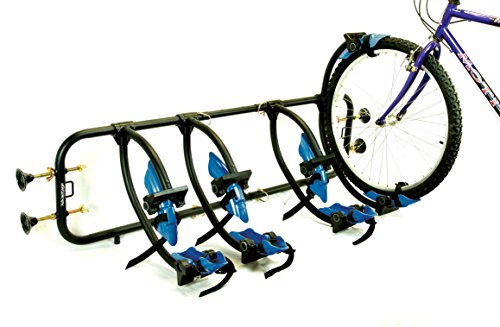
Heininger Advantage SportsRack BedRack Elite Truck 4 Bike Rack (2030)

TANX E-Bike Fat Tire Hitch Rack 2-Bike 160 lbs
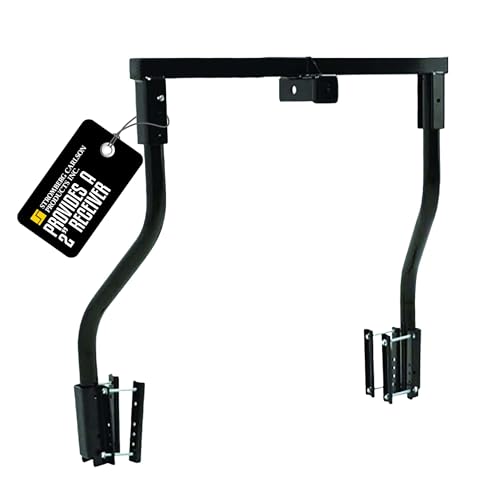
Stromberg Carlson CC-275 Trailer Tongue Bike Bunk

INNO RT202 Truck Bed Bike Rack

MaxxHaul 50250 4-Bike Hitch Mount Rack 22″ Dual Arm

MUQZI Quick Release Thru Axle Bike Fork Mount

Titan Ramps Truck Bed Adjustable Steel Bike Rack
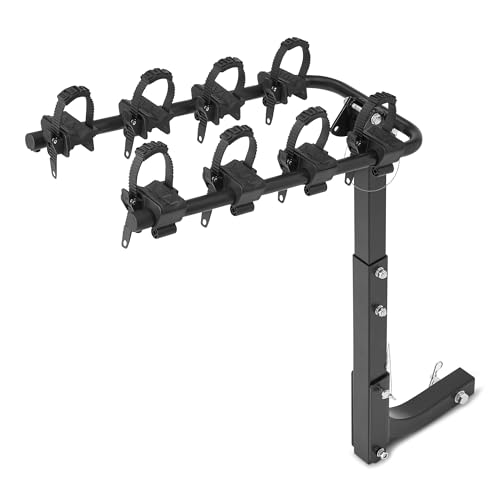
Amazon Basics 4-Bike Hitch Rack 2″ Hitch
More Details On Our Top Picks
Four-bike truck bed transport starts to make sense here, especially for family rides or a weekend group that doesn’t want a hitch setup hanging off the rear. The bed-mounted layout keeps the bikes tied into the pickup rather than relying on a rear swing-out carry style, which helps in tighter parking spots.
Compared with the hitch-first TANX rack, this one suits truck owners who want to keep the back of the vehicle cleaner and use the bed as the anchor point. The trade-off is simple, it’s built around that truck-bed use case, so it’s not the flexible all-vehicle answer.
Strong Points
- Holds up to four bikes, which helps for family outings or riding groups.
- Bed-based placement keeps the load closer to the truck than a rear hitch carrier.
- Black finish gives it a straightforward, utilitarian look.
- Good match for pickup owners who want to keep the hitch free.
Areas To Watch
- Best suited to pickup beds, not the most universal choice in this roundup.
- Installation and tie-down planning matter more than on a simple fork mount.
- Cleaning around the bed rails can take a little extra effort after dusty trips.
Feature Rundown
Who It Suits Best
Pickup owners planning regular group rides will get the most out of this rack, especially around town or on repeated weekend trips.
Where A Sibling Pick Shines
MAXXHAUL 50250 suits mixed-vehicle households better, because its 2-inch hitch format makes it easier to move between a truck, SUV, or car.
This TANX rack leans hard into heavy-bike duty, which is exactly where e-bike transport gets picky. A 2-inch receiver fit gives it the kind of foundation truck owners usually want, and the fat-tire compatibility makes it more relevant than lighter-duty carriers for oversized rubber.
Compared with the Heininger bed rack, this one is the more direct answer for a rear hitch setup on a truck that still has to carry heavy frames. The folding and tilting design adds convenience, though that moving hardware also brings more parts to live with.
What We Like
- Rated for 160 pounds of total load, which suits heavier electric bikes and stout frames.
- Fat-tire support makes it a better fit for wider wheel setups.
- Tilting function helps with cargo-area access on many trucks.
- Folding structure is useful when the rack stays on the vehicle between rides.
- Wobble control matters on rougher roads, where movement can become distracting fast.
Minor Gripes
- Its strength is tied to hitch use, so it’s not a front-bed substitute.
- Moving parts can need more routine checking than a simpler fixed mount.
- Heavy-bike loading still calls for careful handling at the hitch height.
Core Details
Built With In Mind
Heavier e-bike owners and fat-tire setups get the most useful match here, especially for local rides and regular weekend transport.
Another Choice May Suit
MAXXHAUL 50250 fits better for families carrying up to four standard bikes, since it spreads the load across more trays instead of focusing on two heavy machines.
This is the most specialized setup in the group, and that specialization is the point. The raised 2-inch receiver sits on the trailer A-frame, so the bike rack rides higher and leaves the rear travel setup more organized.
Compared with the INNO and Titan bed racks, the CC-275 makes the most sense for RV travel where the trailer tongue is already doing the work. The 100-pound support limit keeps expectations grounded, and that makes it better for moderate loads than a big multi-bike family stack.
Reasons To Buy
- Raised receiver placement helps create a cleaner trailer layout.
- Adjustable fit covers a wide A-frame mounting width range.
- Works with RV-approved 2-inch receiver racks, which broadens rack pairing options.
- 100-pound support rating suits practical travel use instead of overbuilt excess.
Softer Spots
- It serves a narrow use case, so it’s not for every truck setup.
- Trailer-based mounting adds another hardware layer to plan around.
- Best results depend on pairing it with a rack that suits the receiver rating.
Technical Sheet
Whose Shelf It Belongs On
RV owners who want bike transport tied into the trailer tongue rather than the truck bed are the best match here.
Reach For A Different Pick When
Heininger Advantage SportsRack BedRack Elite Truck 4 Bike Rack (2030) fits better for truck owners who need a straightforward four-bike bed solution without trailer hardware in the mix.
The INNO RT202 is for pickup owners who already have a C-channel track system in the bed and want the rack to work with that hardware instead of around it. That approach often feels cleaner than universal clamping, and it helps the rack sit where the truck was already built to accept mounting gear.
Compared with the Titan and Heininger bed options, this one asks more of your truck’s built-in setup but can reward that with a neater installation. The trade-off is obvious, it’s less useful for beds that lack the track system it expects.
Upsides
- Track-system compatibility makes for a more integrated truck-bed fit.
- Dedicated mounting style can feel steadier than generic clamp-on hardware.
- Good match for drivers who want a cleaner bed layout.
Room For Improvement
- Works best with a specific bed-track setup, so compatibility is narrower.
- Owners without C-channel rails may need to look elsewhere.
- Bed-track hardware usually asks for careful installation alignment.
Feature Card
Made For
Pickup owners with factory-style or add-on bed tracks will get the most from this rack, especially around repeat local transport.
Look Elsewhere When
Titan Ramps Truck Bed Adjustable Steel Bike Rack suits broader truck-bed compatibility better, because it is built for more makes and models without leaning on a track-specific layout.
Dual arms make this MaxxHaul rack feel familiar in the best practical sense, since the frame gives multiple bikes a defined place to sit. It’s a sensible fit for truck owners who also rotate between SUV and car duty, because the 2-inch receiver format keeps the setup broadly usable.
Compared with the TANX rack, this one is aimed more at general family hauling than at heavy e-bike weight. The steel build and reflector detail help the rack feel more workmanlike, though the trade-off is that you still need enough hitch room and loading discipline to manage four bikes cleanly.
Positives
- Four-bike capacity supports family outings or group transport.
- 22-inch dual-arm layout helps organize the load across the carrier.
- 2-inch receiver fit works across several vehicle types.
- Steel construction supports a sturdier long-term feel than lighter racks.
- Safety reflectors add visibility detail for roadside presence.
Trade Offs
- Not built around the extra load demands of heavy e-bikes.
- Four-bike carriers can feel bulky in tighter parking or garage spaces.
- Regular checks on straps and contact points help keep the rack tidy over time.
Spec Overview
Perfect Match For
Truck, SUV, and car households that move several bikes at once will get the most from this setup.
Swap It Out When
TANX E-Bike Fat Tire Hitch Rack 2-Bike 160 lbs fits better for heavier electric bikes, since its load focus is narrower and more suitable for stout frames.
Fork mounts live in a different lane from full bike racks, and that’s exactly why this MUQZI block belongs in the list. The quick-release through-axle layout is built for secure front-fork retention, while the raised bar design gives the lever a bit more room during setup.
Compared with the bed and hitch racks above, this is the more stripped-down choice for storage, transport, or shop-style loading where you already know the bike can ride fork-first. The adapters make it more adaptable, though the whole setup still depends on your axle style and how you plan to mount it in the truck or garage.
Best Bits
- Quick-release thru-axle format keeps the bike anchored at the fork.
- Raised design helps the lever clear the mounting surface during install.
- Four adapters broaden compatibility across different axle setups.
- Useful for storage as well as transport in a truck, van, or SUV.
Things To Consider
- It’s a fork-mount solution, not a full-bike carrier.
- Compatibility depends on axle style and how you want to secure the front end.
- Because it’s compact, you may need a dedicated mounting surface in the truck or garage.
Details At A Glance
Who Should Grab It
Hands-on riders who already know their axle format and want a compact fork mount for truck or garage use will get the most from it.
Skip It When
Amazon Basics 4-Bike Hitch Rack 2″ Hitch fits better for shoppers who want one carrier for multiple bikes instead of a fork-only setup.
Titan Ramps takes the broad-compatibility route, and that’s useful for truck owners who don’t want to chase a rare fit. The adjustable steel frame points toward durability and a more planted feel, especially for four-bike transport where a lighter rack can start to feel overmatched.
Compared with the INNO RT202, this is the easier answer for many pickup beds because it isn’t tied to a track-system setup. The honest read is that adjustability helps a lot, but truck-bed hardware still rewards careful placement and periodic checking.
Highlights
- Adjustable layout helps it fit most makes and models more easily.
- Steel construction gives it a solid, utility-first profile.
- Four-bike capacity works well for families and group trips.
- Truck-bed fit keeps the load inside the vehicle footprint.
Points To Note
- Truck-bed use means it won’t suit every vehicle the way a hitch rack might.
- Steel hardware adds weight, so moving or storing the rack takes more effort.
- Bed setups benefit from occasional re-checks after rough roads or repeated loading.
Core Details
The Right Fit
Pickup owners who want an adjustable four-bike truck-bed rack without track-specific hardware should land here first.
A Better Fit Elsewhere
Heininger Advantage SportsRack BedRack Elite Truck 4 Bike Rack (2030) makes more sense for truck families who want the shortest path to a bed-first four-bike setup.
This Amazon Basics rack is the plainspoken choice in the group, and that’s not a weakness when you want a hitch-mounted carrier that stays readable at a glance. The foldable structure and anti-rattle stability language point toward practical day-to-day use, especially for truck owners who prefer a simpler setup than some of the heavier specialty racks.
Compared with the MaxxHaul 50250, this one also serves the four-bike crowd, but the 132-pound capacity gives you a clearer ceiling for planning. That makes it a sensible fit for standard bikes and mixed household transport, not a heavy e-bike job.
Positives
- 4-bike format handles family outings without a second carrier.
- Foldable design helps when the rack stays on the vehicle between trips.
- Anti-rattle focus should reduce the loose, clunky feel some hitch racks develop.
- Heavy-duty steel frame gives the rack a tougher working profile.
- 2-inch hitch fit keeps it aligned with common truck receiver hardware.
Room For Improvement
- It is not the right answer for heavy e-bikes or oversized cargo bikes.
- Four-bike hitch racks still take some care when loading around the rear of the truck.
- Periodic strap and contact-point checks are part of owning any busy hitch carrier.
Spec Overview
Whose Shelf It Belongs On
Truck owners who want a straightforward four-bike hitch rack for standard family use will find this one easy to understand and easy to live with.
Where Shoppers Go Wrong
TANX E-Bike Fat Tire Hitch Rack 2-Bike 160 lbs suits heavy electric bikes better, because its load focus is built for stronger frames and fewer bikes.
How To Choose The Right Bike Racks For Front Of Truck
Match The Mount To The Truck
Front-of-truck use sounds simple until the rack has to fit the actual vehicle hardware. A 2-inch hitch receiver, a truck-bed track, a trailer tongue, and a fork mount all solve different problems, and each one changes how the bikes sit and how much access you keep to the truck.
Truck owners who want the least fuss usually lean toward hitch or bed solutions, while trailer travelers often get more value from a tongue-mounted setup. The right choice depends less on the headline capacity and more on where the rack actually attaches.
Weight Matters More Than Count
Bike count gets attention, but load rating is where the real planning happens. Heavier e-bikes, fat tires, and long-wheelbase frames ask for a stronger carrier than a basic four-bike rack built for standard bikes.
That’s why a 160-pound two-bike hitch rack can make more sense than a lighter four-bike carrier. The honest read is that you want enough room in the rating for the bikes you actually own, not the number that looks most convenient on the product page.
Think About Access After Loading
Some carriers fold, some tilt, and some keep the bikes close to the truck bed. Those details matter once you start opening tailgates, reaching cargo, or parking in a tight driveway after a ride.
A bed rack can preserve rear access better than a bulky hitch carrier, while a tilting hitch design can save you from unloading everything just to get to gear. For daily use, convenience often comes from the little mechanical features, not from capacity alone.
Pick For The Bikes You Ride Most
Standard hybrids, mountain bikes, e-bikes, and fat-tire bikes do not ask for the same rack geometry. A fork mount suits a bike that can be secured by the front axle, while a broad hitch rack is more forgiving for mixed family fleets.
Match the rack to the bikes that leave the garage most often. That keeps the setup calmer on departure day and lowers the chance that you end up forcing a rack into a job it wasn’t built to handle.
Things Worth Knowing First
Mistakes Worth Dodging
Many shoppers start with capacity alone and miss fit, axle style, or receiver size. That’s how a rack that looks capable ends up being awkward in a real truck bed or useless on a trailer tongue.
Another common miss is ignoring what happens after the bikes are loaded. Access, folding, tilting, and storage space can matter as much as the rack’s headline load limit.
The Upgrade Payoff
Higher-tier racks usually cost more because they use stronger steel, more precise mounting hardware, and better control over wobble or movement. You also tend to get more convenience, such as folding arms, tilt functions, or better fit adjustment.
That upgrade makes sense for frequent hauling, heavier bikes, or truck owners who want the rack to feel settled on rough roads. For occasional weekend use with standard bikes, a simpler carrier can still be the smarter buy.
Frequently Asked Questions
Can a front-of-truck bike rack work on any pickup?
No, fit depends on the rack style and the truck hardware it needs. A hitch rack, bed rack, or track-specific mount all solve the job in different ways.
Are e-bikes harder to carry than standard bikes?
Yes, heavier frames and wider tires usually demand a stronger rack and more careful loading. A higher load rating matters more than just having room for two or four bikes.
What matters most for truck-bed bike racks?
Mounting style and bed compatibility matter most. A rack that matches your bed rails or track system usually feels more secure and easier to live with.
Do foldable racks help in daily use?
They do, especially on trucks that stay parked in garages or tight driveways. Folding cuts down the space the carrier occupies when it’s not carrying bikes.
Is a fork mount a full replacement for a hitch rack?
No, it serves a narrower purpose and depends on axle type and a mounting point. A hitch rack is better when you need to carry multiple complete bikes with less setup fuss.