
Road bike computers have gotten a lot more useful for daily rides, weekend climbs, and long training loops. You want clear route guidance, readable screens, and battery life that won’t leave you guessing halfway home. The right unit also needs to fit your cockpit cleanly, because crowded handlebars can make even a good device feel annoying. This roundup focuses on riders who want practical data without a lot of fuss.
Quick Look At Our Shortlist
CooSpo Wireless GPS Bike Computer

iGPSPORT BSC100S GPS Bike Computer

Hilceriy Wired Bike Computer Odometer

Garmin Edge 540 Compact GPS Cycling Computer

Garmin Edge Explore 2 GPS Cycling Navigator
Garmin Edge 840 Compact GPS Cycling Computer

Garmin Edge 1050 Premium Cycling Computer

GEOID CC700 Pro 2.8-Inch Color Touchscreen GPS Bike Computer
More Details On Our Top Picks
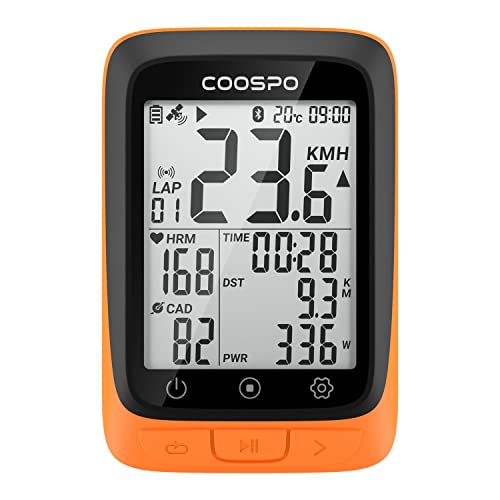
For riders who want GPS basics without a crowded cockpit, this CooSpo model keeps the setup straightforward. The 2.4-inch LCD screen and auto backlight make it easier to read during early starts or late returns, and Bluetooth plus ANT+ give you broader sensor pairing options.
The trade-off is that you’re getting a simpler screen and feature set than the Garmin units later in this roundup. That can be a good thing for daily road riding, especially when you want speed, distance, and route data without a lot of menu digging.
Positives
- Bluetooth and ANT+ support opens up more sensor pairings.
- Auto backlight helps the display stay readable across changing light.
- The compact screen suits slim road-bike bars.
- GPS tracking keeps the ride data cleaner than basic wheel-only units.
Things To Consider
- The display size suits essentials better than dense map work.
- Owners who like deep training tools may want more than this class offers.
- The compact format leaves less room for advanced on-screen detail.
Feature Card
Who It Suits Best
You fit this pick best when you want a clean wireless head unit for commuting, fitness rides, and weekend loops, not a full training dashboard.
A Better Fit Elsewhere
The Garmin Edge 540 suits structured training riders more closely, since it brings a deeper coaching and navigation toolkit.
The BSC100S leans into long, ordinary road rides rather than flashy extras. A 2.6-inch LCD gives you a little more breathing room than the CooSpo, and the rechargeable design is a practical fit for commuters who’d rather charge on a schedule than fuss with disposable cells.
That larger screen still keeps the unit small enough for a tidy bar setup. You may find the simpler interface easier to live with on rough roads, while the wireless build helps keep the cockpit less tangled than a wired odometer.
Highlights
- The 2.6-inch display gives status info a bit more room.
- Rechargeable power suits riders with a regular charging routine.
- Wireless setup keeps the bars cleaner than cable-based units.
- Waterproof construction adds confidence for damp commutes and mixed weather.
Room For Improvement
- Riders wanting advanced coaching tools will outgrow it faster.
- The screen still favors clarity over map-heavy layouts.
- As with most wireless units, pairing and setup deserve a careful first pass.
Spec Overview
Built With In Mind
You suit this model best when you want a straightforward road computer for steady mileage, especially on rides that stretch across a workweek.
Another Choice May Suit
The Garmin Edge Explore 2 makes more sense for navigation-first riders who want a more map-led riding experience.
This wired option is the plain-spoken choice in the lineup. The automatic wake-up function and LCD readout keep it simple, and the cable connection can appeal to road riders who want a set-and-forget odometer more than a smart training head unit.
The honest read is that you give up the cleaner cockpit and flexible sensor pairing that come with the wireless units above it. In return, you get a no-nonsense display of riding speed, distance, time, and related data that suits basic mileage tracking well.
Bright Spots
- Wired operation removes the need to manage wireless pairing.
- Automatic wake-up suits stop-and-go road routines.
- Displays speed, distance, time, and related ride figures.
- The small body keeps the handlebar footprint modest.
Small Caveats
- Wiring makes installation a little more involved than a wireless setup.
- The feature set stays focused on basics.
- Road riders who rotate bikes often may prefer a quicker-mount wireless model.
Core Details
Whose Shelf It Belongs On
You fit this one best when you want a simple road-bike meter for mileage and speed without worrying about sensor ecosystems.
Skip It When
The iGPSPORT BSC100S is the cleaner next step for riders who want wireless convenience without moving up to a full premium computer.
The Edge 540 moves from basic ride logging into more structured training territory. Button controls make sense on wet roads or with gloves, and the compact body suits a tidy road-bike cockpit without stealing bar space.
Up to 26 hours of runtime gives it the stamina many serious riders look for, though real-world use will still depend on settings and connected accessories. Road cyclists who follow coaching plans or want more precise navigation usually get more value from this model than from the simpler picks above.
What We Like
- Button controls stay reliable in rain or with winter gloves.
- Targeted adaptive coaching supports more structured training days.
- Advanced navigation helps on unfamiliar routes and long loops.
- The compact size keeps the front end neat.
- Up to 26 hours of battery life suits long rides and heavier training weeks.
Points To Note
- The button-first interface can feel less immediate than a touchscreen.
- Riders who only want speed and distance may pay for more than they need.
- Setup is a little richer than the simpler wireless units in this roundup.
Technical Sheet
Right Fit For
You suit this pick best when your rides revolve around training structure, route planning, and a cockpit that stays compact.
Look Elsewhere When
The Garmin Edge Explore 2 makes more sense for riders who care more about easy navigation than training depth.
The Explore 2 is built for road cyclists who care more about finding their way than chasing training metrics. It keeps the interface approachable, which helps a lot on unfamiliar routes, touring days, or city-to-suburb rides where you want less fuss and more direction.
Compared with the Edge 540, it feels easier to live with and less training-focused. That softer approach suits riders who commute, tour, or spend long stretches on mapped routes and want a navigator that doesn’t ask for much attention.
Standout Traits
- Easy-to-use layout lowers the learning curve.
- GPS cycling navigation suits route-heavy rides.
- The interface works well for commuters and casual tourists.
- Good fit for riders who value direction over data overload.
Areas To Watch
- Training-focused riders may want the Edge 540 or Edge 840 instead.
- The simpler experience means fewer performance-oriented extras.
- Map-heavy use can still ask for careful setup before a long ride.
Details At A Glance
Made For
You fit this model best when your road rides are built around routing, touring, or everyday navigation instead of interval data.
A Better Fit Elsewhere
The Garmin Edge 840 suits riders who want a compact navigator with more advanced cycling features and a stronger training angle.
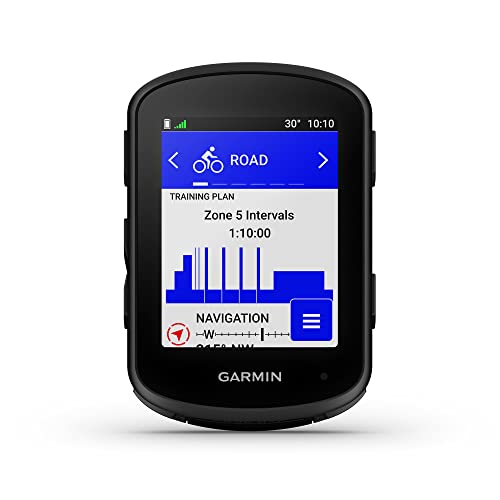
The Edge 840 sits in the sweet spot between straightforward use and richer ride tools. Its compact body mirrors the smaller units in this roundup, but the feature depth makes it a better match for riders who train often and still want a bike computer that doesn’t dominate the bars.
That balance matters on road bikes, where stem space and clean routing count. You may find it the most sensible Garmin step-up once you’ve outgrown basic ride stats and want more control without jumping to the biggest screen in the group.
Upsides
- Compact size keeps the front end neat.
- Feels like a real step up from entry wireless units.
- Fits riders who want more depth without a bulky body.
- Strong match for regular training and long road outings.
Honest Caveats
- Riders only tracking distance may not use the extra depth much.
- Setup can feel more involved than on simpler displays.
- The smaller body leaves less room for huge on-screen layouts.
Feature Rundown
The Right Fit
You fit this pick best when you want a serious training computer that still respects a tidy cockpit.
Where A Sibling Pick Shines
The Garmin Edge 540 makes a slightly better case for riders who prefer physical buttons for wet-weather control.
The Edge 1050 is the most feature-packed pick here, and it shows in the way it tries to be both a cockpit display and a riding assistant. The large touchscreen, built-in speaker, Garmin Coach support, group ride tools, and road hazard alerts put it in a different lane from the simpler computers above.
That extra capability makes sense for riders who spend a lot of time on the bike and want information to feel immediate, not buried. For most road cyclists, the trade-off is cost and complexity, so it suits people who will actually use the richer interface rather than just admire it.
Best Bits
- The large touchscreen makes data and maps easier to read at speed.
- Built-in speaker supports alerts without forcing constant screen checks.
- Garmin Coach and group ride features appeal to structured training and social riding.
- Road hazard alerts add a useful layer of situational awareness.
- Advanced cycling metrics suit riders who track their progress closely.
Softer Spots
- The richer feature set brings more to learn than entry models require.
- Road riders who prefer minimalism may find it more computer than they need.
- The larger body can feel more prominent on a very compact cockpit.
Core Details
Who Will Love This
You suit this model best when you want a feature-rich head unit for serious road mileage, training structure, and route awareness.
Swap It Out When
The Garmin Edge 840 is the more practical step-down for riders who want a compact body with fewer premium extras.
The GEOID CC700 Pro brings a lot of modern conveniences into a comparatively approachable package. A 2.8-inch color touchscreen, map rerouting, WiFi auto-sync, ANT+ and Bluetooth support, message notifications, and free indoor training make it appealing for riders who want the computer to do more than count miles.
It’s especially interesting for road cyclists who split time between outdoor rides and indoor sessions, since the free indoor training support adds value beyond the usual ride screen. The trade-off is that a touch-first, feature-heavy computer asks for a bit more attention during setup and daily use than the stripped-back wired or basic wireless options.
Reasons To Buy
- The 2.8-inch color touchscreen offers a more modern feel.
- Map rerouting helps keep rides moving after a missed turn.
- WiFi auto-sync reduces manual upload steps.
- ANT+ and Bluetooth widen accessory compatibility.
- Indoor training support helps it stay useful off the road too.
Worth Noting
- Touchscreen control can feel less convenient in rain or with thick gloves.
- More functions usually mean more setup time.
- The busy feature list may be more than casual mileage trackers need.
Feature Snapshot
Built For In Mind
You fit this pick best when you want a road computer with touchscreen convenience, rerouting, and indoor training support in the same package.
Reach For A Different Pick When
The Garmin Edge Explore 2 suits riders who want a simpler navigation-first experience without as much screen complexity.
How To Choose The Right Bike Computers For Road Bikes
Screen, Controls, And Cockpit Fit
Start with the way the unit sits on your bars, because road bikes reward a clean cockpit. A compact display like the Edge 540 or Edge 840 keeps the front end tidy, while the 1050 and GEOID CC700 Pro give you more screen space at the cost of a larger visual footprint.
Controls matter just as much. Button-based units suit wet rides and gloved hands, while touchscreen models feel faster for route browsing and data review when conditions are calm.
Battery Life And Power Routine
Battery life becomes a real issue on century rides, daily commuting, and long training weeks. The iGPSPORT BSC100S advertises up to 40 hours, while the Garmin Edge 540 lists up to 26 hours, so your own charging habits should shape the choice.
Longer endurance helps, but it also tends to come with more screen time, more features, or a bigger battery body. That trade-off is worth it for riders who hate midweek charging, yet a simpler computer can feel easier for shorter rides and lighter use.
Navigation, Sensors, And Training Depth
Road cyclists who ride new routes benefit from routing, rerouting, and map clarity. The Explore 2 and GEOID CC700 Pro lean into navigation, while the Edge 540, Edge 840, and Edge 1050 push harder into coaching, alerts, and structured training.
Sensor compatibility is another practical filter. Bluetooth and ANT+ open the door to heart-rate straps, cadence sensors, and other add-ons, which matters more once you start caring about pacing and data consistency.
Simple Data Or Full Training Tool
Basic riders often need speed, distance, and time, nothing more. The Hilceriy wired odometer covers that kind of use well, while the Garmin options suit riders who want route guidance, workout support, and a more polished data display.
That difference shapes the whole ownership experience. A simpler unit is easier to install and live with, but a higher-tier computer earns its keep when your rides turn longer, faster, or more structured.
What To Weigh Before You Commit
Common Shopping Slip Ups
A lot of road cyclists focus on screen size and miss the control style. A touchscreen sounds appealing until wet gloves, rain, or rough roads make button control the calmer choice.
Another common miss is buying more computer than your riding habits require. A simple mileage tracker is enough for many commuters, while map navigation and coaching tools matter more to riders who train often.
The Case For Spending Up
Higher-tier computers usually cost more because they pack in better navigation, richer metrics, and sturdier user interfaces. That extra spend also tends to buy cleaner displays, more flexible connectivity, and more useful ride alerts.
The upgrade makes sense for riders who log long hours, follow structured plans, or ride unfamiliar routes often. A casual weekend rider may never use half the extra functions, so the value drops fast once the feature list starts outpacing the routine.
Frequently Asked Questions
Do road bike computers need GPS?
GPS helps your rides feel more complete because it tracks route, speed, and distance without depending on a wheel sensor alone. Basic wired models can still work for mileage, but GPS units usually give you a more useful picture of each ride.
Is a touchscreen better than buttons?
Touchscreens feel easier for menus and map work in dry conditions. Buttons are steadier in rain, cold, and glove-heavy riding.
How much screen size do you really need?
Smaller displays suit riders who want simple stats and a tidy cockpit. Larger screens help when you want maps, alerts, and more data visible at once.
Do Bluetooth and ANT+ matter?
Yes, because they let your computer connect with more compatible sensors and accessories. That matters most for riders who track cadence, heart rate, or power-related data.
Is a wired bike computer still worth it?
A wired model can still make sense for basic mileage, speed, and distance tracking. It’s a straightforward choice for riders who value simplicity over features.
Closing Thoughts
The right bike computer should match the way you actually ride, not the longest feature list on the page. For simple road miles, the CooSpo, iGPSPORT, or Hilceriy options keep things easy and uncluttered. For training, routing, or long-distance use, the Garmin models and GEOID CC700 Pro bring much more to the bars. Pick the unit that fits your habits first, and the ride data will feel useful instead of distracting.