
Choosing brake parts is less about hype and more about fit, control, and how your bike actually gets used. A commuter rolling through stop-and-go streets needs different hardware than a mountain bike heading down rough trails, and a folding bike asks for its own kind of compact, practical setup. This roundup keeps that in view so you can sort through disc, rim, hydraulic, and mechanical setups without getting lost in jargon.
You’ll see which options make sense for older bikes, kid-sized bikes, e-bikes, and trail rigs. The trade-offs matter, because the easiest part to install is not always the best part to live with every week.
Quick Look At The Shortlist
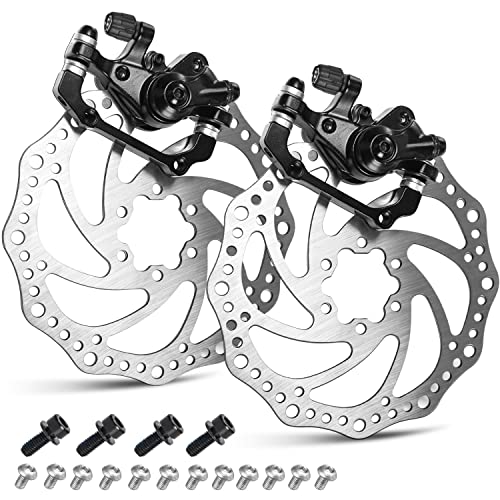
TOBWOLF MTB Cable Disc Brake Kit 160mm Rotors

Bike Calip Brakes Set With Alloy Levers

TOBWOLF MTB Hydraulic Disc Brake Kit 160mm Rotors

PETCHOR Hydraulic Disc Brake Calipers Red

Mimoke C-Brake Rim Brake Set 70mm Pads

LOOEEL Mechanical Disc Brake Pair

Hycline Zoom HB-100 Hydraulic Disc Calipers
More Details On Our Top Picks
This cable-actuated disc set fits the kind of bike that needs a straightforward parts refresh without moving into hydraulic territory. The 160mm rotors are a familiar size for many trail and general-purpose setups, and the post-mount caliper layout keeps the package focused on compatibility rather than flash.
For a weekend mountain bike, folding bike, or BMX that sees mixed use, that balance can be more useful than a fancier system. The honest trade-off is that cable systems usually ask for more regular adjustment than hydraulic ones, so this suits hands-on maintenance better than a set-and-forget approach.
Strong Points
- Front and rear parts come together in one kit, which simplifies a full refresh.
- 160mm rotors give you a familiar disc size for common builds.
- Post-mount calipers help the set line up with many MTB-style frames.
- The cable design keeps service work simpler for home mechanics.
Things To Consider
- Cable systems usually need more periodic tuning than hydraulic setups.
- The fit is more specific than a universal rim brake kit like the Mimoke set.
- Rotor-based braking adds parts that need regular checking for true alignment.
Feature Snapshot
Who It Suits Best
Trail riders and utility cyclists who want a cable-driven disc setup with a known rotor size will get the most from this kit.
Another Choice May Suit
Hycline Zoom HB-100 Hydraulic Disc Calipers suit you better for smoother lever feel and less frequent hand tuning.
Rim-brake bikes still have a place, especially for school runs, city errands, and lighter commuter use where you want a basic front-and-rear setup. This set leans into that simple reality, with aluminium alloy levers and brake cables bundled together so the swap feels less piecemeal.
Compared with the disc sets above, it fits a more classic bike layout and usually keeps the work surface cleaner around the wheels. The catch is that rim brakes depend on the wheel rim itself, so worn rims and wet conditions can change how they feel over time.
What We Like
- Front and rear hardware arrive as one matched rim-brake set.
- Aluminium alloy levers keep the control points light in the hand.
- Included cables help cut down on separate part searching.
- Works well for student bikes and city bikes that keep a traditional rim-brake layout.
Worth Noting
- Rim braking depends on rim condition, so worn wheels can affect feel.
- This style sits outside the disc-brake path used by the TOBWOLF kits.
- Wet-weather performance can feel more variable than with a rotor system.
Core Details
Who Should Grab It
Commuters, student bikes, and child bikes with rim-brake mounts are the clearest match here.
Where A Sibling Pick Shines
Mimoke C-Brake Rim Brake Set suits you better for a long-arm rim-brake swap on a bike that needs wider pad coverage.
Hydraulic discs are where braking starts to feel more refined, and this TOBWOLF kit is built for that kind of ride. Dual piston calipers mean the brake pads push from two sides, which helps the system feel more even on longer descents or heavier bikes.
The hose lengths are spelled out clearly, with 81cm for the left front and 147cm for the right rear, so route planning matters before installation. You’ll appreciate that specificity on an e-bike or MTB with a tidy frame layout, while a more casual commuter may see it as more setup than needed.
Highlights
- Hydraulic actuation gives you a smoother lever feel than cable systems.
- Dual piston calipers help pad contact feel more even.
- The front and rear kit format reduces piecing parts together separately.
- Clear hose lengths make installation planning easier.
- It fits MTB and e-bike use, which broadens the audience.
Small Caveats
- Hydraulic systems can ask for more involved setup than mechanical brakes.
- The hose routing needs more attention than the LOOEEL mechanical pair.
- Some home mechanics may prefer a simpler cable-based refresh.
Feature Rundown
Built With In Mind
MTB and e-bike owners who want a hydraulic upgrade with clear hose lengths are the best match here.
Look Elsewhere When
TOBWOLF MTB Cable Disc Brake Kit suits you better for a simpler install and easier on-bike upkeep.
Some brake parts disappear into a bike, and some make the bike look a bit more deliberate. This red PETCHOR pair sits in the second camp, with a premium aluminum body and oil-driven dual pads that point toward a more assertive hydraulic setup for MTB and e-bike use.
The shape of the value here is as much about material choice as performance feel. Compared with the TOBWOLF cable kit, this set shifts you into hydraulic territory, while the red finish gives a more visible update for riders who care about the build as a whole.
Upsides
- Aluminum construction tends to feel more solid than basic mixed-material parts.
- Oil-driven dual pads support a more even braking action.
- Front and rear pairing makes it easier to refresh both ends together.
- The red finish gives custom builds a cleaner visual accent.
Areas To Watch
- Hydraulic parts usually reward careful setup and tidy hose routing.
- The bold color may not suit every frame or fork finish.
- Home installs can take more patience than a rim-brake swap.
Technical Sheet
Right Fit For
MTB and electric bike owners who want hydraulic calipers with a more styled look will appreciate this set.
Skip It When
Hycline Zoom HB-100 Hydraulic Disc Calipers suit you better if you want a more model-specific hydraulic upgrade path.
Not every bike needs a disc conversion, and this Mimoke set keeps that old-school rim-brake logic intact. The 70mm pads and 110mm long arms make the design better suited to bikes that need broader pad reach, especially when you’re refreshing a commuter or a utility bike with a familiar V-brake style.
Compared with the Hmseng set, this one gives you a different pad and arm layout, so frame and rim compatibility matter more than the color alone suggests. The honest read is that rim brakes are easy to understand, but they also depend heavily on clean rims and regular pad checks.
Best Bits
- Long arms help this set suit bikes that need extra reach.
- 70mm pads give you a wider contact area than short-pad designs.
- Aluminum alloy construction keeps the brake arms light.
- Two pairs cover both front and rear installations.
Room For Improvement
- Rim brake performance depends on rim condition and pad wear.
- This style needs more regular pad inspection than many hydraulic calipers.
- It won’t match bikes already built around discs.
Details At A Glance
The Right Fit
You get the most from this set on commuter bikes and older frames built for rim brakes.
Where Another Pick Fits Better
Bike Calip Brakes Set With Alloy Levers suits you better for a simpler front-and-rear commuter refresh with cables included.
Mechanical discs sit in a useful middle ground, and this LOOEEL pair leans into that middle with a universal front-and-rear promise across mountain, folding, and road bikes. That broad fit makes it appealing for mixed bike households where one rider wants a trail setup and another just wants a reliable commuter refresh.
Against the hydraulic TOBWOLF and Hycline options, the simpler cable-driven layout usually means fewer setup surprises and easier roadside adjustment. Still, universal claims always need a careful check against your frame mount and rotor path, because fit beats broad wording every time.
Positives
- Mechanical actuation keeps the system familiar for home service.
- Front and rear coverage gives you one matched pair.
- Broad bike-type compatibility helps across multiple ride styles.
- The design works well for riders who prefer simpler maintenance.
Softer Spots
- Mechanical systems usually need more hand adjustment than hydraulic ones.
- Universal fit still needs a frame and rotor compatibility check.
- It won’t give the same lever feel as a fluid-based setup.
Quick Facts
Whose Shelf It Belongs On
Mixed-bike homes and riders who want a straightforward mechanical disc option are the best match here.
Reach For A Different Pick When
TOBWOLF MTB Hydraulic Disc Brake Kit suits you better for a smoother hydraulic feel on MTB and e-bike setups.
Hydraulic brake upgrades often feel most worthwhile on bikes that already see real miles, and the HB-100 name here signals a model-minded setup rather than a loose universal kit. For mountain bikes, road bikes, and e-bikes, that kind of front-and-rear hydraulic pairing can make the cockpit feel calmer and more consistent on rolling terrain.
Compared with the PETCHOR pair, this option leans more toward a recognized model line, while still covering multiple bike types. The main trade-off is the same one that comes with most hydraulic systems, installation and bleeding take more care than a cable brake swap.
Reasons To Buy
- Hydraulic braking suits riders who want a smoother lever response.
- Front and rear calipers keep the upgrade cohesive.
- Model naming can help when you’re matching a known brake family.
- It spans mountain, road, and e-bike use.
Points To Note
- Hydraulic installs usually need more patience than mechanical ones.
- Bleeding and hose management are part of long-term upkeep.
- The extra precision may be more than a casual bike needs.
Core Details
Perfect Match For
Riders upgrading a mountain bike, road bike, or e-bike to a hydraulic setup will find this the most natural fit.
Swap It Out When
LOOEEL Mechanical Disc Brake Pair suits you better for a simpler install and less involved upkeep.
How To Choose The Right Bike Brake Calipers
Match The Brake Type To The Bike
Disc and rim systems solve different problems, so start with the frame and wheel setup you already have. Disc calipers work with rotors and suit mountain bikes, many e-bikes, and some road builds, while rim brakes press directly on the wheel rim and fit older commuter frames more naturally.
The choice shapes more than stopping power. It affects maintenance, part compatibility, and how often you’ll need to tweak pad position or cable tension.
Think About Actuation, Not Just Shape
Mechanical brake calipers use a cable, which keeps the system easier to service at home. Hydraulic calipers use fluid in a sealed line, and that usually gives a smoother, more even lever feel, especially on longer rides or heavier bikes.
The trade-off is setup complexity. A cable brake can be simpler for quick repairs, while a hydraulic system usually asks for more careful installation and periodic attention to hose condition.
Check Mounting, Reach, And Rotor Size
Mount style matters more than the listing headline suggests. Post mount, rotor diameter, arm length, and pad reach all need to line up with the frame or fork you own, otherwise the rest of the set becomes harder to use well.
That’s why a 160mm rotor is useful information, not filler. It tells you the braking surface size you’re working with, which can help you judge whether the setup suits a trail bike, commuter, or e-bike load.
Choose For Your Daily Routine
Riders who want low-fuss service usually lean toward mechanical disc or rim brake sets. Riders who want a smoother lever feel and stronger control under repeated braking often find hydraulic calipers worth the extra setup effort.
The right answer depends on where you ride most. A city bike that lives on short trips has different needs from a mountain bike that sees long descents, and that difference is where the real value shows up.
What To Weigh Before You Click Through
Hidden Buying Traps
One common mistake is treating every brake part as interchangeable. A rim brake set won’t replace a disc caliper, and a post-mount disc part won’t suit every fork or frame without the right mounting points.
Another easy miss is overlooking the whole package. Calipers, levers, cables, rotors, hose lengths, and mounting style all need to line up with the bike you already own.
The Upgrade Payoff
Higher-tier brake parts usually cost more because they bring cleaner materials, tighter machining, and more refined actuation. Hydraulic systems, for example, tend to add smoother control and better consistency, but they also add setup work and service steps.
That extra spend makes sense for riders who log serious miles, carry heavier loads, or want less hand fatigue on long rides. For a casual neighborhood bike, a simpler mechanical or rim setup can be the calmer, smarter choice.
Frequently Asked Questions
What’s the difference between mechanical and hydraulic disc calipers?
Mechanical calipers use a cable, so they’re usually simpler to adjust and service. Hydraulic calipers use fluid lines, which often gives a smoother and more even lever feel.
Do rim brakes still make sense in 2026?
Yes, especially on older commuter bikes, kid bikes, and lighter city setups. They make the most sense when the frame and wheel rims already support that style.
Why does rotor size matter on disc brakes?
Rotor size helps determine how much braking surface you have to work with. A 160mm rotor is a common, familiar size for many bikes, which makes fit planning easier.
Can you mix brake parts from different sets?
Sometimes, but only when the mount style, rotor size, and control system match your bike. Mixing parts without checking those details can create fit problems fast.
Which option is easiest for home installation?
Mechanical brake sets are usually the most approachable for home setup. Rim brakes can also be straightforward on the right frame, while hydraulics usually need more care.
Closing Thoughts
Your best brake choice depends on how you ride, not just on how the part looks in the listing. A commuter, a mountain bike, and a folding bike all ask for different levels of adjustment, service, and control. Mechanical sets keep things simpler, hydraulic sets add smoother feel, and rim brakes still make sense on the right frame. Match the caliper style to your bike first, then the details fall into place more easily.